 Loading ...

Thursday, February 26, 2026
Strike Price in Options Trading: A Complete Beginner to Advanced Guide
تم إعداد هذا المنشور من قبل سنشري للاستشارات
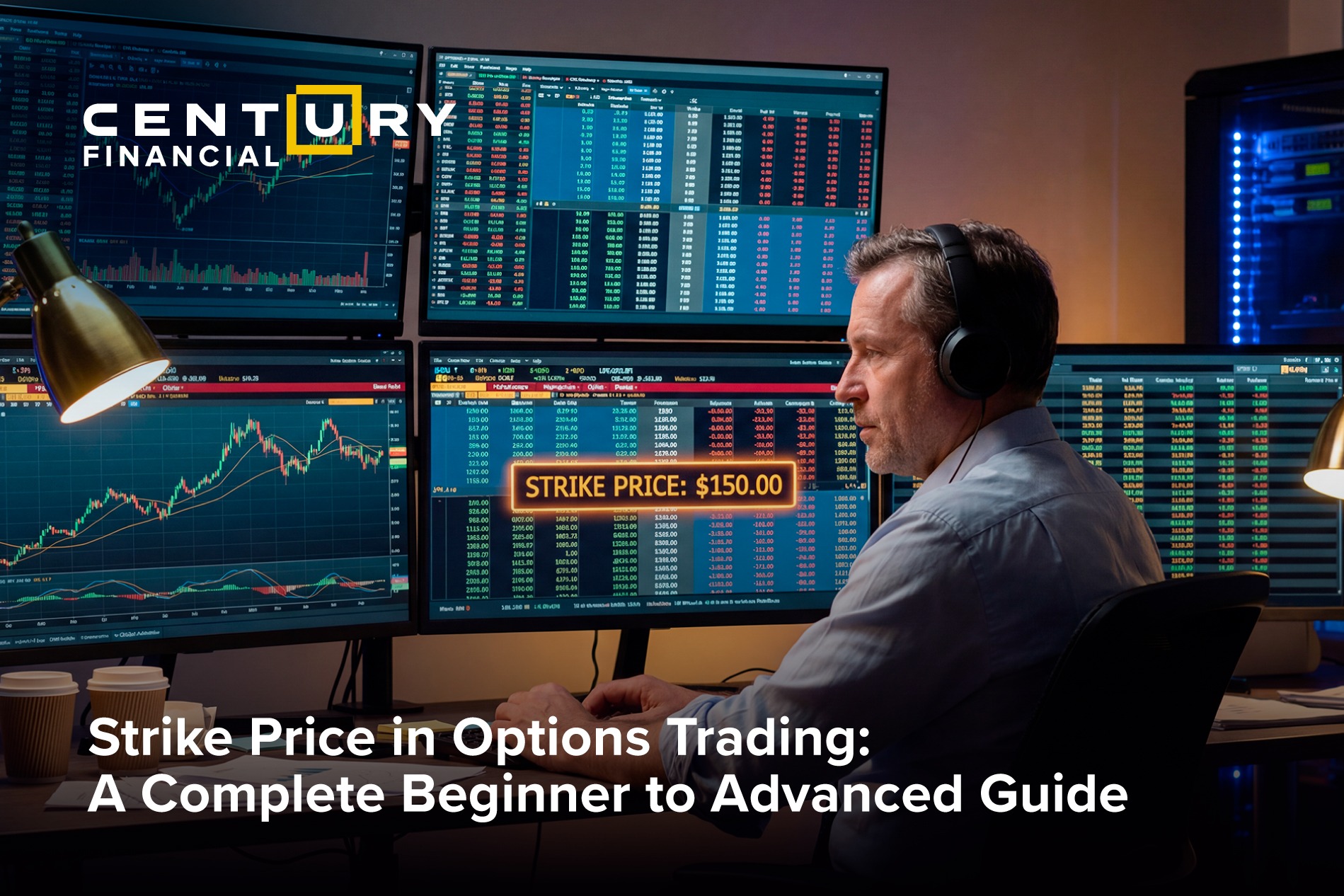

The strike price is a critical concept in options trading. It directly impacts profitability, risk management, and overall strategy selection. Whether you are trading equities, indices, commodities, or currencies, understanding strike price options is essential to making informed and confident trading decisions.
The strike price defines the level at which an options contract can be exercised, making it a central factor in determining option premiums, potential returns, and downside risk. For beginners, it provides clarity on when an option gains value, while for experienced traders, it helps structure advanced strategies such as hedging, income generation, and volatility-based trades.
Strike Price Meaning in Options Trading
The strike price meaning refers to the predetermined price at which the holder of an option has the right to buy or sell the underlying asset. This right can be exercised on or before the option’s expiry date, depending on the contract type.
For more clarity, let’s go over some basics of option trading. In this market, there are two primary contracts:
The strike price does not change once the option contract is created. It defines the level at which the option becomes valuable, depending on market movement.
What Is Strike Price in Options with Example
Assume a stock is trading at a market price of 1,000.
If the stock rises to 1,100 before expiry, the call option holder can buy the stock at 1,050 and gain the difference. If the price falls to 900, the put option holder can sell at 950, benefiting from the decline.
Spot Price and Strike Price Explained
To fully understand strike price options, traders must clearly distinguish between the spot price and strike price. These two prices play different roles in options trading, yet their interaction determines whether an option contract becomes profitable or expires worthless.
What is Spot Price and Strike Price
Understanding the relationship between spot price and strike price helps traders evaluate option moneyness, estimate potential risk and reward, and decide when to enter or exit a trade. This distinction is crucial in fast-moving markets, where even small price changes can significantly impact option value and trading outcomes.
Table of Comparison: Spot Price vs Strike Price
| Factor | Spot Price | Strike Price |
|---|---|---|
| Definition | Current market value | Fixed option contract price |
| Changes | Moves continuously | Remains constant |
| Purpose | Reflects the live market | Determines option value |
| Impact | Drives the option premium | Defines exercise level |
Types of Strike Price Options Based on Market Position
Strike price options are categorized by their relationship to the underlying asset's spot price. By comparing the strike price to the prevailing spot price, traders can determine whether an option has intrinsic value or is purely a function of future market movements. This distinction is critical for selecting strategies aligned with different market conditions, such as trending, range-bound, or highly volatile environments.
In-the-Money Options
These options have intrinsic value and are often preferred by conservative traders.
At-the-Money Options
These options are sensitive to volatility and are commonly used in short-term strategies.
Out-of-the-Money Options
These options are cheaper but require strong market movement to become profitable.
How to Select Strike Price in Options Trading
The strike price you choose should align closely with your market view, risk tolerance, and trading timeframe. Choosing a strike too close to the spot price may increase costs but offer a higher chance of success, while selecting a strike further away may reduce premium costs but require stronger price movement to become profitable. Choosing the right strike is instrumental in having a successful strategy.
Factors to Consider When Selecting Strike Price
| Trading Style | Preferred Strike Price |
|---|---|
| Conservative | In-the-money |
| Moderate | At-the-money |
| Aggressive | Out-of-the-money |
Traders using advanced tools available in trading platforms like the Century Trader or MT5 can analyze option chains and volatility indicators to make informed strike price selections.
Practical Use of Strike Price Across Asset Classes
Each asset class responds to unique economic drivers, volatility patterns, and trading conditions, which makes informed strike price selection especially important. Whether trading stocks, commodities, currencies, or indices, the strike price determines how an option reacts to market movements and how risk is managed. A strike price that works well in a low-volatility market may not be suitable for highly volatile instruments such as commodities or currency pairs.
Influencers of Strike Price in Share and Equity Trading
In share trading and equity trading, strike prices help traders speculate on earnings, dividends, and macroeconomic news.
Influencers of Strike Price in Commodities and Metals
In trading such as oil and gold, strike prices are influenced by supply and demand dynamics, geopolitical factors, and changes in the Gold AM & PM Fixing.
Influencers of Strike Price in Forex and CFDs
In forex and CFD, strike prices are selected based on currency volatility, interest rate decisions, and economic indicators. Traders often use volatility trading strategies to optimize strike price selection.
Conclusion
Understanding strike price is essential for successful options trading across equities, commodities, forex, and CFDs. From knowing the difference between spot price and strike price to learning how to select a strike price in options, every decision impacts your trading outcomes.
At Century Financial, traders gain access to professional-grade tools, deep market insights, and multiple platforms, including the Century Trader, MT5, and TWS, which allow you to analyze, compare, and trade with ease.
FAQs
Q1. Can the strike price change after buying an option
A: No, the strike price is fixed at the time the contract is created and cannot be altered. Spot prices, or the current market price of the underlying, are what change.
Q2: Is a lower strike price always better for call options
A: Not necessarily. A lower strike price usually costs more in premium and must align with your expected price movement.
Q3: How does volatility affect strike price selection
A: Higher volatility increases option premiums and makes out-of-the-money strike prices more attractive due to greater price movement potential.
Q4. What happens if spot price never reaches the strike price
A: If the option expires without reaching the strike price, it becomes worthless and expires without intrinsic value.
Q5. How does time to expiry influence strike price selection
A: Longer expiry gives the market more time to reach distant strike prices, while short-term options usually require strike prices closer to the spot price to improve the probability of profit.
Related Reads
لا تقدم شركة سنشري للإستشارات والتحليل المالي ش.ذ.م.م (الشركة) محتوى هذه المدونة، بما في ذلك أي أبحاث أو تحليلات أو آراء أو توقعات أو أي معلومات أخرى (يُشار إليها مجتمعةً باسم "المعلومات")، إلا لأغراض التسويق والتثقيف وإتاحة المعلومات العامة. ولا يُفسَّر ذلك على أنه نصيحة استثمارية أو توصية أو دعوة لشراء أو بيع أي أدوات مالية.
كما يجوز نشر هذه المعلومات عبر قنوات مختلفة، بما في ذلك موقع الشركة الإلكتروني، ومنصات الغير، والنشرات الإخبارية، والمواد التسويقية، ورسائل البريد الإلكتروني، ووسائل التواصل الاجتماعي، وتطبيقات المراسلة، والندوات الإلكترونية، وغيرها من وسائل التواصل. وبينما تسعى الشركة لضمان دقة المحتوى، فإنها لا تضمن اكتماله أو موثوقيته أو تحديثه في الوقت المناسب. وعليه، فأي قرارات تُتخذ بناءً على هذه المعلومات تكون على مسؤوليتك الشخصية. ولا تتحمل الشركة أي مسؤولية عن أي خسارة أو ضرر ناتج عن استخدامها.
ينطوي تداول المنتجات المالية على مخاطر كبيرة، بما لا يتناسب مع جميع المستثمرين. فيُرجى التأكد من وعيك التام بالمخاطر، وطلب الاستشارة المهنية المتخصصة إذا لزم الأمر.
يُرجى الاطلاع على بيان كشف المخاطر الشامل المتوفر على موقعنا الإلكتروني.


تنظمها هيئة الأوراق المالية والسلع
سنشري للاستشارات المالي ش.ذ.م.م


تصل إلينا:
-
دبي
الطابق رقم 6, مبنى رقم 4, ساحة إعمار دبي
وسط مدينة دبي، ص.ب: 65777،
دبي، الإمارات العربية المتحدة -
Abu Dhabi
27th Floor, Office 2701,
Shining Towers, Abu Dhabi, UAE -
Sharjah
29th Floor, Office 2905,
The Business Tower, Sharjah, UAE - +971 (4) 356 2800
- info@century.ae

Century Financial is the presenting sponsor of

ينطوي التداول في المنتجات المالية على مخاطر كبيرة. فالاعتماد على المشتقات المالية المتاحة للتداول خارح البورصة، مثل عقود الفروقات وتداول العملات الأجنبية (الفوركس) الفوري، قد يتسبب في خسائر تتجاوز قيمة الإيداعات الأولية، مما يجعلها غير ملائمة لجميع المستثمرين. فهذه الأدوات المالية المعقدة لا تمنح ملكية مباشرة للأصول الأساسية. لذا، ينبغي للمستثمرين الاحتراز عند تحديد أهدافهم الاستثمارية ومراعاة مستوى المخاطرة المتوقَع، واللجوء إلى الاستشارة المهنية المتخصصة عند الضرورة.
سنشري للإستشارات والتحليل المالي ش.ذ.م.م (الشركة)، شركة مرخّصة ومنظمة من هيئة الأوراق المالية والسلع في دولة الإمارات العربية المتحدة، بموجب الترخيص رقم (20200000028) و(301044) لتولي أعمال الوساطة في الأسواق الدولية، وتداول المشتقات المالية والعملات المتاحة للتداول خارج البورصة في سوق التداول الفوري، بالإضافة إلى تقديم الخدمات الاستشارية والترويجية. تأسست الشركة بموجب قوانين دولة الإمارات العربية المتحدة، وهي مسجلة لدى دائرة التنمية الاقتصادية بدبي (رقم: 768189)، حيث يقع مكتبها المسجّل في 601، الطابق السادس، المبنى رقم 4، ميدان إعمار، وسط مدينة دبي، دولة الإمارات العربية المتحدة، ص.ب. 65777.
لا يُعرَض محتوى هذا الموقع الإلكتروني إلا لأغراض تعريفية تثقيفية بحتة، فلا يمثل عرضًا ولا توصيةً ولا دعوةً لشراء أو بيع أي أوراق مالية أو منتجات مالية.
لا تنوي الشركة استخدام أو توزيع منتجاتها وخدماتها في أي ولاية قضائية حيث يُشكِّل هذا الاستخدام أو التوزيع انتهاكًا للقوانين المحلية أو اللوائح التنظيمية.
