 Loading ...

Wednesday, June 03, 2026
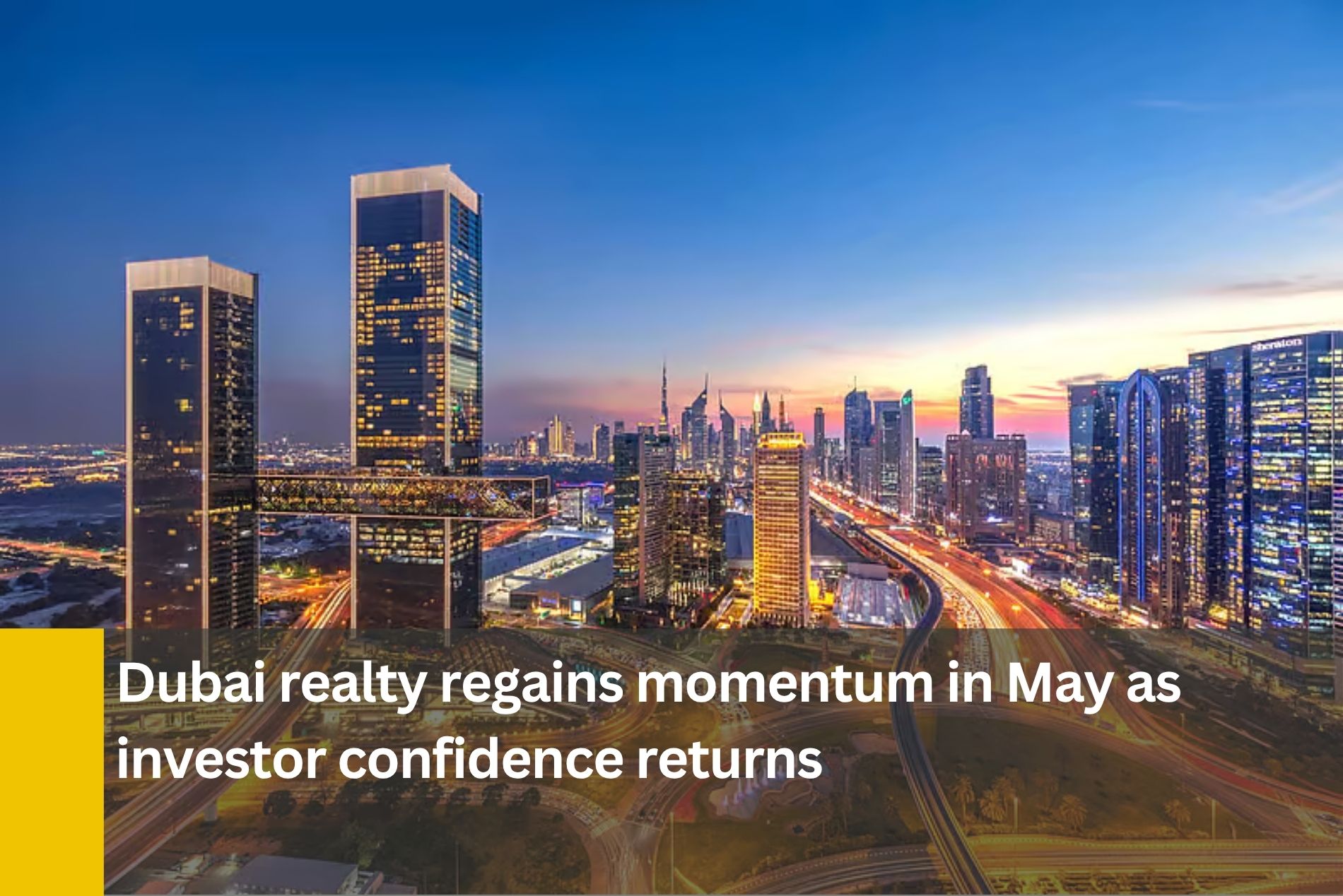
Dubai realty regains momentum in May as investor confidence returns
تم إعداد هذا المنشور من قبل فيجاي فاليتشا
Vijay Valecha, Mon, June 3, 2026 Khaleej times
After a brief slowdown in March triggered by regional tensions, the market quickly rebounds as international travel normalises and buyers resume transactionsDubai’s property market regained its stride in May, extending the sharp rebound that began in April and underscoring the sector’s resilience in the face of geopolitical uncertainty in the Middle East. After a brief slowdown in March triggered by regional tensions, the market quickly regained momentum as investor confidence returned, international travel normalised and buyers resumed transactions that had been temporarily put on hold. The recovery was reflected in consistently strong transaction volumes, renewed activity in the mortgage market and sustained demand across both the luxury and off-plan segments.
Data from the Dubai Land Department showed weekly real estate transactions regularly exceeding Dh14 billion during May, with some weeks approaching Dh15 billion, highlighting the strength of underlying demand. Property sales continued to be dominated by off-plan developments, while luxury waterfront and branded residences remained among the most sought-after assets.
The performance suggests that Dubai’s real estate market has moved beyond the uncertainty that weighed on sentiment earlier in the year and is now entering a more stable phase of growth characterised by stronger fundamentals rather than speculative activity.
The renewed momentum follows a robust April performance, when total market transactions climbed to 13,799, up 3 per cent month-on-month, while the value of sales rose 9 per cent to Dh47.2 billion.
Internal brokerage data from Allsopp & Allsopp showed viewing activity surged by 198 per cent week-on-week, buyer enquiries jumped by 147 per cent and completed transactions rose by 98 per cent as confidence returned to the market.
Vijay Valecha, chief investment officer of Century Financial, believes March now appears to have been the low point of the recent market cycle.
“March was likely the trough,” Valecha said. “What followed in April was decisive. Viewing activity rose 198 per cent week-on-week, buyer enquiries jumped 147 per cent and completed transactions climbed 98 per cent. Mortgage submissions also surged sharply, signalling the return of genuine buyer confidence.”
Mortgage activity provided one of the clearest signs of the market’s recovery. According to brokerage data, more mortgage applications were submitted during the first eight days of April than during the whole of March, while the first half of April recorded a 250 per cent week-on-week increase in submissions.
Importantly, foreign investors continued to pour money into Dubai property throughout the period of regional uncertainty, reinforcing the emirate’s reputation as a global safe-haven market.
During the first quarter of 2026, the value of foreign property transactions increased by nearly 26 per cent compared with the same period last year, while the number of foreign deals rose 11 per cent to 48,445 transactions. Investors from Europe, Asia and other international markets continued to view Dubai as an attractive destination offering strong yields, a favourable tax environment and long-term economic stability.
“Capital did not leave Dubai; it simply paused,” Valecha noted. “The continued growth in foreign transactions during the conflict period demonstrates the market’s underlying strength and global appeal.”
The luxury segment remained a standout performer throughout May. Among the notable transactions were a Dh112.6 million residence at Solaya 5 in Jumeirah First, a Dh83.2 million home at Aman Residences and a Dh56.5 million property at Como Residences. Such transactions demonstrate that demand from high-net-worth individuals remains robust despite broader geopolitical concerns.
Industry experts say Dubai’s appeal among global wealth holders continues to strengthen as the city combines lifestyle advantages, world-class infrastructure, political stability and attractive investment returns.
At the same time, the off-plan sector maintained its position as the market’s principal growth driver. Off-plan transactions accounted for 76 per cent of all sales in April and continued to dominate activity in May. Developers remain confident about future demand, as reflected in Meraas awarding Dh2.4 billion in construction contracts for the expansion of The Acres villa community in Dubailand.
The market is also showing signs of becoming healthier and more sustainable. While transaction activity has rebounded strongly, price growth has moderated to a more balanced pace. Industry estimates indicate annual price appreciation has eased to between 8 and 12 per cent, a significant shift from the rapid gains recorded during the post-pandemic boom.
The REIDIN-DLD citywide average sale price reached Dh1,973 per square foot in April, up 3 per cent month-on-month and 8 per cent year-on-year.
Although the ValuStrat Price Index recorded a 5.9 per cent monthly decline in March, annual growth remained firmly positive at 8.9 per cent, suggesting a market correction rather than any structural weakness.
Analysts increasingly view this moderation as a positive development that supports long-term market sustainability. Buyer decisions are becoming more selective, with greater emphasis on project quality, location, infrastructure, rental yields and developer credibility.
Developers are also adapting to changing market dynamics. Incentives such as fee waivers, lower upfront payments and more flexible payment plans have become increasingly common, creating attractive opportunities for investors and end-users alike.
The broader investment environment remains supportive. The UAE continues to attract substantial institutional capital, with global investment giant Blackstone committing $250 million to a UAE-based payments platform in March. Market observers say such investments reflect enduring confidence in the country's regulatory framework, financial infrastructure and long-term economic prospects.
For Dubai’s property market, May served as a clear reminder of its resilience. Despite facing one of the most challenging geopolitical environments in recent years, the sector not only recovered lost ground but also reinforced its status as one of the world’s most dynamic and internationally connected real estate markets.
With strong population growth, rising foreign investment, expanding infrastructure and continued demand for both luxury and off-plan properties, the outlook for the remainder of 2026 remains broadly positive, even as the market transitions towards a more mature and sustainable growth cycle.
Source__1543832205.jpg)
__516790862.jpg)
__645274992.jpg)


تنظمها هيئة الأوراق المالية والسلع
سنشري للاستشارات المالي ش.ذ.م.م


تصل إلينا:
-
دبي
الطابق رقم 6, مبنى رقم 4, ساحة إعمار دبي
وسط مدينة دبي، ص.ب: 65777،
دبي، الإمارات العربية المتحدة -
Abu Dhabi
27th Floor, Office 2701,
Shining Towers, Abu Dhabi, UAE -
Sharjah
29th Floor, Office 2905,
The Business Tower, Sharjah, UAE - +971 (4) 356 2800
- info@century.ae
Century Financial is the presenting sponsor of

ينطوي التداول في المنتجات المالية على مخاطر كبيرة. فالاعتماد على المشتقات المالية المتاحة للتداول خارح البورصة، مثل عقود الفروقات وتداول العملات الأجنبية (الفوركس) الفوري، قد يتسبب في خسائر تتجاوز قيمة الإيداعات الأولية، مما يجعلها غير ملائمة لجميع المستثمرين. فهذه الأدوات المالية المعقدة لا تمنح ملكية مباشرة للأصول الأساسية. لذا، ينبغي للمستثمرين الاحتراز عند تحديد أهدافهم الاستثمارية ومراعاة مستوى المخاطرة المتوقَع، واللجوء إلى الاستشارة المهنية المتخصصة عند الضرورة.
سنشري للإستشارات والتحليل المالي ش.ذ.م.م (الشركة)، شركة مرخّصة ومنظمة من هيئة الأوراق المالية والسلع في دولة الإمارات العربية المتحدة، بموجب الترخيص رقم (20200000028) و(301044) لتولي أعمال الوساطة في الأسواق الدولية، وتداول المشتقات المالية والعملات المتاحة للتداول خارج البورصة في سوق التداول الفوري، بالإضافة إلى تقديم الخدمات الاستشارية والترويجية. تأسست الشركة بموجب قوانين دولة الإمارات العربية المتحدة، وهي مسجلة لدى دائرة التنمية الاقتصادية بدبي (رقم: 768189)، حيث يقع مكتبها المسجّل في 601، الطابق السادس، المبنى رقم 4، ميدان إعمار، وسط مدينة دبي، دولة الإمارات العربية المتحدة، ص.ب. 65777.
لا يُعرَض محتوى هذا الموقع الإلكتروني إلا لأغراض تعريفية تثقيفية بحتة، فلا يمثل عرضًا ولا توصيةً ولا دعوةً لشراء أو بيع أي أوراق مالية أو منتجات مالية.
لا تنوي الشركة استخدام أو توزيع منتجاتها وخدماتها في أي ولاية قضائية حيث يُشكِّل هذا الاستخدام أو التوزيع انتهاكًا للقوانين المحلية أو اللوائح التنظيمية.
