 Loading ...

Tuesday, October 13, 2026
Oil outlook clouded by Middle East risks and returning supply
By Vijay Valecha in 'Century in News'
Vijay Valecha, Tue, Oct 13, 2026 Khaleej Times
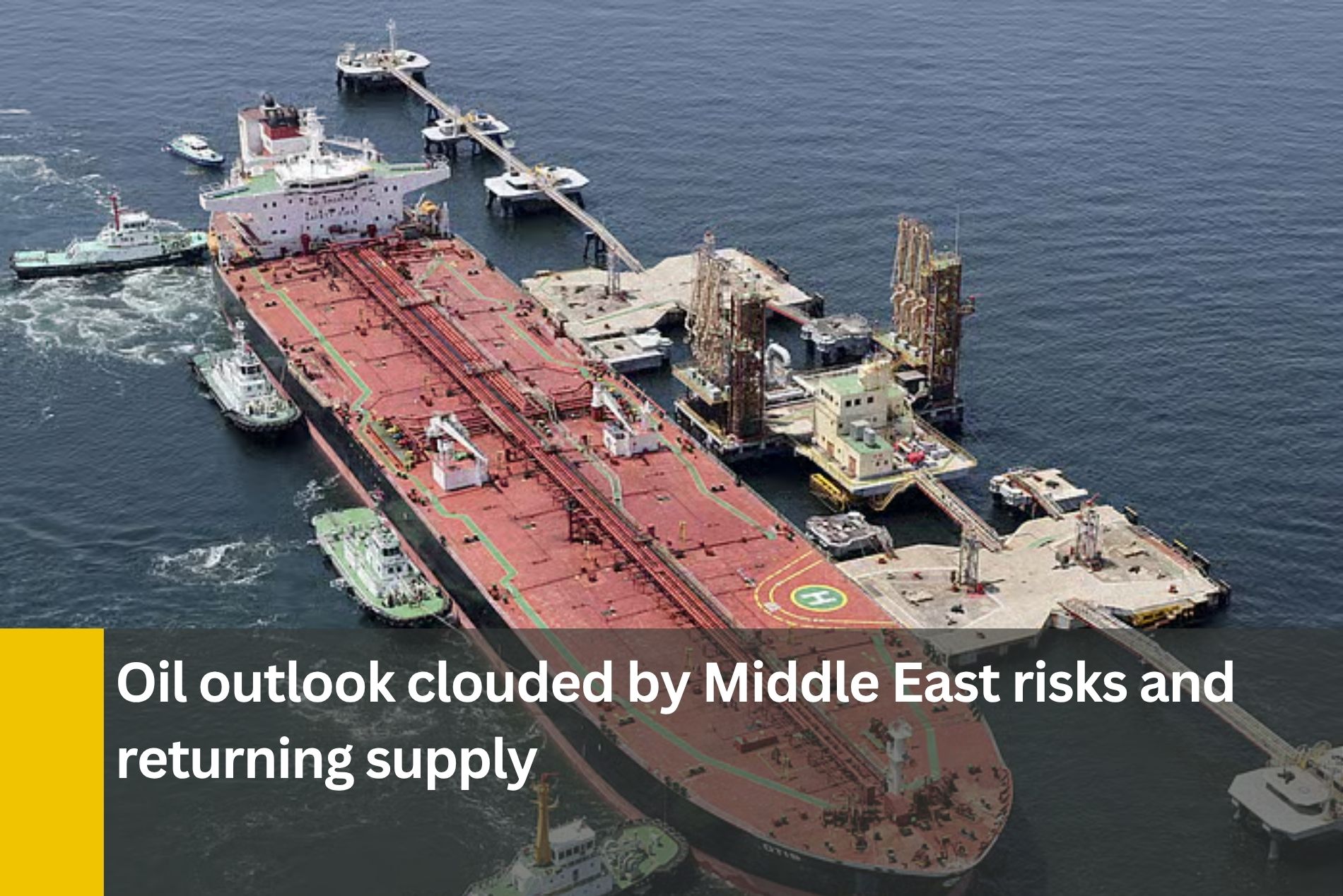
Traders are weighing geopolitical disruptions against weaker demand forecasts and the prospect of additional Russian fuel exports into global marketsOil markets are entering a period of heightened uncertainty as geopolitical tensions in the Middle East compete with signs that additional supplies could return to global markets, analysts say.
Crude prices have eased from recent highs, but experts warn that risks to shipping routes and energy infrastructure continue to underpin market volatility.
Brent crude has recently traded near $105-$107 a barrel, while West Texas Intermediate hovered around $92-$93. Analysts say the next direction for prices will depend on whether improving supply conditions outweigh lingering geopolitical threats.
The prospect of increased Russian diesel exports, coupled with hopes of a Russia-Ukraine energy ceasefire, has raised expectations that some pressure on global fuel markets could ease. At the same time, concerns remain over tanker movements through the Strait of Hormuz and attacks linked to regional conflicts.
Analysts also point to weakening demand forecasts as a potential brake on prices. OPEC has reportedly lowered its expectations for 2026 oil demand growth, while the International Energy Agency has projected lower global consumption.
However, analysts at forex.com argue that easing crude prices could help reduce inflation concerns that have weighed on global financial markets.
“The real energy shock is no longer simply about a supply deficit, but a ‘logistics premium’ imposed on every barrel that transits,” said Vijay Valecha, Chief Investment Officer at Century Financial.
Valecha said investors are increasingly focused on the cost and risks of moving oil through global supply chains, including shipping delays, insurance costs and security concerns.
“Just because the market has found ways to keep oil flowing doesn’t mean it can handle another major disruption,” he said. “That’s the risk the market may be underestimating.”
For UAE investors, analysts say the outlook will depend not only on supply and demand fundamentals but also on whether regional tensions ease and whether major economies can avoid a deeper slowdown. Until then, oil prices are likely to remain driven as much by geopolitics and logistics as by traditional market fundamentals.
Source__890978133.jpg)
__2144975706.jpg)

Regulated by CMA
Century Financial Consultancy LLC








Reach us:
-
Dubai
6th Floor, Emaar Square Building 4,
Downtown, Dubai, P.O. Box 65777,
Dubai, United Arab Emirates -
Abu Dhabi
27th Floor, Office 2701,
Shining Towers, Abu Dhabi, UAE -
Sharjah
29th Floor, Office 2905,
The Business Tower, Sharjah, UAE - +971 (4) 356 2800
- info@century.ae

Disclaimer: Trading in financial products carries substantial risk. Leveraged over-the-counter (OTC) derivatives, such as Contracts for Difference (CFDs) and spot forex, may result in losses exceeding initial deposits and may not be suitable for all investors. These complex instruments do not confer ownership of the underlying assets. Investors should carefully consider their investment objectives and risk appetite, and seek independent professional advice if necessary.
Century Financial Consultancy LLC (CFC) is licensed and regulated by the Capital Market Authority (CMA) of the UAE under license numbers 20200000028 and 301044 to carry out the activities of Financial Products dealer, Trading Broker in international markets, Trading Broker of OTC derivatives and currencies in the spot market, Introduction, Financial Consultations, and Promotion. CFC is incorporated under UAE law, registered with the Dubai Economic Department (No. 768189), with its office at 601, Level 6, Building No. 4, Emaar Square, Downtown Dubai, UAE, PO Box 65777.
The content on this website is provided solely for informational and educational purposes and does not constitute an offer, recommendation, or solicitation to buy or sell any securities or financial products.
Products and services offered by CFC are not intended for use in any jurisdiction where such use or distribution would breach local laws or regulatory requirements.
⚠️ Alert: Fraudulent Activity Notice
Century Financial Consultancy LLC (“Century”) has become aware of fraudulent individuals and entities impersonating our firm through unofficial websites, social media channels, and messaging applications such as Telegram, WhatsApp, and Discord.
Please be advised:
- Century does not manage investments on behalf of clients.
- Century does not solicit funds or guarantee investment returns.
- Century does not accept or make payments in cash, cryptocurrency, or digital assets.
- We do not conduct business via social media or messaging platforms.
Our only official website is www.century.ae, and all communication is conducted exclusively through verified channels.
We strongly urge the public to remain vigilant, verify the authenticity of any communication claiming to be from Century, and report any suspicious activity. Century disclaims any responsibility for losses arising from dealings with unauthorised or fraudulent parties.
