 Loading ...

Tuesday, January 27, 2026
Backtesting Trading Strategies: Meaning, Methods, and How to Backtest Effectively
By Century Financial in 'Blog'
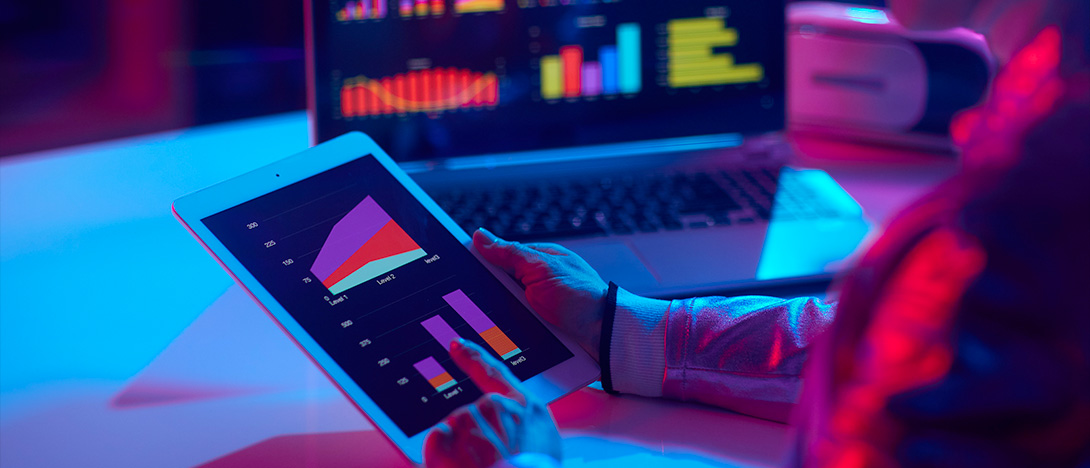
Backtesting trading strategies is a critical process used by traders to evaluate how a trading idea would have performed in past market conditions before applying it in live trading. It allows traders to move beyond assumptions and gut feelings by relying on historical data, measurable outcomes, and repeatable logic.
Whether you are trading in the share market, forex, commodities, indices, or CFD trading, backtesting helps determine whether a strategy has a genuine statistical edge or whether its success is purely random. Understanding backtesting meaning is especially important in modern markets, where volatility, algorithmic trading, and rapid, news-driven price movements can significantly affect performance.
What Is Backtesting in Trading? Meaning and Core Concept
Backtesting meaning in trading, refers to the process of applying a trading strategy to historical market data to evaluate its historical performance. When traders ask what is backtest in trading, they are essentially looking to understand whether a strategy has a measurable edge before risking real capital.
Backtesting trading strategies helps traders assess profitability, risk exposure, and consistency across different market conditions. It is important to note that backtesting does not predict future performance. Instead, it provides statistical insight that helps traders make informed decisions and avoid emotional trading.
Why Backtesting Trading Strategies Is Essential for Modern Traders
In modern financial markets, price movements are influenced by multiple factors, including algorithmic trading, macroeconomic data, interest rate decisions, and global risk sentiment.
Backtesting transforms trading from speculation into a structured, evidence-based process. Without backtesting, trading decisions are often driven by assumptions, recent market noise, or emotional reactions rather than statistically proven logic.
Key Benefits of Backtesting
- Helps identify whether a strategy has a positive expectancy
- Measures risk through drawdowns and volatility
- Improves trade consistency and discipline
- Builds confidence before deploying capital
- Reduces emotional bias during live trading
Limitations of Backtesting
Despite its value, stock backtesting has limitations that must be understood:
- Historical data cannot fully reflect future market behavior
- Over-optimization can distort results
- Slippage and execution delays may be underestimated
- Extreme market events may not be captured
This is why traders combine backtesting with forward testing and strong risk management.
How to Backtest a Trading Strategy Step by Step
Understanding how to backtest a trading strategy correctly ensures reliable and repeatable results. Many traders fail to backtest trading strategies because they rush the process or focus solely on returns.
Effective backtesting requires discipline, clearly defined rules, and realistic assumptions that closely mirror live trading environments. This is especially important when testing strategies across the share market, Forex trading, commodities, gold trading, oil trading, or CFD trading, where volatility and execution costs vary significantly.
Step-by-Step Backtesting Process
Select the market and instrument
Choose whether you are testing stocks, forex trading pairs, commodities, or CFDs.Define clear trading rules
Include precise entry, exit, stop-loss, take-profit, and position sizing rules.Collect historical market data
Use accurate price data that matches your intended trading timeframe.Apply the strategy to historical data
This can be done manually, via spreadsheets, or automatically using platforms.Analyze performance metrics
Evaluate win rate, risk-reward ratio, drawdown, and overall expectancy.Key Metrics Used in Backtesting
These metrics help traders determine whether a strategy is viable in live market conditions.
| Metric | Description |
|---|---|
| Win Rate | Percentage of profitable trades |
| Risk-Reward Ratio | Average profit relative to loss |
| Maximum Drawdown | Largest capital decline |
| Expectancy | Average profit per trade |
| Sharpe Ratio | Risk-adjusted performance |
Types of Backtesting Strategies Across Markets
Different asset classes require different backtesting approaches due to variations in volatility, liquidity, trading hours, and market structure. A strategy that performs well in one market may fail in another if differences between markets are not adequately accounted for during backtesting.
For example, equity markets operate within fixed trading hours, whereas forex and some commodity markets trade nearly 24 hours a day. These structural differences influence price gaps, overnight risk, and the reliability of strategies
- Stock Backtesting
Stock backtesting focuses on equities within the share market. Traders test trend-following, breakout, and mean-reversion strategies, often diversifying risk through instruments like a share basket. - Backtesting Options Strategies
Backtesting options strategies involves analyzing time decay, implied volatility, and strike selection. Strategies such as spreads, straddles, and covered calls require precise modeling to ensure realistic results. - Commodity, Forex, and CFD Backtesting
In the foreign exchange (forex) and commodity markets, traders backtest momentum and breakout strategies. CFD trading enables testing across multiple asset classes; however, traders must account for spreads, financing costs, and the impact of leverage
Best Practices and Common Mistakes in Backtesting
Best Practices for Accurate Backtesting
- Use out-of-sample data for validation
- Apply realistic trading costs and spreads
- Test strategies across multiple market phases
- Keep rules simple and consistent
- Combine backtesting with demo trading
Common Backtesting Mistakes to Avoid
- Curve fitting historical data
- Ignoring long losing streaks
- Using insufficient historical samples
- Changing rules after seeing results
- Assuming backtested success guarantees profits
Conclusion
Backtesting trading strategies is a cornerstone of disciplined and data-driven trading. By understanding the meaning of backtesting, learning to backtest a trading strategy correctly, and avoiding common pitfalls, traders can significantly enhance consistency and decision-making.
However, true trading success comes from execution, technology, and market access. Century Financial empowers traders with robust trading platforms like Century Trader and MT5. Whether you are refining stock backtesting models or executing advanced backtesting options strategies, Century Financial provides the infrastructure, transparency, and professional support needed to turn historical insights into real trading performance.
Frequently Asked Questions About Backtesting Trading Strategies
Q1. Is backtesting trading strategies reliable?
A: Backtesting is reliable when performed with clean data, realistic assumptions, and proper risk analysis. It identifies statistical edges but does not ensure future performance.
Q2: How much historical data is required for stock backtesting?
A: Most traders use five to ten years of historical data or multiple market cycles to ensure robustness.
Q3: Can beginners use backtesting effectively?
A: Yes, beginners can start with simple strategies and gradually progress using demo environments and structured platforms.
Q4: What tools are commonly used for backtesting strategies?
A: Traders use spreadsheets, automated software, and professional platforms and integrated trading systems.
Q5: Does backtesting work for CFD and leveraged trading?
A: Yes, but realistic spreads, overnight charges, and leverage effects should be taken into consideration to avoid overstated results.
Related Reads
This marketing and educational content has been created by Century Financial Consultancy LLC (“Century”) for general information only. It does not constitute investment, legal, tax, or other professional advice, nor does it constitute a recommendation, offer, or solicitation to buy or sell any financial instrument. The material does not take into account your investment objectives, financial situation, or particular needs.
The opinions expressed by the hosts, speakers, or guests are their own and may change without notice. Information is based on sources we consider to be reliable; however, Century does not guarantee its accuracy, completeness, or timeliness and accepts no liability for any loss arising from reliance on this content.
Trading and investing involve significant risk, and losses may exceed initial deposits. Past performance is not indicative of future results. CFDs and other leveraged products are complex instruments that may not be suitable for all investors. Please ensure you understand how these products work, the associated risks, and seek independent professional advice if necessary.
Century is licensed and regulated by the UAE Capital Market Authority (CMA) under License Nos. 20200000028 and 301044.
Please refer to the full risk disclosure mentioned on our website.

Regulated by SCA
Century Financial Consultancy LLC


.png)
.png)
.png)
.png)

Reach us:
-
Dubai
6th Floor, Emaar Square Building 4,
Downtown, Dubai, P.O. Box 65777,
Dubai, United Arab Emirates -
Abu Dhabi
27th Floor, Office 2701,
Shining Towers, Abu Dhabi, UAE -
Sharjah
29th Floor, Office 2905,
The Business Tower, Sharjah, UAE - +971 (4) 356 2800
- info@century.ae

Disclaimer: Trading in financial products carries substantial risk. Leveraged over-the-counter (OTC) derivatives, such as Contracts for Difference (CFDs) and spot forex, may result in losses exceeding initial deposits and may not be suitable for all investors. These complex instruments do not confer ownership of the underlying assets. Investors should carefully consider their investment objectives and risk appetite, and seek independent professional advice if necessary.
Century Financial Consultancy LLC (CFC) is licensed and regulated by the Capital Market Authority (CMA) of the UAE under license numbers 20200000028 and 301044 to carry out the activities of Financial Products dealer, Trading Broker in international markets, Trading Broker of OTC derivatives and currencies in the spot market, Introduction, Financial Consultations, and Promotion. CFC is incorporated under UAE law, registered with the Dubai Economic Department (No. 768189), with its office at 601, Level 6, Building No. 4, Emaar Square, Downtown Dubai, UAE, PO Box 65777.
The content on this website is provided solely for informational and educational purposes and does not constitute an offer, recommendation, or solicitation to buy or sell any securities or financial products.
Products and services offered by CFC are not intended for use in any jurisdiction where such use or distribution would breach local laws or regulatory requirements.
⚠️ Alert: Fraudulent Activity Notice
Century Financial Consultancy LLC (“Century”) has become aware of fraudulent individuals and entities impersonating our firm through unofficial websites, social media channels, and messaging applications such as Telegram, WhatsApp, and Discord.
Please be advised:
- Century does not manage investments on behalf of clients.
- Century does not solicit funds or guarantee investment returns.
- Century does not accept or make payments in cash, cryptocurrency, or digital assets.
- We do not conduct business via social media or messaging platforms.
Our only official website is www.century.ae, and all communication is conducted exclusively through verified channels.
We strongly urge the public to remain vigilant, verify the authenticity of any communication claiming to be from Century, and report any suspicious activity. Century disclaims any responsibility for losses arising from dealings with unauthorised or fraudulent parties.
