 Loading ...

.jpg)
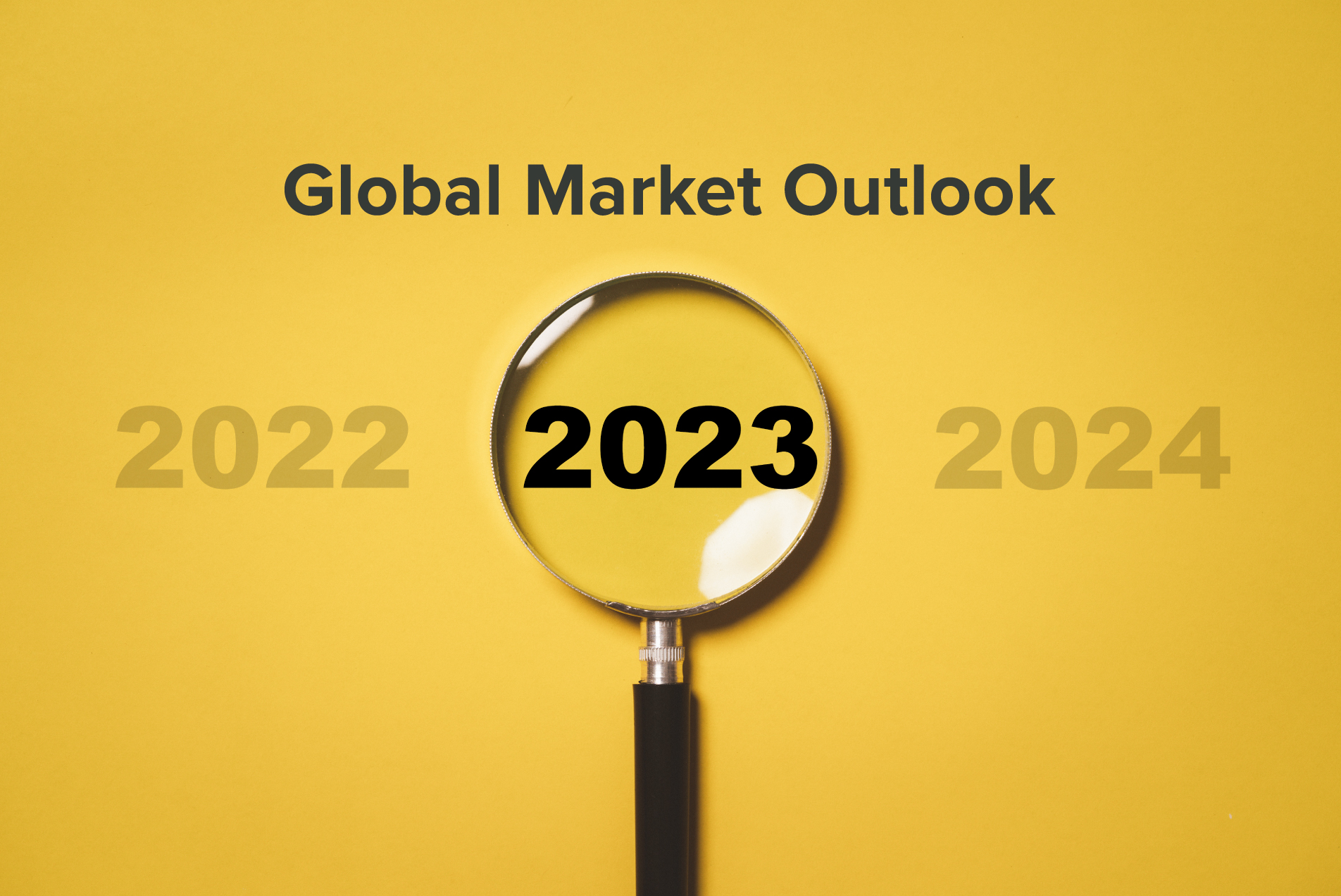
As 2023 approaches, the drag of tighter monetary policy is intensifying, yet central banks continue to advance. The new dot plots show the median year-end 2023 projection for the fed funds rate at 5.1% before being cut to 4.1% in 2024 — a higher level than previously indicated. However, investors don't seem to be buying the Fed's hawkish dot plot and are justified in their skepticism. At the end of last year, the Fed expected the upper limit of its fund's rate to be 1% at the end of 2022, but it ended up at 4.50%. The Fed predicts that the rate will be +5.00% a year from now. If it underestimated rates, then is it guilty of overestimating them now?

Global Growth Outlook
The substantial increase in borrowing costs in the United States is already depressing housing activity, and the strength in the U.S. dollar likely weighs on U.S. corporate profit margins. There are also growing signs that credit conditions are becoming tighter. Moreover, the problems in the emerging markets, the U.K. pension fund industry, and the U.S. cryptocurrency market are all interconnected and indicate that tightening financial conditions can create stress that could have broader macroeconomic implications.

Equity market outlook
In 2023 fundamentals are expected to deteriorate due to tightening financial conditions and more restrictive monetary policy. Historically, during the past eight cycles, the Fed hiked until the Fed Funds Rate was greater than the CPI, meaning there is more room for hikes.
The economy will likely enter a mild recession, with the labor market contracting and the unemployment rate rising.
Consumers who had saved money during lockdowns have largely used up their post-COVID excess cash, and are now facing negative wealth effects from declines in housing, bonds, equities, and other investments. This negative trend is likely to continue next year as consumers and businesses reduce discretionary spending and capital investments.
It is also possible that markets will shift from their current "bad news is good" mindset, where soft economic data is seen as signaling a shift in monetary policy by the Federal Reserve, to a "bad news is bad" scenario, where fears of a significant decline in profits and job losses lead to further market losses.
Overall, the outlook for equities is bleak in the first half of 2023, but there might be a rebound in the latter half of the year. Weaker demand, lower pricing power, margin compression, and tighter financial conditions will weigh on equities, but the transition from inflation to disinflation and a shift in central bank policy toward growth will support a recovery in risk assets in the latter half. In addition, low valuations may also attract investors and boost equity markets in the second half of 2023.
Higher yields - a gift to investors long starved of income in bonds.

Rising interest rates, widening spreads across sectors, and market volatility have stressed fixed-income total returns with an intensity that few expected, making it one of the most challenging years for fixed-income investors in recent history. While headwinds are expected to continue in the near term, long-term investors will have opportunities in 2023. Widespread sell-offs and volatility have created attractive buying opportunities, and higher yields have made bonds more appealing to investors who were starving for yield for years.
The forecast for inflation and interest rates will remain crucial in 2023 as investors attempt to predict where rates will peak and when the Fed might "pivot" toward monetary easing.
Unfortunately, Central bank policy rates cannot resolve production constraints; they can only affect demand in their economies. This leaves them with a difficult choice: either bring inflation back to their 2% targets by reducing demand to levels that the economy can comfortably handle or accept higher levels of inflation. For now, they are opting for the first option. There are signs of an economic slowdown, but as the negative effects become more pronounced, we expect central banks to stop raising rates even if inflation is not on track to reach 2%.
This marketing and educational content has been created by Century Financial Consultancy LLC (“Century”) for general information only. It does not constitute investment, legal, tax, or other professional advice, nor does it constitute a recommendation, offer, or solicitation to buy or sell any financial instrument. The material does not take into account your investment objectives, financial situation, or particular needs.
The opinions expressed by the hosts, speakers, or guests are their own and may change without notice. Information is based on sources we consider to be reliable; however, Century does not guarantee its accuracy, completeness, or timeliness and accepts no liability for any loss arising from reliance on this content.
Trading and investing involve significant risk, and losses may exceed initial deposits. Past performance is not indicative of future results. CFDs and other leveraged products are complex instruments that may not be suitable for all investors. Please ensure you understand how these products work, the associated risks, and seek independent professional advice if necessary.
Century is licensed and regulated by the UAE Capital Market Authority (CMA) under License Nos. 20200000028 and 301044.
Please refer to the full risk disclosure mentioned on our website.





Regulated by CMA
Century Financial Consultancy LLC


.png)
.png)
.png)
.png)


Reach us:
-
Dubai
6th Floor, Emaar Square Building 4,
Downtown, Dubai, P.O. Box 65777,
Dubai, United Arab Emirates -
Abu Dhabi
27th Floor, Office 2701,
Shining Towers, Abu Dhabi, UAE -
Sharjah
29th Floor, Office 2905,
The Business Tower, Sharjah, UAE - +971 (4) 356 2800
- info@century.ae

Disclaimer: Trading in financial products carries substantial risk. Leveraged over-the-counter (OTC) derivatives, such as Contracts for Difference (CFDs) and spot forex, may result in losses exceeding initial deposits and may not be suitable for all investors. These complex instruments do not confer ownership of the underlying assets. Investors should carefully consider their investment objectives and risk appetite, and seek independent professional advice if necessary.
Century Financial Consultancy LLC (CFC) is licensed and regulated by the Capital Market Authority (CMA) of the UAE under license numbers 20200000028 and 301044 to carry out the activities of Financial Products dealer, Trading Broker in international markets, Trading Broker of OTC derivatives and currencies in the spot market, Introduction, Financial Consultations, and Promotion. CFC is incorporated under UAE law, registered with the Dubai Economic Department (No. 768189), with its office at 601, Level 6, Building No. 4, Emaar Square, Downtown Dubai, UAE, PO Box 65777.
The content on this website is provided solely for informational and educational purposes and does not constitute an offer, recommendation, or solicitation to buy or sell any securities or financial products.
Products and services offered by CFC are not intended for use in any jurisdiction where such use or distribution would breach local laws or regulatory requirements.
⚠️ Alert: Fraudulent Activity Notice
Century Financial Consultancy LLC (“Century”) has become aware of fraudulent individuals and entities impersonating our firm through unofficial websites, social media channels, and messaging applications such as Telegram, WhatsApp, and Discord.
Please be advised:
- Century does not manage investments on behalf of clients.
- Century does not solicit funds or guarantee investment returns.
- Century does not accept or make payments in cash, cryptocurrency, or digital assets.
- We do not conduct business via social media or messaging platforms.
Our only official website is www.century.ae, and all communication is conducted exclusively through verified channels.
We strongly urge the public to remain vigilant, verify the authenticity of any communication claiming to be from Century, and report any suspicious activity. Century disclaims any responsibility for losses arising from dealings with unauthorised or fraudulent parties.
