 Loading ...

Thursday, March 05, 2026
How to Protect Your Money When the World Is at War
By Century Financial in 'Blog'
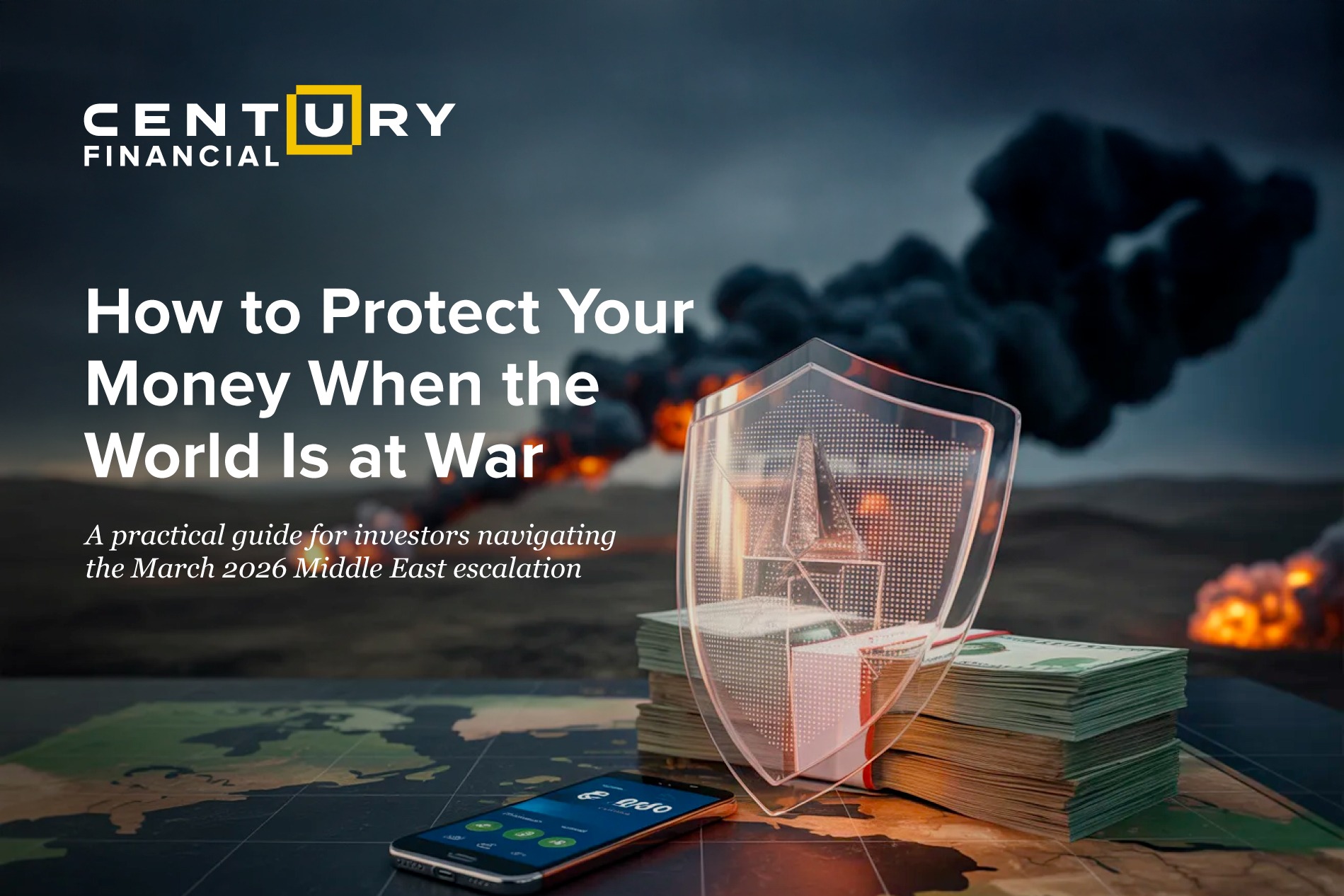
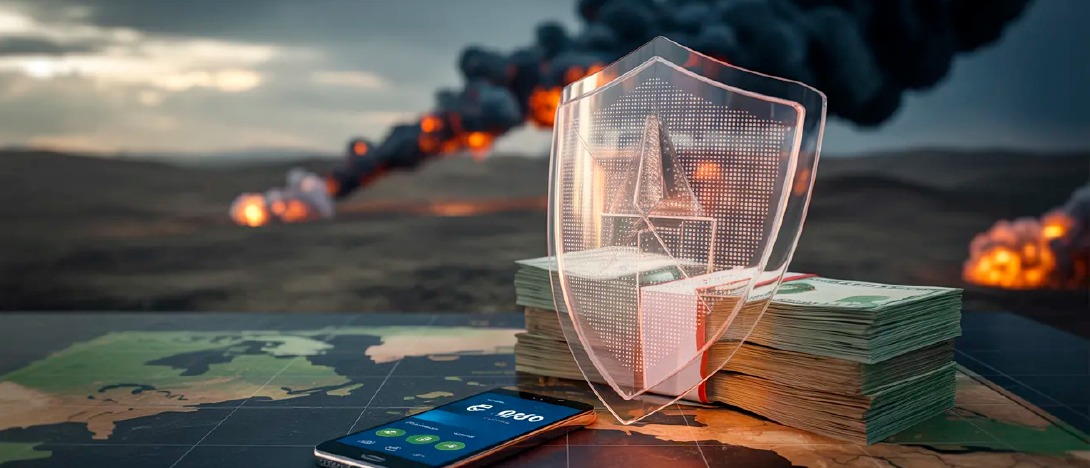
The Dubai Financial Market and the Abu Dhabi Securities Exchange closed operations for two consecutive days as an emergency suspension, the first time both exchanges have closed simultaneously since their founding. The joint US-Israeli strikes of late February and the retaliatory drone and missile attacks that followed have drawn the entire Gulf Cooperation Council into an escalation cycle not seen since 1979.
Markets are reacting accordingly. S&P 500 e-mini futures fell 1.6% in pre-market trading. The Nasdaq 100 slid 2.3%. Gold surged past $5,400 per ounce. Brent crude gapped higher toward $80–85. These moves are sharp, but if you know the history, they are also familiar. And history, more than anything else, is what should be guiding your decisions right now.
At Century Financial, we have been through enough crisis cycles to know what works and what doesn't. This guide is not about alarm but about giving you the specific, evidence-based steps you should be taking this week and the context to understand why they matter.
60-70%
11.4%
~5%
3 wks
What We Are Actually Dealing With
What is unfolding across the Gulf right now is what the World Economic Forum has termed a polycrisis, not a single shock, but a cluster of interconnected disruptions hitting at once—military escalation, energy supply uncertainty, cybersecurity alerts on financial infrastructure, and exchange closures. Each one alone would be manageable. Together, they create a compounding effect that demands a different level of preparedness.
The Strait of Hormuz handles approximately 20.5 million barrels of oil per day, around 20% of global consumption. Any sustained disruption there does not just move energy prices; it ripples through every supply chain on earth. J.P. Morgan estimates that if the disruption extends beyond three weeks, Brent crude could trade in the $100–$120 range. We are not there yet. But the market is already pricing in the risk.
For investors based in Dubai and across the UAE, the picture is more nuanced than the global headlines suggest. Life continues, the economy remains fundamentally sound, and the UAE's structural position provides genuine advantages that most investors around the world simply do not have. But those advantages need to be actively managed, not assumed.
Strategy 1: Build a Conflict-Ready Cash Reserve
Liquidity is the most immediate thing you can control. When markets face volatility, exchange closures, or physical disruptions (as we are seeing right now), accessible cash is what keeps you from being forced into decisions you would never make in calmer conditions. It buys you time, which during a crisis, is everything.
The standard advice of three to six months of living expenses is no longer sufficient for the current environment. We recommend extending your liquid buffer to twelve months. That reserve should be held across at least two currencies: the UAE Dirham and US Dollar as your primary holding, given the AED's peg to the USD at 3.6725, and either the Swiss Franc or Singapore Dollar as a secondary position. Both are seeing strong safe-haven inflows right now, and the Swiss Franc has appreciated against the dollar in 100% of the major conflict episodes we have analyzed, gaining an average of 0.85% per month during escalation periods.
One more thing that tends to get overlooked until it's too late: a portion of that reserve should be in physical cash. Digital payment systems are vulnerable during periods of elevated cyber activity and cyberattacks reliably spike during kinetic conflicts. Keep enough accessible in physical form to cover essential expenses for at least a week, stored securely at home.
Strategy 2: Gold Is Doing What It Was Built to Do
Gold crossed $5,400 per ounce on the 2nd of March. Analysts watching the technical levels suggest that a sustained breakout above $5,600 would mark the beginning of a new structural bull market for the metal. We will leave the price forecasting to others; what matters for this discussion is the reason gold moves the way it does and why that reason is particularly relevant right now.
Gold has no counterparty risk. It is not a claim on a government, a bank, or any financial system. When those systems come under stress—as they are right now—gold does not need anyone to honor an obligation. It simply holds its value. That is why central banks around the world purchased over 1,000 tons of gold annually in both 2024 and 2025. They understand what it represents in a world that is becoming less predictable.
A 10–15% allocation to gold and precious metals is the institutional benchmark during periods of elevated geopolitical risk. For Dubai-based investors, access is unusually straightforward: physical bullion through the Gold Souk, Gold ETFs on regional exchanges, or structured gold-backed investment products. What matters is that you have the position, not that you time it perfectly.
Strategy 3: Position for the Energy Reality
The Strait of Hormuz is not a background variable in this crisis; it is the central one. Twenty percent of global oil consumption moves through that waterway. When it faces disruption, the market does not wait and prices in the fear of disruption immediately. Brent crude has already gapped to $80–85. If the situation persists beyond three weeks, J.P. Morgan's analysis puts the ceiling at $100–$120.
However, this is not just a risk to hedge but also an opportunity to position for. A 5–10% tilt toward global energy producers and GCC energy-linked Sukuk instruments gives your portfolio direct exposure to what is currently the most significant price driver in global markets. At the same time, it creates a natural hedge: if energy prices rise further, these positions appreciate alongside them, offsetting the inflationary pressure felt elsewhere in the portfolio.
The same logic applies to defense and aerospace sectors that consistently see increased government contracts during military build-ups and consumer staples, where demand remains essentially unchanged regardless of what is happening geopolitically. People still buy food, medicine, and hygiene products.
Strategy 4: Diversify with Focus on UAE's Strengths
Concentration is always a risk, and when a single region is at the center of a geopolitical crisis, it becomes an acute one. If your savings, income streams, and real estate are all tied to the same geography, a shock here has nowhere to dilute itself. That is not an argument against investing in the UAE, but an argument for ensuring you also have meaningful exposure elsewhere.
Politically stable, out-of-region markets worth considering right now include Northern Europe, Singapore, and select North American positions. Within equities, the current environment rewards a deliberate shift away from growth and tech-heavy indices. The Nasdaq 100 fell 2.3% on Monday morning, partly because tech valuations are particularly sensitive to the rate hikes that wartime inflation tends to trigger. The current shock could favor equal-weighted and value-oriented strategies given their lower concentration in rate-sensitive mega-cap tech.
That said, it is worth being clear about what the UAE offers that most investors globally do not have access to. The dirham's peg to the dollar at 3.6725 eliminates the currency collapse risk that has decimated investors in other conflict-adjacent economies throughout history. ADIA and Mubadala—the UAE's flagship sovereign wealth funds managing assets in the trillions—function as a national shock absorber. The CBUAE projects UAE GDP growth at 5% in 2026, with the non-oil sector expanding at 4.8%. The UAE banking sector carries a Capital Adequacy Ratio of 17.3% and a net non-performing ratio at a record low of 1.7%.
These are not marketing statistics. They are the reason that, even on a day when the DFM and ADX are closed, Dubai-based investors are starting from a position of genuine structural strength.
| Asset Class | Weight | Why Now |
|---|---|---|
| Gold & Precious Metals | 10-15% | At $5,400+/oz, gold is at historic highs and performing exactly as expected. Core crisis hedge |
| Cash (AED/USD + CHF/SGD) | 10-15% | UAE inflation at 1.8% vs global 3.7%. CHF appreciates in 100% of analysed conflict periods |
| Global Equities (Equal-Wt.) | 25-35% | Favour value and energy over Nasdaq tech. Wartime large-cap average: 11.4% annually (approx.) |
| GCC Energy Sukuk / Gov. Bonds | 15-20% | Direct exposure to the Hormuz risk premium. Aligns with AED and regional currency exposure |
| Real Assets / Commodities | 10-15% | Brent at $80–85 and rising. Hard assets hold value through the inflation conflict reliably produces |
Strategy 5: Lock Down Your Digital and Physical Footprint
Cyber-attacks on financial institutions and critical infrastructure are a standard component of modern military escalation, and the 2026 landscape is no different. Every time a kinetic conflict escalates, financial system cyberattacks spike in frequency and sophistication alongside it.
The practical steps here are unglamorous but non-negotiable.
These are not crisis-specific measures. They are the basics that most people defer until a crisis makes them urgent.
The Most Important Rule: Stay Invested
Everything above is about positioning. Now we get into mindset, as it may matter more than any individual allocation decision you make.
Everything above is about positioning. Now we get into mindset, as it may matter more than any individual allocation decision you make.
The data we cited earlier bears repeating: the S&P 500 has been higher 12 months after a major geopolitical shock 60-70% of the time. The average initial decline is around 5%. Markets typically bottom within three weeks. What that means in practice is that if you are selling into this, you are likely selling near the bottom and will miss the recovery. Rebalance while staying defensive, but stay invested.
Your March 2026 Action Checklist
Do This Week
Extend your cash buffer to 12 months of living expenses across AED/USD and CHF/SGD
Keep a small amount of physical cash accessible at home; assume digital disruption is possible
Ensure your gold allocation sits between 10–15% of your investable portfolio
Rebalance away from Nasdaq-heavy or growth-concentrated positions toward equal-weight and energy
Split your deposits across at least two banks, both with Tier 1 capital ratios above 15%
Enable multi-factor authentication on every financial account and brokerage platform
Review political risk clauses in insurance on any high-value assets
Locate and secure physical copies of title deeds, wills, insurance policies, brokerage statements
Consider a 5–10% tilt toward GCC energy Sukuk or global energy producers
Review with your portfolio, use this week's market levels as your baseline
A Final Word
Nobody knows how this resolves or how long it lasts. That uncertainty is real and it is okay to find it uncomfortable. What is not okay is letting that discomfort drive your financial decisions. The people who come through crisis periods in the strongest financial position are almost never the ones who saw it coming or timed it perfectly. They are the ones who had a plan, kept their heads when the headlines were worst, and used the volatility to strengthen their portfolios rather than abandon them.
The UAE gives you a better starting position than most investors in the world have right now. The data, the history, and the structural fundamentals are all on your side. With secure and smooth platforms provided by Century Financial, including Century Trader, TWS, CQG, and MT5, you can manage your portfolio with confidence no matter how unpredictable the world might get.
FAQs
Q1. Should I sell everything and move to cash right now?
A: History consistently shows that panic-selling during geopolitical crises locks in losses and causes investors to miss the recovery. It is advised to stay invested and rebalance toward more defensive positions.
Q2: How much of my portfolio should be in gold during a crisis?
A: A 10–15% allocation to gold and precious metals is the widely accepted institutional benchmark during periods of elevated geopolitical risk. The key is to hold the asset, not timing it perfectly.
Q3: Is my money safe in UAE banks right now?
A: The UAE banking sector remains structurally strong, with high capital adequacy ratios and low net non-performing loan rates.
Q4. Does the AED's peg to the US dollar protect me from currency risk?
A: Yes, to a meaningful degree. The dirham's peg eliminates the risk of currency collapse that has hurt investors in other conflict-adjacent economies, making AED-denominated cash a relatively stable anchor for your liquidity.
Q5. I've never invested in energy or commodities before. Is now a good time to start?
A: A modest, measured tilt toward energy-linked assets can serve as a natural hedge when oil prices are elevated. You don't need to overhaul your portfolio. A small, deliberate allocation can make a meaningful difference without taking on excessive risk.
This marketing and educational content has been created by Century Financial Consultancy LLC (“Century”) for general information only. It does not constitute investment, legal, tax, or other professional advice, nor does it constitute a recommendation, offer, or solicitation to buy or sell any financial instrument. The material does not take into account your investment objectives, financial situation, or particular needs.
The opinions expressed by the hosts, speakers, or guests are their own and may change without notice. Information is based on sources we consider to be reliable; however, Century does not guarantee its accuracy, completeness, or timeliness and accepts no liability for any loss arising from reliance on this content.
Trading and investing involve significant risk, and losses may exceed initial deposits. Past performance is not indicative of future results. CFDs and other leveraged products are complex instruments that may not be suitable for all investors. Please ensure you understand how these products work, the associated risks, and seek independent professional advice if necessary.
Century is licensed and regulated by the UAE Capital Market Authority (CMA) under License Nos. 20200000028 and 301044.
Please refer to the full risk disclosure mentioned on our website.

Regulated by CMA
Century Financial Consultancy LLC


.png)
.png)
.png)
.png)

Reach us:
-
Dubai
6th Floor, Emaar Square Building 4,
Downtown, Dubai, P.O. Box 65777,
Dubai, United Arab Emirates -
Abu Dhabi
27th Floor, Office 2701,
Shining Towers, Abu Dhabi, UAE -
Sharjah
29th Floor, Office 2905,
The Business Tower, Sharjah, UAE - +971 (4) 356 2800
- info@century.ae
Disclaimer: Trading in financial products carries substantial risk. Leveraged over-the-counter (OTC) derivatives, such as Contracts for Difference (CFDs) and spot forex, may result in losses exceeding initial deposits and may not be suitable for all investors. These complex instruments do not confer ownership of the underlying assets. Investors should carefully consider their investment objectives and risk appetite, and seek independent professional advice if necessary.
Century Financial Consultancy LLC (CFC) is licensed and regulated by the Capital Market Authority (CMA) of the UAE under license numbers 20200000028 and 301044 to carry out the activities of Financial Products dealer, Trading Broker in international markets, Trading Broker of OTC derivatives and currencies in the spot market, Introduction, Financial Consultations, and Promotion. CFC is incorporated under UAE law, registered with the Dubai Economic Department (No. 768189), with its office at 601, Level 6, Building No. 4, Emaar Square, Downtown Dubai, UAE, PO Box 65777.
The content on this website is provided solely for informational and educational purposes and does not constitute an offer, recommendation, or solicitation to buy or sell any securities or financial products.
Products and services offered by CFC are not intended for use in any jurisdiction where such use or distribution would breach local laws or regulatory requirements.
⚠️ Alert: Fraudulent Activity Notice
Century Financial Consultancy LLC (“Century”) has become aware of fraudulent individuals and entities impersonating our firm through unofficial websites, social media channels, and messaging applications such as Telegram, WhatsApp, and Discord.
Please be advised:
- Century does not manage investments on behalf of clients.
- Century does not solicit funds or guarantee investment returns.
- Century does not accept or make payments in cash, cryptocurrency, or digital assets.
- We do not conduct business via social media or messaging platforms.
Our only official website is www.century.ae, and all communication is conducted exclusively through verified channels.
We strongly urge the public to remain vigilant, verify the authenticity of any communication claiming to be from Century, and report any suspicious activity. Century disclaims any responsibility for losses arising from dealings with unauthorised or fraudulent parties.
