 Loading ...


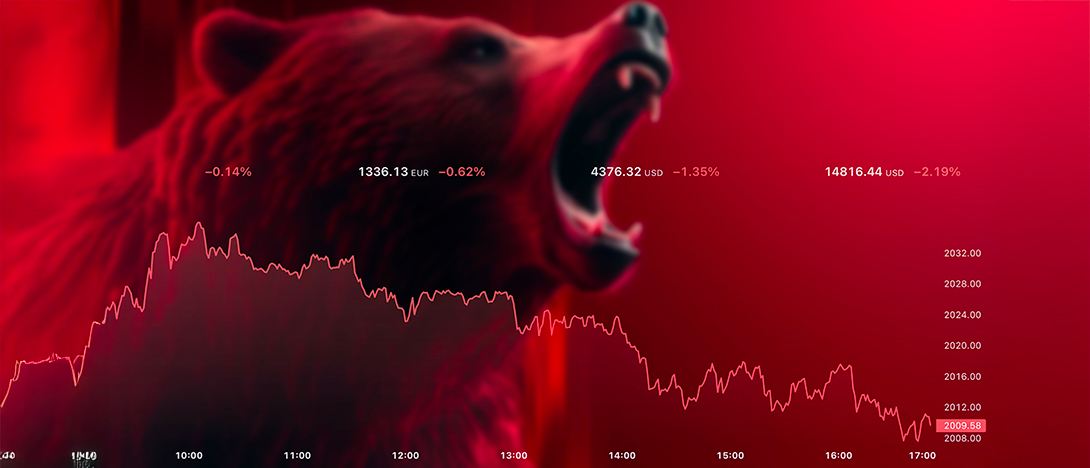
When people think of financial markets, they often picture growth and profits. These markets have a history of outpacing inflation and offering better returns than many traditional investments. However, they are also known for their risks, which are a constant part of investing. Beyond the daily ups and downs, sharp declines known as stock market crashes are events that every investor watches out for.
A stock market crash is one of the most disruptive events in finance. It occurs when stock prices drop sharply and suddenly across all exchanges, often leading to panic and a significant loss of investor confidence. These crashes can cause major economic problems and wipe out years of gains in just a few days.
Learning about past stock crashes, what causes them, and how markets recover can help traders and investors handle market swings with more confidence and less fear.
What Is a Stock Market Crash?
A stock crash occurs when stock prices decline rapidly over a short period, typically due to panic selling and systemic risk. Unlike routine market fluctuations, a crash is sudden, intense, and impacts nearly all sectors simultaneously.
A collapse of the stock market is usually characterized by:
Sharp declines across major indices
Extremely high trading volumes
Forced selling and margin calls
Loss of liquidity and confidence
Stock Market Crash vs Normal Market Decline
| Aspect | Normal Decline | Stock Market Crash |
|---|---|---|
| Speed | Gradual | Sudden |
| Price fall | Limited | Severe |
| Investor behavior | Cautious | Panic-driven |
| Economic impact | Minimal | Often widespread |
It's important to remember that market crashes are often driven by emotions, not by companies' actual value. This is why having a solid risk management plan matters.
History of Major Stock Market Crashes
Looking back, we see that stock market crashes often follow similar patterns, even if the reasons change over time. Times of excessive optimism, high borrowing, and overvalued stocks are usually followed by sharp declines or even full market crashes.
Each stock market crash may have different causes, like changes in the economy, politics, or technology. Still, common threads include investor panic, quick selling, and not enough cash in the system. By looking at past crashes, you can see how markets behave under pressure, how long it might take to recover, and why sticking to a plan is essential during wild swings.
Timeline of Major Global Stock Market Crashes
| Year | Event | Key Trigger | Impact |
|---|---|---|---|
| 1929 | Great Depression | Excessive speculation and leverage | Prolonged global economic collapse |
| 1987 | Black Monday | Program trading and panic | Rapid but short-lived crash |
| 2000 | Dot-Com Bust | Overvalued tech stocks | Multi-year correction |
| 2008 | Financial Crisis | Banking and housing collapse | Global recession |
| 2020 | COVID-19 Crash | Economic shutdown | Fastest recovery on record |
A silver lining to these financial catastrophes is that positive changes and reinforcements often follow. Each stock crisis forced changes in regulation, investor behavior, and risk management practices. While losses were severe, markets eventually recovered, reinforcing the cyclical nature of investing.
Why Do Stock Market Crashes Happen?
A stock market crash usually doesn't happen because of just one event. Most crashes are caused by a mix of economic, financial, and emotional pressures that build up over time.
These problems often go unnoticed when prices are rising, and people feel confident. But as issues such as excessive borrowing, high prices, insufficient cash, and slower growth accumulate, the market becomes weaker. When something bad finally happens, it can set off panic selling and turn a normal drop into a full-blown crash, affecting not just stocks but also currencies, commodities, and the wider financial system.
Key Causes of a Stock Market Crash
Economic slowdowns reduce corporate earnings
Rising interest rates tighten liquidity
Excessive speculation and inflated valuations
High leverage and margin trading
Global shocks such as wars, pandemics, or financial system failures
Why Is the Stock Market Down Today?
Investors frequently ask why is stock market down today, especially during volatile periods. Daily declines are often triggered by:
Inflation and interest rate expectations
Central bank announcements
Weak economic or earnings data
Global risk-off sentiment
Not every downturn signals a complete share market collapse, but if problems keep building and people lose confidence, a bigger crash can happen.
Warning Signs Before a Share Market Collapse
Although crashes cannot be predicted with certainty, market history shows that warning signs often appear well before a share market collapse becomes visible to the broader public. These signals usually develop gradually as economic imbalances, excessive risk-taking, and investor complacency build beneath the surface.
During such phases, asset prices may continue rising, masking underlying weaknesses in earnings growth, liquidity, or market breadth. Experienced investors closely monitor these early indicators to assess whether optimism is becoming unsustainable.
Recognizing these warning signs in advance allows traders and investors to reduce exposure, adjust strategies, and prepare for increased volatility rather than panic when a stock market crash is already underway.
Common Pre-Crash Indicators
Rapid price increases disconnected from fundamentals
Excessive optimism and speculative trading behavior
High margin debt and leverage levels
Narrow market leadership
Rising volatility with declining market breadth
How Traders and Investors Can Navigate a Stock Market Crash
A crash market stock environment is challenging, but it also creates opportunities for disciplined participants who understand market dynamics.
During a stock market crash, fear and panic often drive prices far below their intrinsic value, leading to mispricing across sectors. Investors who focus on risk management, diversification, and long-term fundamentals can use such periods to reassess portfolios and identify high-quality assets at discounted levels.
For traders, increased volatility during a stock crisis opens opportunities across indices, commodities, currencies, and derivatives, provided positions are managed carefully. Rather than reacting emotionally to sharp declines, successful market participants rely on structured strategies, liquidity planning, and regulated trading platforms to navigate uncertainty effectively.
Risk Management During a Stock Crisis
Effective approaches include:
Diversifying exposure across asset classes
Managing position size and leverage
Using stop-loss strategies
Maintaining liquidity during uncertainty
Trading Opportunities Beyond Equities
During crashes, many traders shift focus from pure equity exposure to:
Indices and CFD Trading for short-term strategies
Defensive assets, such as gold trading and treasuries
Volatile instruments like oil trading during global disruptions
Currency movements through Forex trading
Access to multiple asset classes allows traders to adapt rather than exit markets completely.
Conclusion
Stock market crashes are a regular part of investing. Even though they bring fear, big price swings, and short-term losses, history shows that markets recover and often come back stronger. Investors who know what causes crashes, can spot warning signs, and learn from the past are better able to protect their money and make wise choices during uncertain times.
Instead of pulling out of the market during a crash, traders can adjust by using different strategies and investing in a range of assets. With modern tools, secure systems, and access to global markets, Century Financial helps traders handle market ups and downs with confidence. Whether you trade stocks, Forex, gold, oil, or CFDs, Century Financial offers the technology, education, and access you need to turn uncertainty into an informed opportunity.
FAQs
Q1. What is a stock market crash?
A: A stock market crash is a rapid and severe decline in stock prices across markets, driven by panic selling and loss of investor confidence.
Q2: What causes an equity market crash?
A: Equity market crashes are caused by economic downturns, excessive leverage, rising interest rates, speculative bubbles, and global shocks.
Q3: How long does a stock market crash last?
A: Some crashes recover within months, while deeper stock crises may take years, depending on economic recovery and policy support.
Q4. Is a stock market crash a good time to trade?
A: For prepared traders using risk management and diversified instruments, increased volatility during crashes can present trading opportunities.
Q5. Why is the stock market down today?
A: Markets may fall due to economic data, interest rate expectations, earnings announcements, or global uncertainty affecting investor sentiment.
Related Reads
This marketing and educational content has been created by Century Financial Consultancy LLC (“Century”) for general information only. It does not constitute investment, legal, tax, or other professional advice, nor does it constitute a recommendation, offer, or solicitation to buy or sell any financial instrument. The material does not take into account your investment objectives, financial situation, or particular needs.
The opinions expressed by the hosts, speakers, or guests are their own and may change without notice. Information is based on sources we consider to be reliable; however, Century does not guarantee its accuracy, completeness, or timeliness and accepts no liability for any loss arising from reliance on this content.
Trading and investing involve significant risk, and losses may exceed initial deposits. Past performance is not indicative of future results. CFDs and other leveraged products are complex instruments that may not be suitable for all investors. Please ensure you understand how these products work, the associated risks, and seek independent professional advice if necessary.
Century is licensed and regulated by the UAE Capital Market Authority (CMA) under License Nos. 20200000028 and 301044.
Please refer to the full risk disclosure mentioned on our website.





Regulated by CMA
Century Financial Consultancy LLC


.png)
.png)
.png)
.png)


Reach us:
-
Dubai
6th Floor, Emaar Square Building 4,
Downtown, Dubai, P.O. Box 65777,
Dubai, United Arab Emirates -
Abu Dhabi
27th Floor, Office 2701,
Shining Towers, Abu Dhabi, UAE -
Sharjah
29th Floor, Office 2905,
The Business Tower, Sharjah, UAE - +971 (4) 356 2800
- info@century.ae

Disclaimer: Trading in financial products carries substantial risk. Leveraged over-the-counter (OTC) derivatives, such as Contracts for Difference (CFDs) and spot forex, may result in losses exceeding initial deposits and may not be suitable for all investors. These complex instruments do not confer ownership of the underlying assets. Investors should carefully consider their investment objectives and risk appetite, and seek independent professional advice if necessary.
Century Financial Consultancy LLC (CFC) is licensed and regulated by the Capital Market Authority (CMA) of the UAE under license numbers 20200000028 and 301044 to carry out the activities of Financial Products dealer, Trading Broker in international markets, Trading Broker of OTC derivatives and currencies in the spot market, Introduction, Financial Consultations, and Promotion. CFC is incorporated under UAE law, registered with the Dubai Economic Department (No. 768189), with its office at 601, Level 6, Building No. 4, Emaar Square, Downtown Dubai, UAE, PO Box 65777.
The content on this website is provided solely for informational and educational purposes and does not constitute an offer, recommendation, or solicitation to buy or sell any securities or financial products.
Products and services offered by CFC are not intended for use in any jurisdiction where such use or distribution would breach local laws or regulatory requirements.
⚠️ Alert: Fraudulent Activity Notice
Century Financial Consultancy LLC (“Century”) has become aware of fraudulent individuals and entities impersonating our firm through unofficial websites, social media channels, and messaging applications such as Telegram, WhatsApp, and Discord.
Please be advised:
- Century does not manage investments on behalf of clients.
- Century does not solicit funds or guarantee investment returns.
- Century does not accept or make payments in cash, cryptocurrency, or digital assets.
- We do not conduct business via social media or messaging platforms.
Our only official website is www.century.ae, and all communication is conducted exclusively through verified channels.
We strongly urge the public to remain vigilant, verify the authenticity of any communication claiming to be from Century, and report any suspicious activity. Century disclaims any responsibility for losses arising from dealings with unauthorised or fraudulent parties.
