 Loading ...

Thursday, July 02, 2026
Saudi fintech has crossed a threshold—Now Silicon Valley wants in
By Vijay Valecha in 'Century in News'
Vijay Valecha, Thur, July 2, 2026 Fast Company Middle East
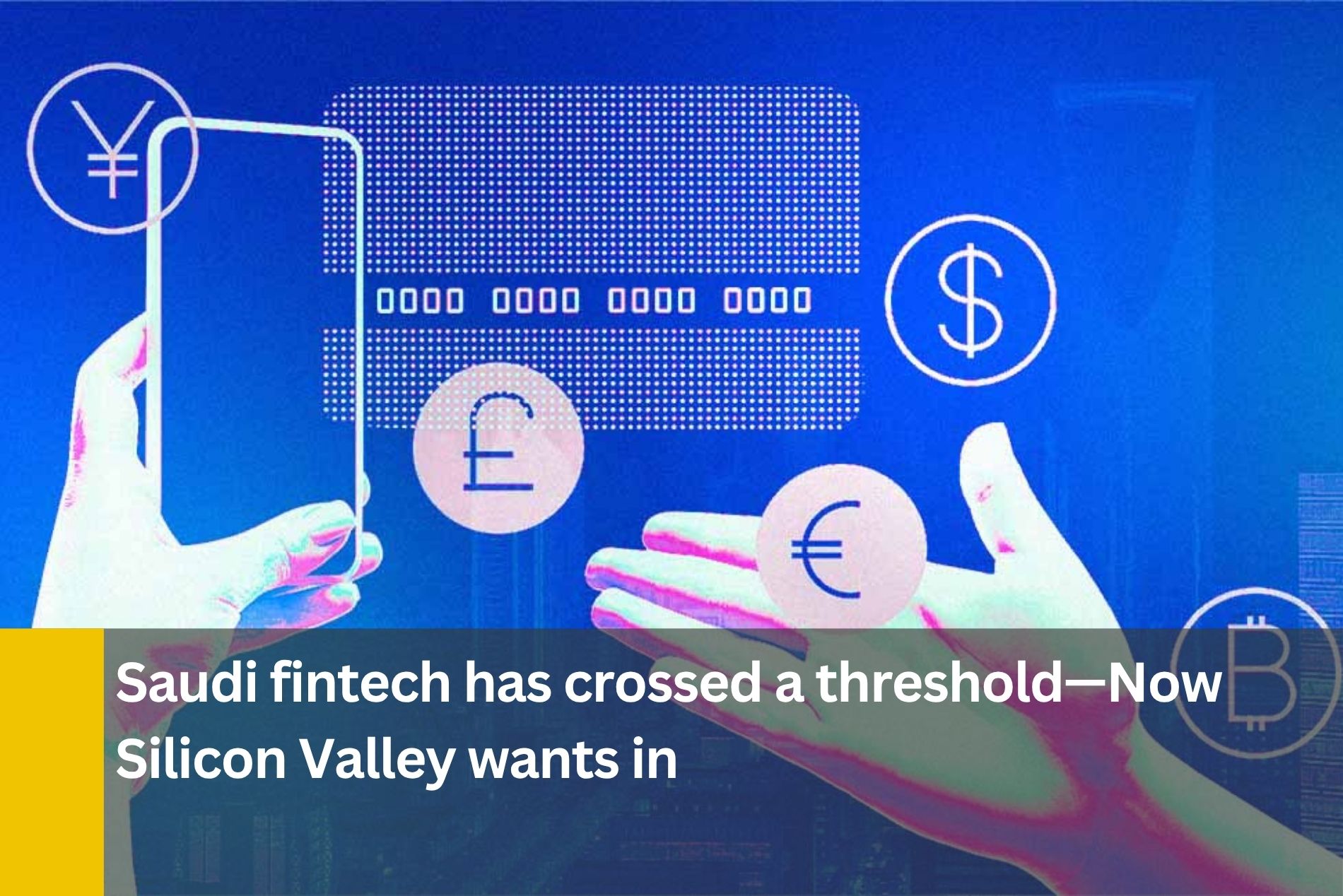
When Andreessen Horowitz announced a $25 million investment in Saudi fintech startup Stitch, it marked more than the firm’s first deal in the GCC. It signaled something larger: Saudi fintech has reached a stage where some of Silicon Valley’s most selective investors believe the market is no longer an emerging opportunity, but a proven one.
The investment follows a growing list of Silicon Valley-backed deals in the kingdom. General Catalyst, Bain Capital Ventures, and Duquesne Capital backed Lean Technologies in 2024, while Sequoia Capital and PayPal Ventures invested in Tabby in 2023.
Together, these deals point to a broader shift: global venture capital is increasingly viewing Saudi Arabia not as a frontier market, but as one of fintech’s most compelling growth stories.
SUPPORTING ECONOMIC DIVERSIFICATIONIn Saudi Arabia, fintech firms have seen strong consumer adoption — digital payments now account for nearly 79% of retail transactions.
For investors, Vijay Valecha, CIO at Century Financial, says companies such as Tabby, Lean Technologies, and Stitch are not only benefiting from this digital transformation but are also building the financial infrastructure that will support the kingdom’s broader economic diversification under Vision 2030. “This creates an opportunity to invest early in businesses that can scale alongside one of the fastest-growing fintech markets in the region.”
Moving forward with diversifying its economy, the country now wants foreign capital and direct investment to flow into it rather than out of it. And fintech is the “natural wedge” here, says Nour Prince.
“It’s a sector global funds already understand from other markets, so the learning curve is relatively lower, the opportunity is large, and the pipeline exists. Saudi Arabia is targeting $100 billion in annual FDI by 2030, and financial services is one of the sectors it’s explicitly courting.”
Sweid adds that fintech is the clearest proof that diversification is pulling in capital, not just recycling it at home. “The investor base is transforming. International participants in Saudi VC jumped from under a fifth in 2020 to over half by 2024, concentrated in fintech and e-commerce.”
In Saudi Arabia, the fintech industry has become a key driver of future economic growth, rather than just an FDI line item, says Valecha. This sector has seen growing confidence amid major investments. For the last quarter of 2025, net FDI rose 90% YoY, while outflows came down 84%. With around 261 fintech firms and 79% cashless payments, the sector helps retain capital.”
“Fintech alone will not deliver the kingdom’s target of $100 billion in annual FDI by 2030, but its influence outweighs its share of the capital,” adds Valecha.
“Silver, meanwhile, looks bearish, falling below the key support zone near $61-$62, with RSI falling deeper into the oversold territory as well. The next potential support might come near the $54 level, based on the highs achieved in late 2025,” he said.
BUILDING THE RAILS TO TRADE GLOBALLYExperts point out that the most important work of Saudi fintech isn’t consumer-facing, but building the rails for local and regional businesses to trade globally.
The consumer layer proved its worth in the market at first. But the work that travels globally is infrastructure: Lean builds the open-banking rails and has processed over $2 billion in transactions, and Stitch is building unified core systems for banks and fintechs…The real strength is a greenfield market with regulatory weight behind it,” says Nour Prince.
According to Valecha, Saudi fintech’s defining strength is infrastructure, not apps. “The real opportunity is in the rails, enabling local and regional businesses to trade globally, open banking APIs, real-time settlement, and cross-border payments.”
The Saudi fintech market is valued at $2.85 billion in 2025. It is forecast to reach $5.28 billion by 2030 at a 13% CAGR, with the real-time payments system processing 593 million transactions and growing at 50% annually since 2020. “That B2B plumbing, not the consumer layer, is what makes Saudi fintech a credible force in global trade corridors,” Valecha adds.
Source__890978133.jpg)
__2144975706.jpg)

Regulated by CMA
Century Financial Consultancy LLC








Reach us:
-
Dubai
6th Floor, Emaar Square Building 4,
Downtown, Dubai, P.O. Box 65777,
Dubai, United Arab Emirates -
Abu Dhabi
27th Floor, Office 2701,
Shining Towers, Abu Dhabi, UAE -
Sharjah
29th Floor, Office 2905,
The Business Tower, Sharjah, UAE - +971 (4) 356 2800
- info@century.ae

Disclaimer: Trading in financial products carries substantial risk. Leveraged over-the-counter (OTC) derivatives, such as Contracts for Difference (CFDs) and spot forex, may result in losses exceeding initial deposits and may not be suitable for all investors. These complex instruments do not confer ownership of the underlying assets. Investors should carefully consider their investment objectives and risk appetite, and seek independent professional advice if necessary.
Century Financial Consultancy LLC (CFC) is licensed and regulated by the Capital Market Authority (CMA) of the UAE under license numbers 20200000028 and 301044 to carry out the activities of Financial Products dealer, Trading Broker in international markets, Trading Broker of OTC derivatives and currencies in the spot market, Introduction, Financial Consultations, and Promotion. CFC is incorporated under UAE law, registered with the Dubai Economic Department (No. 768189), with its office at 601, Level 6, Building No. 4, Emaar Square, Downtown Dubai, UAE, PO Box 65777.
The content on this website is provided solely for informational and educational purposes and does not constitute an offer, recommendation, or solicitation to buy or sell any securities or financial products.
Products and services offered by CFC are not intended for use in any jurisdiction where such use or distribution would breach local laws or regulatory requirements.
⚠️ Alert: Fraudulent Activity Notice
Century Financial Consultancy LLC (“Century”) has become aware of fraudulent individuals and entities impersonating our firm through unofficial websites, social media channels, and messaging applications such as Telegram, WhatsApp, and Discord.
Please be advised:
- Century does not manage investments on behalf of clients.
- Century does not solicit funds or guarantee investment returns.
- Century does not accept or make payments in cash, cryptocurrency, or digital assets.
- We do not conduct business via social media or messaging platforms.
Our only official website is www.century.ae, and all communication is conducted exclusively through verified channels.
We strongly urge the public to remain vigilant, verify the authenticity of any communication claiming to be from Century, and report any suspicious activity. Century disclaims any responsibility for losses arising from dealings with unauthorised or fraudulent parties.
