 Loading ...

Monday, May 18, 2026
UAE Markets Under Pressure: What the Selloff Is Missing
By Vijay Valecha in 'Century in News'
__882533497.jpg)
Vijay Valecha, May 18, Business Today ME
The Middle East conflict has altered the investment landscape in 2026 in ways that are hard to ignore. Uncertainty remains elevated, diplomacy hasn’t gained meaningful traction, and the risk of further escalation cannot be ruled out. With the Strait of Hormuz closure keeping oil prices above $100 per barrel and inflation concerns firmly back on the table, the odds of a rate cut have fallen sharply. Against that backdrop, investors aren’t sitting still — they’re reshaping their portfolios, trying to protect against the volatility while also staying alert to the opportunities that corrections like this one tend to create.
Global equities have sold off since the war began, and UAE stocks have followed, though not for reasons that hold up under scrutiny. The ADX General Index has dropped by more than 10% and the DFM General Index by more than 15% since the conflict escalated — moves that reflect the classic investor instinct to sell first and ask questions later. The underlying fundamentals, however, tell a different story. They’re more resilient than the price action suggests, and they’re likely to reassert themselves once the dust begins to settle.
For GCC investors, the current environment is presenting two distinct opportunities. The first is high-dividend UAE stocks that are now offering yields previously unavailable six months ago. The second is fundamentally strong, large-cap names trading at meaningful discounts to what any fair assessment of their businesses would justify. Neither opportunity comes without near-term uncertainty — that’s the nature of the moment — but history is consistent on this point: the investors who build exposure during periods of maximum fear rarely regret it when conditions normalise.
The real estate names make the opportunity quite clear. Emaar offers a strong 8.7% dividend yield and nearly 60% upside to analyst targets. Aldar, backed by its leading position in Abu Dhabi’s off-plan market, offers roughly 50% potential upside. RAK Properties stands out even more, with nearly 145% upside, supported by the upcoming Wynn Resort — a long-term catalyst that remains intact despite the current backdrop.
Beyond real estate, the case for selective exposure in banking, telecoms, and energy is equally compelling. UAE bank stocks have suffered double-digit losses since the war began on February 28 — a selloff that isn’t entirely irrational given the hits to aviation, logistics, tourism, and trade. But the financial system has held. The UAE Central Bank stepped in with its largest liquidity support package since the pandemic, reinforcing confidence in the system. It highlighted that banks are sitting on nearly AED 920 billion in liquidity, including over AED 400 billion in reserves — a substantial cushion that significantly lowers the risk of any credit stress. That strength is showing up in bond markets too: financial sector bonds have seen price declines of only 0–2% through the conflict, compared to 3–5% for real estate bonds. In telecoms, e& is structurally better positioned than most to weather the disruption, with 228 million of its 244 million subscribers outside the UAE, a revenue base that is broadly insulated from single-country risk. The uncertainty hasn’t disappeared. But for investors willing to look six to twelve months ahead, these dislocations have a way of looking obvious in hindsight.
Against this backdrop, investor positioning is beginning to diverge more clearly. While some remain cautious and prioritise capital preservation, others are selectively increasing exposure to take advantage of current dislocations.
How Investors Are Positioning in the Current MarketConservative InvestorsThese types of investors are more risk-averse, prefer to have high cash positions and would wait for market stabilisation before entering into new positions. They also prefer safer equity and fixed income allocation, like high dividend yield UAE stocks and Sovereign Bonds. Gold can also be a great opportunity for such investors.
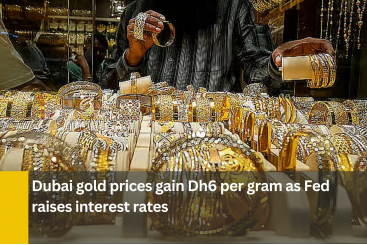
GoldSo far, gold has fallen around 17% from its pre-conflict levels. This might seem surprising at first glance given that geopolitical tensions typically increase demand for safe-haven instruments. However, gold’s behaviour is in line with how the precious metal has performed historically during periods of war, market distress, and uncertainty. That is because investors typically tend to liquidate gold positions to cover losses in other riskier asset classes amid the broader risk-off sentiment in the markets. However, historical analysis reveals that gold tends to rebound strongly once the situation stabilises making it an opportune time to invest in gold right now.
UAE Sovereign BondsSovereign UAE bonds offer conservative investors a combination of high credit quality and strong yields, backed by a fiscally surplus sovereign with around $3 trillion in sovereign wealth assets. Further, the dirham’s USD peg since 1997 eliminates currency risk entirely.
Aggressive InvestorsThese investors take on more risk and are expected to capitalise on UAE stocks that have declined the most recently. They could also benefit from investing in high-yield corporate bonds, and high beta metals like Silver, Platinum, and Palladium which are a hedge against rising inflation risk.
High-Yield Corporate BondsUAE real estate bonds are pricing at stressed levels driven by regional geopolitical uncertainty, not fundamental credit deterioration. As such, an interesting opportunity has opened up for investors who are willing to tolerate short-term volatility, with yields of 9%–16% on USD-denominated real estate bonds backed by one of the world’s most active property markets. The liquidity at most issuers remains adequate, and annual bond repayment obligations look good until 2029. Average yields on UAE investment-grade real estate seniors are already clearly above US and European peers.
High Beta MetalsCommodities have emerged as a very popular asset class in recent years. Investors are increasingly exploring the possibility of holding commodities as a good diversification bet. Moreover, structural demand and supply factors have also presented compelling opportunities in this asset class. For instance, silver’s recent sharp correction appears more like a short-term macro-driven reset than a breakdown in fundamentals, creating a compelling setup for a rebound. The underlying demand story remains strong, supported by structural growth across solar, EVs, AI infrastructure, and power grids. At the same time, supply remains constrained, with the market heading into a sixth consecutive annual deficit, while China’s aggressive imports and export controls are tightening global availability further. The nomination of Kevin Warsh as the new Fed chair has also added a tailwind for commodities. Historically, he has been viewed as data-dependent and slightly hawkish, but his recent stance appears more dovish and aligned with Trump’s preference for lower interest rates benefitting metals.
The current environment is defined by uncertainty, but also by a divergence between market sentiment and underlying fundamentals. While price action reflects caution, the resilience across key sectors suggests a more stable picture beneath the surface. The path forward is unlikely to be linear, but the distinction between short-term volatility and longer-term positioning is becoming increasingly important.
Source__1543832205.jpg)
__516790862.jpg)
__645274992.jpg)


Regulated by CMA
Century Financial Consultancy LLC


.png)


.png)
.png)

Reach us:
-
Dubai
6th Floor, Emaar Square Building 4,
Downtown, Dubai, P.O. Box 65777,
Dubai, United Arab Emirates -
Abu Dhabi
27th Floor, Office 2701,
Shining Towers, Abu Dhabi, UAE -
Sharjah
29th Floor, Office 2905,
The Business Tower, Sharjah, UAE - +971 (4) 356 2800
- info@century.ae

Disclaimer: Trading in financial products carries substantial risk. Leveraged over-the-counter (OTC) derivatives, such as Contracts for Difference (CFDs) and spot forex, may result in losses exceeding initial deposits and may not be suitable for all investors. These complex instruments do not confer ownership of the underlying assets. Investors should carefully consider their investment objectives and risk appetite, and seek independent professional advice if necessary.
Century Financial Consultancy LLC (CFC) is licensed and regulated by the Capital Market Authority (CMA) of the UAE under license numbers 20200000028 and 301044 to carry out the activities of Financial Products dealer, Trading Broker in international markets, Trading Broker of OTC derivatives and currencies in the spot market, Introduction, Financial Consultations, and Promotion. CFC is incorporated under UAE law, registered with the Dubai Economic Department (No. 768189), with its office at 601, Level 6, Building No. 4, Emaar Square, Downtown Dubai, UAE, PO Box 65777.
The content on this website is provided solely for informational and educational purposes and does not constitute an offer, recommendation, or solicitation to buy or sell any securities or financial products.
Products and services offered by CFC are not intended for use in any jurisdiction where such use or distribution would breach local laws or regulatory requirements.
⚠️ Alert: Fraudulent Activity Notice
Century Financial Consultancy LLC (“Century”) has become aware of fraudulent individuals and entities impersonating our firm through unofficial websites, social media channels, and messaging applications such as Telegram, WhatsApp, and Discord.
Please be advised:
- Century does not manage investments on behalf of clients.
- Century does not solicit funds or guarantee investment returns.
- Century does not accept or make payments in cash, cryptocurrency, or digital assets.
- We do not conduct business via social media or messaging platforms.
Our only official website is www.century.ae, and all communication is conducted exclusively through verified channels.
We strongly urge the public to remain vigilant, verify the authenticity of any communication claiming to be from Century, and report any suspicious activity. Century disclaims any responsibility for losses arising from dealings with unauthorised or fraudulent parties.
