 Loading ...

Wednesday, August 19, 2026
Gold CFD vs Physical Gold: What's the Difference?
تم إعداد هذا المنشور من قبل سنشري للاستشارات
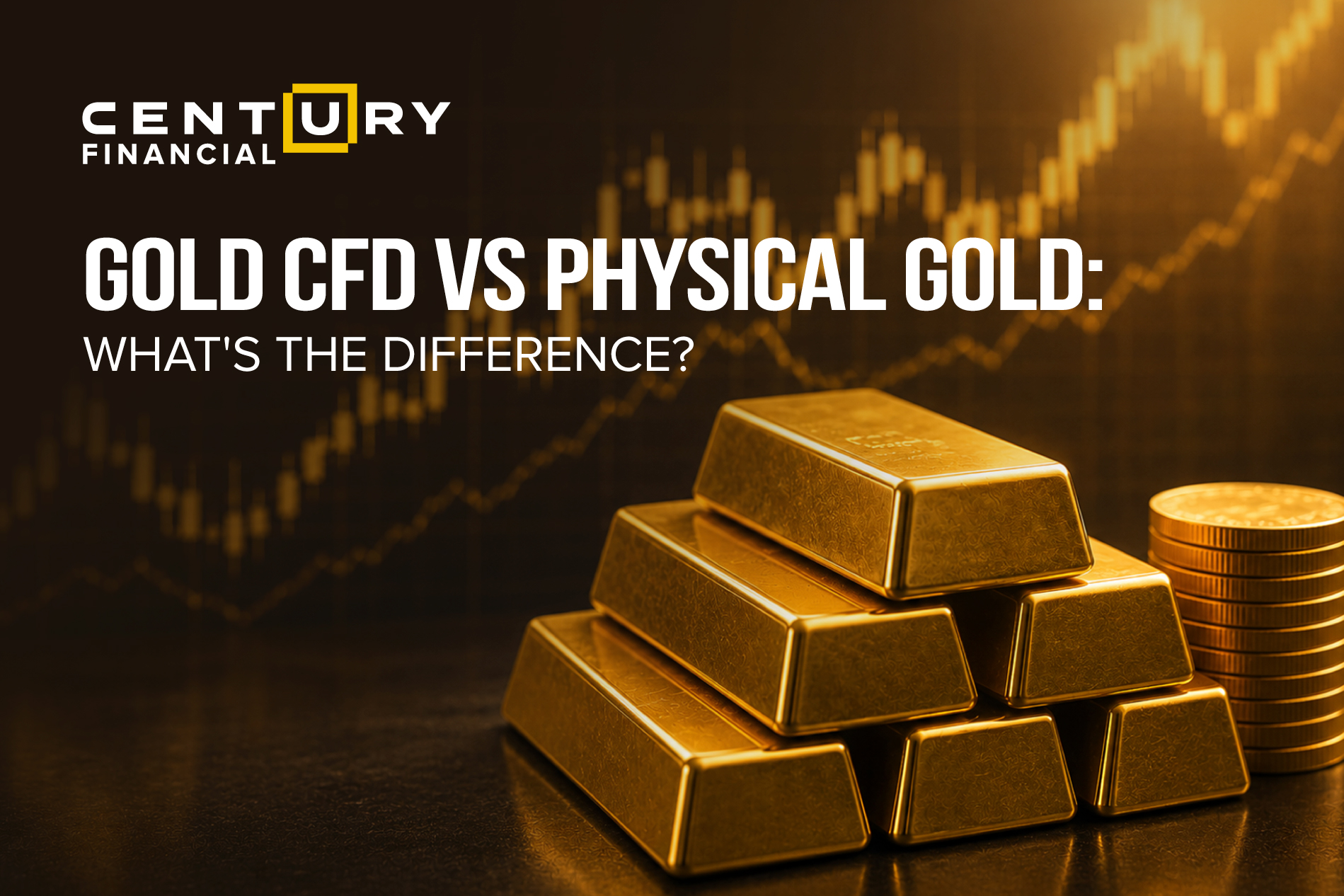

Gold CFD vs Physical Gold: What's the Difference?
There are two completely different ways to invest in gold. One involves owning actual metal—bars, coins, or jewelry. The other involves trading price contracts without touching physical gold. The difference determines everything from costs to profits and everything in between.
Understanding both helps you choose the approach that better matches your intent.
What Is Gold CFD Trading
What Is a Gold CFD?
A CFD (Contract for Difference) is a contract tracking an underlying asset's price movement. A gold CFD tracks the spot price of gold, and your profit or loss is based on price movement alone.
CFDs are leveraged instruments, which means you can hold a position with a fraction of the required capital. But leverage amplifies both gains and losses; if the price moves 1%, your position swings $1,000.
How Gold CFD Trading Works
You open a position with a broker. Specify whether you want to buy or sell, the quantity, and the leverage. The broker holds your position against the live gold price.
No physical gold changes hands, nor is any storage required. With gold CFDs, you close the position whenever you want during trading hours by clicking sell (or buy to cover shorts).
Key Features of Gold CFDs

Leverage
You can control large positions with small capital.

No ownership
You hold a gold contract, not actual gold—no gold exchanges hands.
24-hour trading
Gold trades constantly across global markets. You can enter/exit positions at any time.

Tight spreads
Major CFD providers offer tight bid-ask spreads during peak hours (London and New York sessions).
Short selling
You can profit when gold falls. Physical gold ownership offers no profits during falls.
What Is Physical Gold Trading?
Buying Physical Gold
Gold has been a trusted asset for generations. Investing in physical gold means owning actual metal in the form of bars, coins, or jewelry, just the way it has been for centuries. The gold sits in your possession or in a vault you pay to secure.
With physical ownership, it is permanent until you sell. No leverage, no expiration dates, and no counterparty risk applies here, as the purchase is a closed transaction.
Types of Physical Gold Investments
Gold bars: 1 oz, 10 oz, or 1 kg bars of standardized weight and purity.
Gold coins: Numismatic or bullion coins. Bullion coins (American Gold Eagle, Canadian Maple Leaf) trade at near-spot prices. Numismatic coins have collector premiums.
Gold jewelry: Wearable gold. Premiums are highest as manufacturing costs are added. Resale value is lowest because jewelers pay near-spot but at lower prices than dealers.
Gold ETFs: Exchange-traded funds that track gold prices. You own shares representing gold holdings: no physical possession but similar price exposure to physical gold.
Gold CFD vs Gold ETFs vs Physical Gold: Risk Comparison
| Factor | Gold CFDs | Gold ETFs | Physical Gold |
|---|---|---|---|
| Leverage | Available (amplifies gains/losses) | None | None (100% capital required) |
| Ownership | Contract only (no physical gold) | Shares of fund | Actual metal ownership |
| Storage | None required | ETF handles storage | Vault storage costs |
| Trading Hours | 24 hours | Market hours | Dealer hours |
| Costs | Spreads, overnight financing | Expense ratios | Premiums, storage, insurance |
| Liquidity | High (instant entry/exit) | High (sell anytime market is open) | Medium (dealers close, prices vary) |
| Price Discovery | Real-time | Real-time (market price) | Dealer-dependent |
| Volatility Risk | High (leverage amplifies moves) | Medium (no leverage) | Medium (no leverage) |
| Counterparty Risk | Broker bankruptcy | Fund closure risk | None (you own the gold) |
 Leverage amplifies
profits on margins
Trade 24 hours andreact to global
news immediately
Short-selling allowsprofit during price
declines
No storage orinsurance costs
Fast entry/exit (clickto open/close)
Tight spreadsduring peak hours
Capital efficiencyaccounts on losses

costs accumulate
on long-held
positions
(broker solvency
matters)
possession
from leverage and
daily volatility
overnight moves
past stop-losses
treatments
Advantages and Disadvantages of Physical Gold
Benefits of Holding Physical Gold
Limitations of Physical Gold Investments
How to Trade Gold CFDs with Century Financial
Century Financial offers gold CFD trading (XAU/USD) through multiple platforms, including the Century Trader App, which provides intuitive mobile and desktop access, and MT5, which provides advanced charting and technical analysis.
With fast order execution and segregated client funds, your trades are processed on a secure, transparent platform. Economic calendars built into platforms show which announcements move gold prices. Real-time quotes update continuously during 24-hour trading, offering a bird's-eye view of live markets on the go.
Elevate your trading experience with
Century Trader App
Elevate your trading experience with
Century Trader App

Conclusion
Gold CFDs and physical gold serve different purposes. CFDs enable leverage, 24-hour trading, and short-selling for active traders. Physical gold provides tangible ownership, storage security, and inflation hedging for long-term investors.
The selection depends on your goals, risk tolerance, and time commitment. Conservative investors usually prefer physical gold while active traders prefer CFDs. Most successful investors use both—physical gold as a core holding and CFDs for tactical positions. With Century Financial as your trading companion, you can trade in gold and other assets globally without sacrificing speed or efficiency.
Frequently Asked Questions
Q1: What is a Gold CFD?
A: A contract tracking gold's price movement. You don't own physical gold but profit or lose based on spot price changes. Leverage available amplifies both gains and losses.
Q2: Is Gold CFD better than buying physical gold?
A: Neither is universally better. CFDs suit active traders (24-hour access, leverage, short-selling). Physical gold suits long-term investors (tangible ownership, no leverage risk). The intent is what matters more.
Q3: Can I own real gold through a CFD?
A: No. CFDs are contracts, not physical gold ownership. You own the price exposure, not the metal. If you need tangible gold ownership, physical gold or ETFs are some options.
Q4: Is Gold CFD trading suitable for beginners?
A: Yes, but with caution. Conservative leverage and strict position sizing make CFDs beginner-accessible. Try trading in a simulated environment through a demo account before using real money.
لا تقدم شركة سنشري للإستشارات والتحليل المالي ش.ذ.م.م (الشركة) محتوى هذه المدونة، بما في ذلك أي أبحاث أو تحليلات أو آراء أو توقعات أو أي معلومات أخرى (يُشار إليها مجتمعةً باسم "المعلومات")، إلا لأغراض التسويق والتثقيف وإتاحة المعلومات العامة. ولا يُفسَّر ذلك على أنه نصيحة استثمارية أو توصية أو دعوة لشراء أو بيع أي أدوات مالية.
كما يجوز نشر هذه المعلومات عبر قنوات مختلفة، بما في ذلك موقع الشركة الإلكتروني، ومنصات الغير، والنشرات الإخبارية، والمواد التسويقية، ورسائل البريد الإلكتروني، ووسائل التواصل الاجتماعي، وتطبيقات المراسلة، والندوات الإلكترونية، وغيرها من وسائل التواصل. وبينما تسعى الشركة لضمان دقة المحتوى، فإنها لا تضمن اكتماله أو موثوقيته أو تحديثه في الوقت المناسب. وعليه، فأي قرارات تُتخذ بناءً على هذه المعلومات تكون على مسؤوليتك الشخصية. ولا تتحمل الشركة أي مسؤولية عن أي خسارة أو ضرر ناتج عن استخدامها.
ينطوي تداول المنتجات المالية على مخاطر كبيرة، بما لا يتناسب مع جميع المستثمرين. فيُرجى التأكد من وعيك التام بالمخاطر، وطلب الاستشارة المهنية المتخصصة إذا لزم الأمر.
يُرجى الاطلاع على بيان كشف المخاطر الشامل المتوفر على موقعنا الإلكتروني.





تنظمها هيئة الأوراق المالية والسلع
سنشري للاستشارات المالي ش.ذ.م.م


تصل إلينا:
-
دبي
الطابق رقم 6, مبنى رقم 4, ساحة إعمار دبي
وسط مدينة دبي، ص.ب: 65777،
دبي، الإمارات العربية المتحدة -
Abu Dhabi
27th Floor, Office 2701,
Shining Towers, Abu Dhabi, UAE -
Sharjah
29th Floor, Office 2905,
The Business Tower, Sharjah, UAE - +971 (4) 356 2800
- info@century.ae

Century Financial is the presenting sponsor of

ينطوي التداول في المنتجات المالية على مخاطر كبيرة. فالاعتماد على المشتقات المالية المتاحة للتداول خارح البورصة، مثل عقود الفروقات وتداول العملات الأجنبية (الفوركس) الفوري، قد يتسبب في خسائر تتجاوز قيمة الإيداعات الأولية، مما يجعلها غير ملائمة لجميع المستثمرين. فهذه الأدوات المالية المعقدة لا تمنح ملكية مباشرة للأصول الأساسية. لذا، ينبغي للمستثمرين الاحتراز عند تحديد أهدافهم الاستثمارية ومراعاة مستوى المخاطرة المتوقَع، واللجوء إلى الاستشارة المهنية المتخصصة عند الضرورة.
سنشري للإستشارات والتحليل المالي ش.ذ.م.م (الشركة)، شركة مرخّصة ومنظمة من هيئة الأوراق المالية والسلع في دولة الإمارات العربية المتحدة، بموجب الترخيص رقم (20200000028) و(301044) لتولي أعمال الوساطة في الأسواق الدولية، وتداول المشتقات المالية والعملات المتاحة للتداول خارج البورصة في سوق التداول الفوري، بالإضافة إلى تقديم الخدمات الاستشارية والترويجية. تأسست الشركة بموجب قوانين دولة الإمارات العربية المتحدة، وهي مسجلة لدى دائرة التنمية الاقتصادية بدبي (رقم: 768189)، حيث يقع مكتبها المسجّل في 601، الطابق السادس، المبنى رقم 4، ميدان إعمار، وسط مدينة دبي، دولة الإمارات العربية المتحدة، ص.ب. 65777.
لا يُعرَض محتوى هذا الموقع الإلكتروني إلا لأغراض تعريفية تثقيفية بحتة، فلا يمثل عرضًا ولا توصيةً ولا دعوةً لشراء أو بيع أي أوراق مالية أو منتجات مالية.
لا تنوي الشركة استخدام أو توزيع منتجاتها وخدماتها في أي ولاية قضائية حيث يُشكِّل هذا الاستخدام أو التوزيع انتهاكًا للقوانين المحلية أو اللوائح التنظيمية.
