 Loading ...


Monday, October 26, 2026
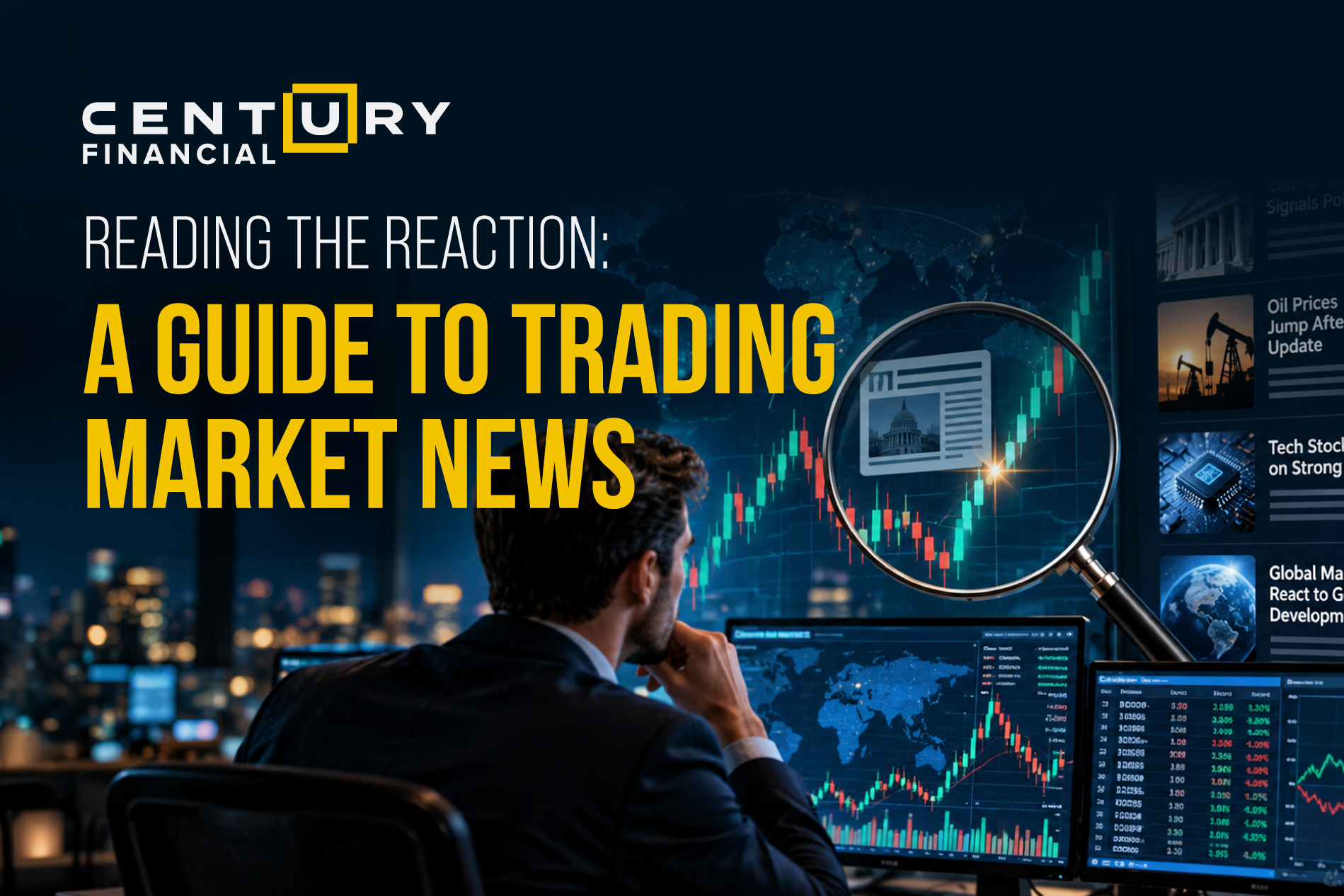
Reading the Reaction: A Guide to Trading Market News
تم إعداد هذا المنشور من قبل سنشري للاستشارات

What Is News Trading?
News trading means positioning for price movement around a scheduled economic release or an unscheduled, market-moving event, rather than waiting for a technical setup to develop over time.
Which News Events Move Markets?
Not every scheduled release has the same impact; a few recurring categories tend to account for most of the volatility that news traders focus on.
How to Trade the News: A Step-by-Step Framework
News Trading Strategies
Five strategies make up most approaches traders use around scheduled and unscheduled news events, each timed to a different part of the reaction.
News Breakout Strategy
How It Works:
Usually entered in the direction of the initial move once price breaks through a key level right after the release.
When It Is Commonly Used:
On high-impact events where a decisive, fast move is expected.
Confirmation:
A clear break beyond the pre-news trading range, often with a volume surge.
Key Risks:
False breakouts and wider spreads immediately after release can trigger a position that reverses just as fast.
Spike and Reversal Strategy
How It Works:
Against the initial spike, assuming the market overshot the data surprise.
When It Is Commonly Used:
When the first move looks disproportionate to how significant the actual data surprise was.
Confirmation:
Price failing to hold the new high or low, with a clear reversal structure forming.
Key Risks:
Mistaking a genuine trend continuation for an overshoot, and fading a move that keeps going.
Post-News Trend Strategy
How It Works:
Waits for the initial volatility to settle, then trades the direction that establishes itself afterward.
When It Is Commonly Used:
When the first few minutes of reaction are too erratic to trade reliably.
Confirmation:
Price holding a direction beyond the short-term reaction window.
Key Risks:
Missing the strongest part of the move while waiting, or entering just as momentum fades.
Pre-News Positioning
How It Works:
Opens a position before the release based on the expected outcome.
When It Is Commonly Used:
When a trader has a strong view on where the data or decision will land.
Confirmation:
There isn't one; this approach accepts the position without confirmation.
Key Risks:
Full exposure to the raw volatility of the release itself if the data surprises in either direction.
Trading the Second Move
How It Works:
Looks past the first, often choppy reaction to trade the market's second, more decisive move.
When It Is Commonly Used:
After an initial spike and partial reversal have already played out.
Confirmation:
A clear break beyond the range set by the first move and its reversal.
Key Risks:
The second move doesn't always materialize; some events resolve in a single directional move with no distinct second leg.
On a single event timeline, pre-news positioning happens before the release, while breakout and spike-and-reversal strategies play out in the first moments. Post-news trend strategy and trading the second move happen after the initial reaction settles. Waiting for confirmation isn't a separate strategy; it's a discipline that underpins all five, since each approach relies on it to some extent.
Benefits and Risks of News Trading
| Point of Concern | Benefit | Risk |
|---|---|---|
| Volatility | Can create larger price moves in a shorter window than typical session trading | That same volatility can move prices well beyond a typical session’s range overshooting limits set |
| Timing and execution speed | Access to a short-term opportunity window built around a specific, timestamped event | Slippage and wider spreads right after release can fill an order at a noticeably different price, and false breakouts are common too |
| Market breadth | Major releases often move forex, equities, commodities, and bonds at once, opening opportunities across multiple markets | Rapid reversals are possible, unscheduled news can move several markets at once |
| Leverage and analysis depth | Combines fundamental and technical analysis, reading the data itself alongside the price structure that forms around it | Leverage and margin risk are amplified in fast-moving conditions, since a volatile move against a leveraged position can affect account equity faster than in calmer markets |
How to Build a News Trading Plan
Every plan depends on your goals, risk tolerance, time, and other personal factors. The list below offers general points to consider.
Elevate your trading experience with
Century Trader App
Elevate your trading experience with
Century Trader App

Conclusion
News trading focuses on price movements that follow scheduled releases, rate decisions, CPI, employment data, GDP, earnings, and unscheduled events such as geopolitical developments, rather than slower technical setups. The size of the reaction depends more on how actual data compares with market expectations than on the headline figure itself, which is why checking consensus and waiting for confirmation are as important as selecting a strategy.
Because spreads can widen and prices can move quickly around a release, a platform built for fast execution is as important as the strategy itself. Century Trader app provides the real-time charting and order speed news trading relies on for those who need to respond as soon as a scheduled release occurs.

Frequently Asked Questions
Q1: What is a news trading strategy?
A: A news trading strategy focuses on positioning for the price move that follows a scheduled economic release or unscheduled market event, rather than a developing technical setup.
Q2: How does news trading work?
A: It works by anticipating or reacting to the gap between actual data and market expectations, then trading the price move that gap creates in the moments or hours after the release.
Q3: How do you trade economic news?
A: By checking the calendar and consensus beforehand, comparing the actual release to that consensus, and trading the resulting price action with predefined entry, exit, and risk controls.
Q4: How do you trade CPI news?
A: Traders primarily trade CPI on the gap between the actual inflation figure and expectations, since that gap shapes rate expectations and drives most of the market's reaction.
Q5: Is news trading risky?
A: Yes, it carries higher execution risk than many other approaches because of wider spreads, rapid price reversals, and the chance of unexpected events, which is why risk controls matter so much here.
لا تقدم شركة سنشري للإستشارات والتحليل المالي ش.ذ.م.م (الشركة) محتوى هذه المدونة، بما في ذلك أي أبحاث أو تحليلات أو آراء أو توقعات أو أي معلومات أخرى (يُشار إليها مجتمعةً باسم "المعلومات")، إلا لأغراض التسويق والتثقيف وإتاحة المعلومات العامة. ولا يُفسَّر ذلك على أنه نصيحة استثمارية أو توصية أو دعوة لشراء أو بيع أي أدوات مالية.
كما يجوز نشر هذه المعلومات عبر قنوات مختلفة، بما في ذلك موقع الشركة الإلكتروني، ومنصات الغير، والنشرات الإخبارية، والمواد التسويقية، ورسائل البريد الإلكتروني، ووسائل التواصل الاجتماعي، وتطبيقات المراسلة، والندوات الإلكترونية، وغيرها من وسائل التواصل. وبينما تسعى الشركة لضمان دقة المحتوى، فإنها لا تضمن اكتماله أو موثوقيته أو تحديثه في الوقت المناسب. وعليه، فأي قرارات تُتخذ بناءً على هذه المعلومات تكون على مسؤوليتك الشخصية. ولا تتحمل الشركة أي مسؤولية عن أي خسارة أو ضرر ناتج عن استخدامها.
ينطوي تداول المنتجات المالية على مخاطر كبيرة، بما لا يتناسب مع جميع المستثمرين. فيُرجى التأكد من وعيك التام بالمخاطر، وطلب الاستشارة المهنية المتخصصة إذا لزم الأمر.
يُرجى الاطلاع على بيان كشف المخاطر الشامل المتوفر على موقعنا الإلكتروني.


تنظمها هيئة الأوراق المالية والسلع
سنشري للاستشارات المالي ش.ذ.م.م


تصل إلينا:
-
دبي
الطابق رقم 6, مبنى رقم 4, ساحة إعمار دبي
وسط مدينة دبي، ص.ب: 65777،
دبي، الإمارات العربية المتحدة -
Abu Dhabi
27th Floor, Office 2701,
Shining Towers, Abu Dhabi, UAE -
Sharjah
29th Floor, Office 2905,
The Business Tower, Sharjah, UAE - +971 (4) 356 2800
- info@century.ae

Century Financial is the presenting sponsor of

ينطوي التداول في المنتجات المالية على مخاطر كبيرة. فالاعتماد على المشتقات المالية المتاحة للتداول خارح البورصة، مثل عقود الفروقات وتداول العملات الأجنبية (الفوركس) الفوري، قد يتسبب في خسائر تتجاوز قيمة الإيداعات الأولية، مما يجعلها غير ملائمة لجميع المستثمرين. فهذه الأدوات المالية المعقدة لا تمنح ملكية مباشرة للأصول الأساسية. لذا، ينبغي للمستثمرين الاحتراز عند تحديد أهدافهم الاستثمارية ومراعاة مستوى المخاطرة المتوقَع، واللجوء إلى الاستشارة المهنية المتخصصة عند الضرورة.
سنشري للإستشارات والتحليل المالي ش.ذ.م.م (الشركة)، شركة مرخّصة ومنظمة من هيئة الأوراق المالية والسلع في دولة الإمارات العربية المتحدة، بموجب الترخيص رقم (20200000028) و(301044) لتولي أعمال الوساطة في الأسواق الدولية، وتداول المشتقات المالية والعملات المتاحة للتداول خارج البورصة في سوق التداول الفوري، بالإضافة إلى تقديم الخدمات الاستشارية والترويجية. تأسست الشركة بموجب قوانين دولة الإمارات العربية المتحدة، وهي مسجلة لدى دائرة التنمية الاقتصادية بدبي (رقم: 768189)، حيث يقع مكتبها المسجّل في 601، الطابق السادس، المبنى رقم 4، ميدان إعمار، وسط مدينة دبي، دولة الإمارات العربية المتحدة، ص.ب. 65777.
لا يُعرَض محتوى هذا الموقع الإلكتروني إلا لأغراض تعريفية تثقيفية بحتة، فلا يمثل عرضًا ولا توصيةً ولا دعوةً لشراء أو بيع أي أوراق مالية أو منتجات مالية.
لا تنوي الشركة استخدام أو توزيع منتجاتها وخدماتها في أي ولاية قضائية حيث يُشكِّل هذا الاستخدام أو التوزيع انتهاكًا للقوانين المحلية أو اللوائح التنظيمية.
