 Loading ...

Wednesday, February 11, 2026
Understanding the Long Position in a Put Option: Strategy, Use Cases & Trading Insights
By Century Financial in 'Blog'
What Is a Long Position in a Put Option?
Trading in the market goes beyond understanding the market sentiments or news. Many instruments in this realm are complex and advanced, including Options.
Before understanding what a long put position means, let’s recap what option trading is. Options are leverage instruments like CFDs, where traders can assign a margin of their capital to take a position with amplified exposure. Like CFDs, the value of options contracts is based on their underlying assets, but unlike CFDs, contracts are priced based on “strike prices,” and traders either go long (buy) or short (sell) them based on their outlook and the outlook’s severity.
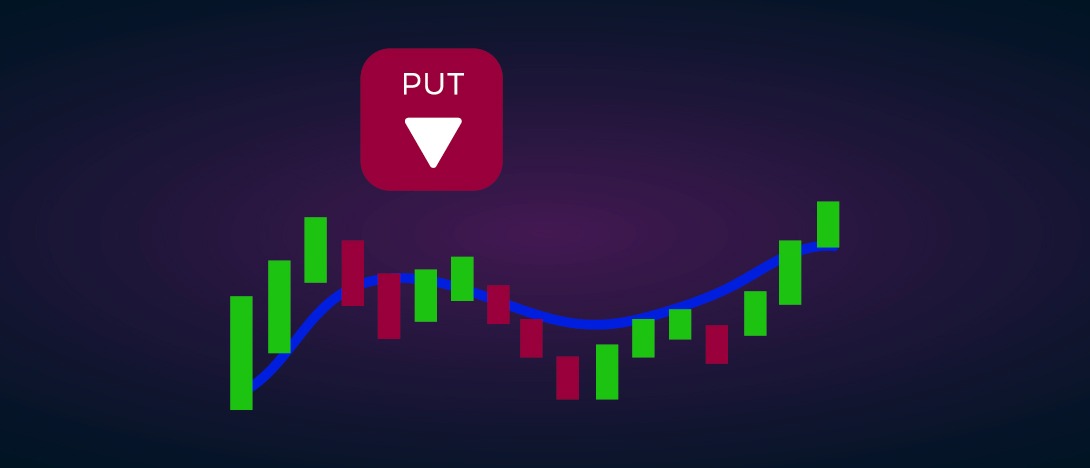
A long put position is a bearish position taken when a trader expects the underlying to fall to a certain level. Keep reading, and you’ll understand more about the long put position, the strategies that go with it, the risks that come with it, and a long list of similar details.
Long Put Position vs Short Put & Long Call
Options orders have a few combinations. Long and short is about the action you will take, and call and put is about the outlook you have. So, you could take four types of positions when initiating a trade in the options market. Below is a simple comparison of a long put position, a short put and long call.
| Position | Market View | Risk Profile | Profit Potential | Use Cases |
|---|---|---|---|---|
| Long Put | Bearish | Limited to premium paid | Increases as price of underlying falls | Profiting from falling market or hedging |
| Short Put | Neutral to bullish | Potentially unlimited | Limited to the premium received | Income generation during less volatility |
| Long Call | Bullish | Limited to premium paid | Increases as price of underlying rises | Profiting from rising markets |
How a Long Put Position Works
A long put position gives the trader the right to sell an underlying asset at a predetermined price within a specific time frame. You pay a premium, which becomes your maximum possible loss.
With a long put position, if the market price falls below the strike price, the put’s value increases. The trader can book their profits. If the market doesn’t move as expected, the options could expire worthless, and the trader would lose the premium they paid.
When to Use a Long Put?
This position is not just about a bearish outlook. When structured and layered through a proper strategy, a long put position can become a tool to help balance and improve your portfolio performance. Traders typically use this position in two distinct situations.
As a Hedger
Even a well-diversified portfolio stands in a precarious position when the broader market is on a downturn. In situations such as these, a long put position can become helpful.
Hedging with a long put position during bearish markets can be beneficial for several reasons.
Capitalize on Bearish Movements
Traders take a long position in a put option to profit from a falling market. In other assets, short selling could play out differently, hence the preference to put positions.
Some factors to keep in mind while taking a long put position are:
Short positions tend to work best when:
- In other markets, assets are shorted or sold during market downturns
- In the options market, put positions are bought during falling markets
- Put options are sold when traders expect prices to stay stable or move higher
Strategies with Long Put Position
Professional traders often couple instruments and positions to manage risk more effectively. Long put position has a place in several of those layered positions.
Long Put Short Call Strategy
In the long put short call strategy, you take the following positions:
With this structure, the position benefits when prices decline and remain below the call strike. The call premium provides upfront income, while falling prices increase the value of the put. This increases cost, but reduces overall risk if appropriately monitored.
Protective Put
A portfolio exposed to several risks, a protective long position in a put option can look like:
The put acts as an insurance. If the asset drops sharply, the losses are capped. If prices rise, the only cost is the premium paid for protection. This manages downside risk during falling markets.
Bear Put Spread
Markets are quick to catch up to trends. With a bear put spread:
Compared to a single long put, a bear put spread lowers the upfront cost by selling a lower-strike put. Profits are capped here and work best in a moderately bearish market, not during sharp swings.
Benefits and Risks of a Long Put Position
In financial markets, risks and rewards are inseparable. With long put positions, the pros and cons could be as follows.
Benefits of Long Put Position
The advantages of taking long put positions are:
Risks of Long Put Position
Some downsides of taking long put positions are:
Where to Take Long Put Positions
A long put position can be taken across multiple underlying assets to accommodate various market conditions and strategies. With every position, you should be mindful of how well it can be managed. Therefore, along with strategy, the broker and platform you choose are also integral to a smooth trading experience in the markets.
With Stocks
Long puts are commonly used with shares, especially when individual stocks show signs of weakness. Price action trading calls for long put positions and other bearish strategies when markets turn bearish. Investors can choose individual stock contracts, thereby making their strategy specific to the stock positions they hold.
With Commodities or Currencies
Macro-economic conditions, geopolitical news, and global trends impact both commodities and currencies. Traders take a long put position when broader market sentiments sour. Since several commodities and currencies are defensive assets, bearish trends can arise during bullish stock market trends, too.
With Indices and Other ETPs
Broad-market downside can be expressed through puts on indices or index-linked ETPs. Index-based long puts are also commonly used for portfolio protection, as they hedge overall exposure while avoiding the complexity of managing multiple single-stock positions.
Conclusion
When the markets are plunging, and you are looking for a way to capitalize on it without assigning a massive chunk of your capital, taking a long position in a put option is the way to go. We have seen the whys and hows of this particular notion. Be it trading for gains or safeguarding your existing investments, a long put position is an invaluable tool for responding to falling markets with defined losses.
With Century Financial, you can access global markets and capture the movements of assets available to traders worldwide. With coveted and reputable platforms like MT5, CQG, IBKR’s TWS, and our Century Trader, you can analyze the markets and master your option trading strategies with ease and transparency.
FAQs
Q1. What is the main purpose of taking a long put position?
A: A long position in a put option is taken when you have a bearish outlook on the market or asset. With a long position, your losses are limited to the premium. The primary purpose, then, is to capitalize on this downturn by clearly defining losses and reducing capital requirements.
Q2: How does a long put position differ from a short put?
A: With a long put position, you are buying the contract, and with a short put, you are selling it. With longs, your losses are capped at the premium, whereas on shorts, your profits are limited to the premiums. Finally, long puts are taken with a bearish outlook, and short puts usually have a neutral to mildly bullish outlook.
Q3: What is the benefit of combining a long put and a short call?
A: When you sell an option, you receive a premium. With the combination of short put and long call, net costs are reduced while keeping the possibility of capitalizing on a downturn open. Professional traders take this position when sharp falls or rallies are unlikely.
Q4. Can traders use long put strategies on CFDs and indices?
A: Surely. CFDs are derivative contracts that allow participants to sell the underlying asset and profit from market price movements. There are several instruments linked to indices, such as index CFDs, futures, or options, that could be used to take a short position.
Q5. Is a long put position suitable for hedging shares and ETP portfolios?
A: A long put position gains value when the underlying's value declines. So, yes, a long put can be used to safeguard the portfolio when the asset or broader markets are falling. The gains received through the put position could offset portfolio losses.
This marketing and educational content has been created by Century Financial Consultancy LLC (“Century”) for general information only. It does not constitute investment, legal, tax, or other professional advice, nor does it constitute a recommendation, offer, or solicitation to buy or sell any financial instrument. The material does not take into account your investment objectives, financial situation, or particular needs.
The opinions expressed by the hosts, speakers, or guests are their own and may change without notice. Information is based on sources we consider to be reliable; however, Century does not guarantee its accuracy, completeness, or timeliness and accepts no liability for any loss arising from reliance on this content.
Trading and investing involve significant risk, and losses may exceed initial deposits. Past performance is not indicative of future results. CFDs and other leveraged products are complex instruments that may not be suitable for all investors. Please ensure you understand how these products work, the associated risks, and seek independent professional advice if necessary.
Century is licensed and regulated by the UAE Capital Market Authority (CMA) under License Nos. 20200000028 and 301044.
Please refer to the full risk disclosure mentioned on our website.



Regulated by CMA
Century Financial Consultancy LLC


.png)
.png)
.png)
.png)


Reach us:
-
Dubai
6th Floor, Emaar Square Building 4,
Downtown, Dubai, P.O. Box 65777,
Dubai, United Arab Emirates -
Abu Dhabi
27th Floor, Office 2701,
Shining Towers, Abu Dhabi, UAE -
Sharjah
29th Floor, Office 2905,
The Business Tower, Sharjah, UAE - +971 (4) 356 2800
- info@century.ae

Disclaimer: Trading in financial products carries substantial risk. Leveraged over-the-counter (OTC) derivatives, such as Contracts for Difference (CFDs) and spot forex, may result in losses exceeding initial deposits and may not be suitable for all investors. These complex instruments do not confer ownership of the underlying assets. Investors should carefully consider their investment objectives and risk appetite, and seek independent professional advice if necessary.
Century Financial Consultancy LLC (CFC) is licensed and regulated by the Capital Market Authority (CMA) of the UAE under license numbers 20200000028 and 301044 to carry out the activities of Financial Products dealer, Trading Broker in international markets, Trading Broker of OTC derivatives and currencies in the spot market, Introduction, Financial Consultations, and Promotion. CFC is incorporated under UAE law, registered with the Dubai Economic Department (No. 768189), with its office at 601, Level 6, Building No. 4, Emaar Square, Downtown Dubai, UAE, PO Box 65777.
The content on this website is provided solely for informational and educational purposes and does not constitute an offer, recommendation, or solicitation to buy or sell any securities or financial products.
Products and services offered by CFC are not intended for use in any jurisdiction where such use or distribution would breach local laws or regulatory requirements.
⚠️ Alert: Fraudulent Activity Notice
Century Financial Consultancy LLC (“Century”) has become aware of fraudulent individuals and entities impersonating our firm through unofficial websites, social media channels, and messaging applications such as Telegram, WhatsApp, and Discord.
Please be advised:
- Century does not manage investments on behalf of clients.
- Century does not solicit funds or guarantee investment returns.
- Century does not accept or make payments in cash, cryptocurrency, or digital assets.
- We do not conduct business via social media or messaging platforms.
Our only official website is www.century.ae, and all communication is conducted exclusively through verified channels.
We strongly urge the public to remain vigilant, verify the authenticity of any communication claiming to be from Century, and report any suspicious activity. Century disclaims any responsibility for losses arising from dealings with unauthorised or fraudulent parties.
