 Loading ...


Wednesday, November 11, 2026
From the Ground Up: A Trader’s Guide to Hard and Soft Commodities
By Century Financial in 'Blog'
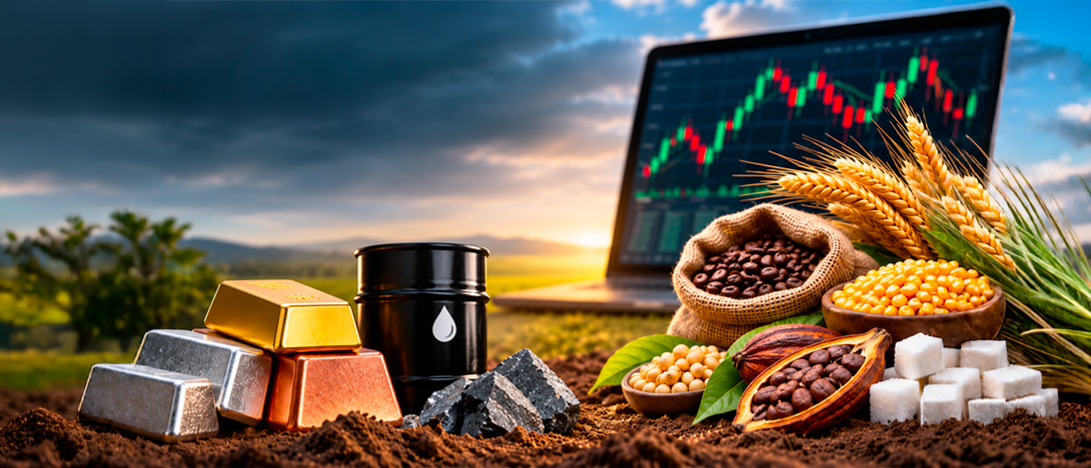
The split between soft commodities and hard commodities comes down to origin: one group is grown, the other is extracted. Soft commodities like coffee, sugar, wheat, and cotton come from farming and agricultural cycles, while hard commodities like crude oil, gold, and natural gas come from mining or extraction. Understanding soft vs hard commodities matters because the two categories behave differently in supply, storage, and how prices react to outside events.
This guide covers what separates soft and hard commodities, how each group gets traded, what drives price movement in both, and the risks worth weighing before taking a position in either.
What Are Commodities?
Commodities are raw materials or primary agricultural products traded in physical markets or through financial instruments, from crude oil and metals to coffee and wheat.
They fall into two broad categories: hard commodities, which come from the earth, and soft commodities, which come from farming, and that distinction shapes nearly everything else about how each behaves.
What Are Hard Commodities?
Hard commodities are natural resources extracted from the earth through mining, drilling, or similar processes.
Examples of Hard Commodities
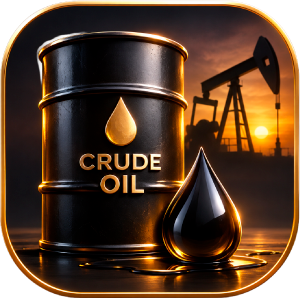 Crude oil |
Global demand, OPEC+ supply decisions, refining capacity |
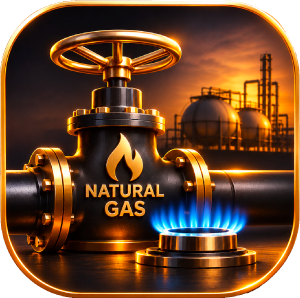 Natural gas |
Seasonal heating and cooling demand, pipeline and storage capacity |
 Gold |
Safe-haven demand, central bank reserves, real interest rates |
 Silver |
Industrial demand from electronics and solar, alongside investment demand |
 Copper |
Construction and manufacturing activity, often read as an economic bellwether |
What Are Soft Commodities?
Soft commodities are agricultural products grown through farming, tied to planting and harvest cycles rather than extraction.
Examples of Soft Commodities
Soft vs Hard Commodities: What Are the Key Differences?
Origin is the starting point, but it carries through into supply behavior, storage, and how each category reacts to the world around it.
| Factors | Hard Commodities | Soft Commodities |
|---|---|---|
| Origin and production | Extracted or mined from the earth | Grown or farmed through agricultural cycles |
| Common examples | Crude oil, gold, copper | Coffee, wheat, cotton |
| Supply and demand drivers | Industrial demand, energy consumption, mining output | Crop yields, consumption patterns, harvest results |
| Weather and seasonal sensitivity | Low, extraction is largely weather-independent in the short term | High, weather directly shapes each season’s crop yield |
| Storage and transportation | Generally stable to store, longer shelf life | Often perishable or quality-degrading, higher storage and spoilage costs |
| Price volatility | Driven by macro cycles, industrial demand, and geopolitics | Driven by weather and harvest outcomes, can spike sharply around a single season |
| Typical market uses | Energy, manufacturing, reserves and jewelry | Food, beverages, textiles |
What Factors Affect Soft and Hard Commodity Prices?
Although the influences on soft vs hard commodities differ, some factors affect both. Some such factors include:
Examples of Soft Commodities
How Are Soft and Hard Commodities Traded?
Commodities can change hands in physical markets or be traded through financial instruments that track price without any physical delivery.
| Market Types | What It Means | Typically Used By |
|---|---|---|
| Spot markets | Buying or selling at the current price for near-immediate delivery or settlement | Producers and buyers who need the physical commodity |
| Futures and options | Standardized contracts to exchange a commodity at a set price on a future date | Producers and institutions hedging exposure, traders speculating on price |
| CFDs | Instruments that track a commodity’s price without ownership or delivery, allowing long or short positions | Retail traders accessing price movement directly |
Soft Commodities vs Hard Commodities: Practical Examples
How Drought Can Affect Coffee and Sugar Prices
Event: A drought in Brazil—the leading producer of both coffee and sugar.
Effect: A smaller harvest against unchanged demand, which has historically pushed both prices higher until the next season’s crop offers some relief.
How Supply Disruptions Can Affect Crude Oil and Gold
Event: A disruption to production or transport in a major oil-producing region.
Effect: Tighter crude supply pushes oil prices higher. In contrast, gold often moves in the opposite direction entirely, rising on the same geopolitical uncertainty even though nothing about gold’s own supply has changed.
What Are the Risks of Trading Soft and Hard Commodities?
A single surprise—a harvest report, a production outage—can move prices sharply with little warning, in either category. A few specific triggers account for most of this risk:
Leverage and Margin Risks in Commodity CFDs
Trading commodities through leveraged CFDs amplifies both gains and losses relative to the capital put up. A sharp move against a leveraged position can trigger a margin call considerably faster than the same move would affect an unleveraged one.
How to Choose Between Soft and Hard Commodities
The choice comes down to market knowledge, risk tolerance, trading objectives, and which set of signals (weather reports or industrial data) actually fits how someone wants to follow a market.
Understanding Agricultural Market Trends
Following soft commodities closely means tracking planting and harvest cycles, weather forecasts for key growing regions, and periodic crop reports that shape expectations ahead of each season.
Analyzing Energy and Metals Markets
Industrial demand data, energy supply reports, and broader growth indicators matter most here, rather than a seasonal weather forecast.
Matching Commodity Exposure With Trading Goals
A short-term trade built around a single weather event behaves very differently from a longer-term position built around an industrial demand trend, so your holding period and risk tolerance should match whichever category you choose.
Elevate your trading experience with
Century Trader App
Elevate your trading experience with
Century Trader App

Conclusion
Soft commodities are grown, hard commodities are extracted, and that distinction drives most practical differences between them, from weather sensitivity to storage costs to how prices tend to move. Both can be accessed through spot markets, futures and options, or CFDs, with CFDs offering the most direct route to price exposure without the logistics of handling anything physical.
Trading either category through our platforms, including Century Trader and MT5, gives access to live pricing and execution across a range of commodity CFDs and keeps that access available on the move.

Frequently Asked Questions
Q1: What Is the Difference Between Soft and Hard Commodities?
A: Soft commodities are agricultural products grown through farming, such as coffee and wheat, while hard commodities are natural resources extracted through mining or drilling, such as gold and crude oil.
Q2: Is Gold a Hard Commodity?
A: Yes. Gold is mined from the earth rather than grown or farmed, which places it firmly in the hard commodity category.
Q3: Are Soft Commodities More Volatile Than Hard Commodities?
A: Both can be volatile, just for different reasons. Soft commodities tend to see sharp, concentrated moves around a single harvest or weather event, while hard commodities move more on macroeconomic cycles and geopolitical events.
Q4: Can You Trade Soft and Hard Commodities Through CFDs?
A: Yes. You can trade both categories through CFDs, which track the underlying price without requiring ownership or physical delivery.
This marketing and educational content has been created by Century Financial Consultancy LLC (“Century”) for general information only. It does not constitute investment, legal, tax, or other professional advice, nor does it constitute a recommendation, offer, or solicitation to buy or sell any financial instrument. The material does not take into account your investment objectives, financial situation, or particular needs.
The opinions expressed by the hosts, speakers, or guests are their own and may change without notice. Information is based on sources we consider to be reliable; however, Century does not guarantee its accuracy, completeness, or timeliness and accepts no liability for any loss arising from reliance on this content.
Trading and investing involve significant risk, and losses may exceed initial deposits. Past performance is not indicative of future results. CFDs and other leveraged products are complex instruments that may not be suitable for all investors. Please ensure you understand how these products work, the associated risks, and seek independent professional advice if necessary.
Century is licensed and regulated by the UAE Capital Market Authority (CMA) under License Nos. 20200000028 and 301044.
Please refer to the full risk disclosure mentioned on our website.



Regulated by CMA
Century Financial Consultancy LLC








Reach us:
-
Dubai
6th Floor, Emaar Square Building 4,
Downtown, Dubai, P.O. Box 65777,
Dubai, United Arab Emirates -
Abu Dhabi
27th Floor, Office 2701,
Shining Towers, Abu Dhabi, UAE -
Sharjah
29th Floor, Office 2905,
The Business Tower, Sharjah, UAE - +971 (4) 356 2800
- info@century.ae

Disclaimer: Trading in financial products carries substantial risk. Leveraged over-the-counter (OTC) derivatives, such as Contracts for Difference (CFDs) and spot forex, may result in losses exceeding initial deposits and may not be suitable for all investors. These complex instruments do not confer ownership of the underlying assets. Investors should carefully consider their investment objectives and risk appetite, and seek independent professional advice if necessary.
Century Financial Consultancy LLC (CFC) is licensed and regulated by the Capital Market Authority (CMA) of the UAE under license numbers 20200000028 and 301044 to carry out the activities of Financial Products dealer, Trading Broker in international markets, Trading Broker of OTC derivatives and currencies in the spot market, Introduction, Financial Consultations, and Promotion. CFC is incorporated under UAE law, registered with the Dubai Economic Department (No. 768189), with its office at 601, Level 6, Building No. 4, Emaar Square, Downtown Dubai, UAE, PO Box 65777.
The content on this website is provided solely for informational and educational purposes and does not constitute an offer, recommendation, or solicitation to buy or sell any securities or financial products.
Products and services offered by CFC are not intended for use in any jurisdiction where such use or distribution would breach local laws or regulatory requirements.
⚠️ Alert: Fraudulent Activity Notice
Century Financial Consultancy LLC (“Century”) has become aware of fraudulent individuals and entities impersonating our firm through unofficial websites, social media channels, and messaging applications such as Telegram, WhatsApp, and Discord.
Please be advised:
- Century does not manage investments on behalf of clients.
- Century does not solicit funds or guarantee investment returns.
- Century does not accept or make payments in cash, cryptocurrency, or digital assets.
- We do not conduct business via social media or messaging platforms.
Our only official website is www.century.ae, and all communication is conducted exclusively through verified channels.
We strongly urge the public to remain vigilant, verify the authenticity of any communication claiming to be from Century, and report any suspicious activity. Century disclaims any responsibility for losses arising from dealings with unauthorised or fraudulent parties.
