 Loading ...

Friday, December 12, 2025
Understanding Stop-Limit Orders: Definition, Use Cases & Strategy
By Century Financial in 'Blog'
.jpg)
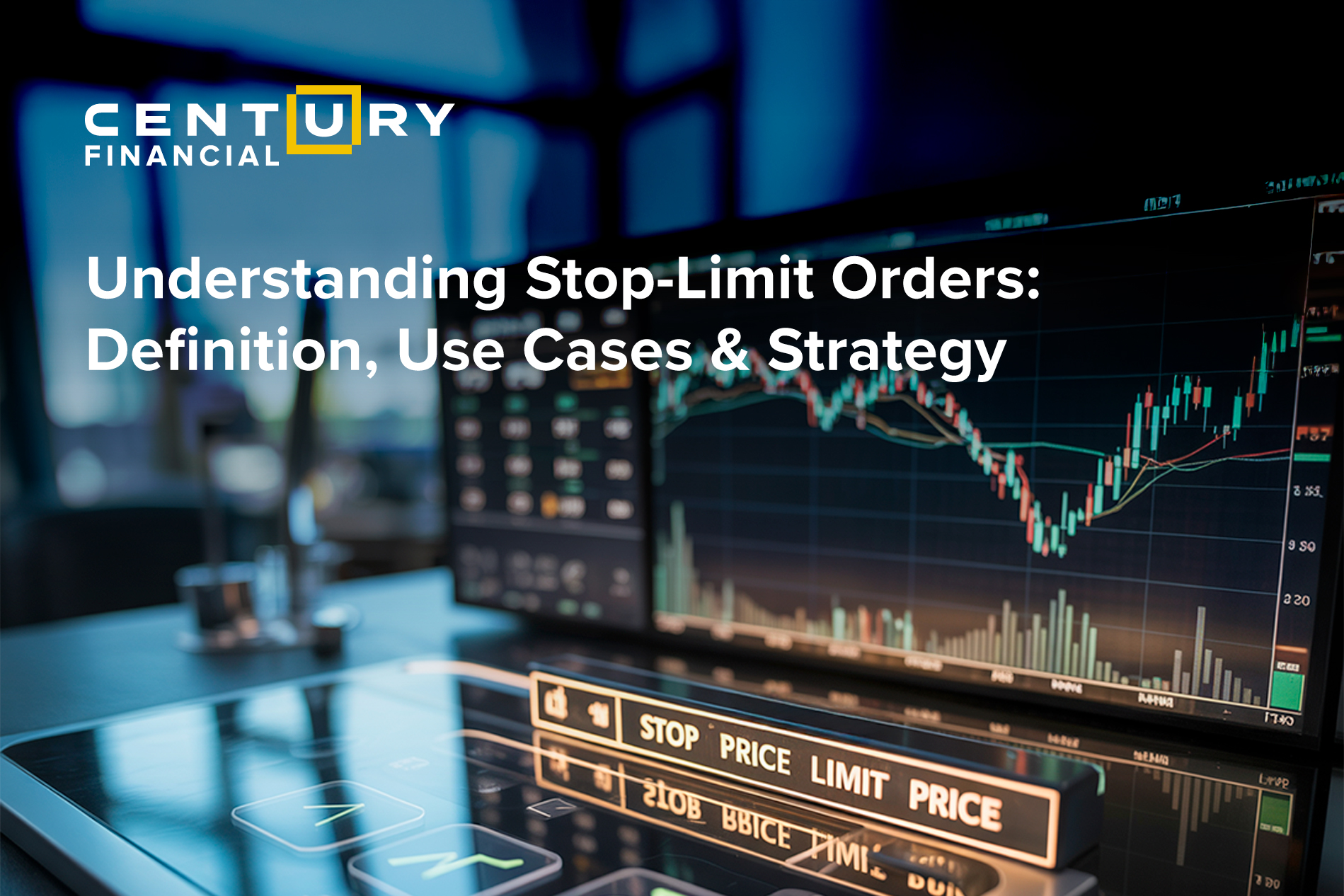
In a market driven by speed and sentiment, hesitation costs money. Stop-limit orders bring structure to chaos, ensuring your trades happen at your price—not the market’s whim.
It is a fact that trading involves not just spotting opportunities but also managing risks effectively. One of the advanced tools that helps traders achieve this balance is the stop-limit order. Combining the features of a stop order and a limit order allows traders to execute trades with more precision.
Whether you are a beginner trying to learn order types or an experienced investor looking to refine your strategy, understanding stop-limit orders can play a key role in improving your trading discipline.
What is a Stop-Limit Order?
A stop-limit order combines two order types: a stop (trigger) price and a limit price. Both these orders are referred to as conditional trading instructions. How they work is: when the market or instrument reaches the stop price, the order becomes a limit order, which only executes at that predetermined price or better.
This means the order won’t execute until the stop price is reached, and even then, it will only fill if the price stays within your specified limit. In essence, it protects you from unwanted slippage while ensuring you don’t enter or exit a trade at a worse price than you are comfortable with.
Unlike a market order or a simple stop-loss order, a stop-limit order gives you more control over the execution price—but it also carries the risk of non-execution if the market moves past your limit without matching.
How Stop-Limit Orders Work
A stop-limit order works by combining two price levels—the stop price and the limit price—along with duration settings. Once the stop is reached, the limit order is activated; however, execution only occurs if the market price matches the limit or is better.
Key Components of a Stop-Limit Order
A stop-limit order has multiple elements that determine when and how the trade executes. Each component allows you to control risk, manage execution, and align your trades with your strategy.
Key Features of Corporate Bonds

Stop Price (Trigger Point)
The activation level. When the market price reaches or crosses this point, your order becomes live. Without this, the order remains inactive.

Limit Price (Execution Threshold)
The worst acceptable price for your trade. For buyers, it’s the maximum you are willing to pay; for sellers, the minimum you are willing to accept.

Order Duration / Validity
Day Order is valid only for the current trading session.
Good-Till-Cancelled (GTC) orders remain active until executed or manually canceled.
Buy vs. Sell Stop-Limit Orders
Buy Stop-Limit Orders

This order is placed above the current market price, anticipating that momentum will push prices higher. The limit ensures you don’t overpay.
Sell Stop-Limit Orders

When selling, limits are placed below the current market price, often used to lock in profits or limit losses if prices fall. The limit ensures you don’t sell below your set threshold.
Execution Mechanics
The stop-limit order becomes a limit order when it gets triggered. The advantage here is that the order will only execute at the limit price or better. If no matching orders are available, the order may remain unfilled or be partially filled.
Key Benefits of Stop-Limit Orders
Stop-limit orders provide traders with a strategic balance between control and automation. Unlike market orders, which execute immediately, stop-limit orders allow you to set precise conditions for entry or exit. This makes them particularly useful for active traders, long-term investors, and anyone who wants to manage risk without being glued to the screen.
Major Advantages
The benefits of stop-limit orders go beyond just executing trades at desired prices. They combine price precision, risk management, and convenience, making them a versatile tool for both conservative and aggressive traders. By understanding these advantages, you can design more effective trading strategies, reduce emotional decision-making, and take control of execution in volatile or illiquid markets.

Price Control
You avoid your order being fulfilled at a price worse than you find acceptable. This ensures that your trades only execute within your comfort zone, making stop-limit orders ideal for disciplined trading strategies.

Risk Management
By setting predefined triggers, stop-limit orders help protect against sudden or adverse price movements—especially in volatile markets. They can also be used to secure profits before a potential reversal.

Automation & Convenience
Once placed, stop-limit orders don’t require constant monitoring. The system automatically triggers the order when conditions are met, allowing traders to focus on other opportunities or step away from the screen.
.png)
Strategic Flexibility
Stop-limit orders can be applied in both bullish and bearish scenarios—whether you’re looking to enter a breakout trade, lock in profits, or cap downside risk.

Psychological Discipline
They help reduce emotional trading decisions. Since the prices are predefined, you’re less likely to panic-sell or overpay in fast-moving markets.

Flexibility
Useful across different instruments, shares, commodities, indices, CFDs, etc., and on platforms like MT5 and Century Trader .
Drawbacks & Risks of Stop-Limit Orders
While stop-limit orders provide control, they also carry some risks. Traders should understand these drawbacks before relying on them, as poorly placed stop-limit orders can lead to missed opportunities or unprotected positions.
Common Risks
Stop-limit orders are not foolproof. While they offer price control and strategic flexibility, they introduce risks that can impact both execution and overall trade performance. Understanding the following risks can help prevent unexpected losses and improve overall trade planning.

Non-Execution Risk
If the limit price is not met after the stop is triggered, the order will not execute. This can leave you exposed to larger-than-expected losses or prevent you from entering a trade you anticipated.

Price Gaps in Volatile Markets
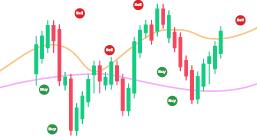
In fast-moving or illiquid markets, the price can “gap” over both the stop and limit levels without triggering your order. This is common after major news events, earnings releases, or market openings.
Complexity of Setup
Both the stop and limit prices must be carefully selected. Setting them too close may cause premature triggering, while setting them too far may make execution unlikely.

Partial Fills
Even if the order is triggered and matches the limit price, you may only receive a partial fill. This often occurs in low-liquidity instruments or when the order size is large compared to the available market depth.

False Sense of Security
Some traders assume stop-limit orders guarantee protection. However, unlike stop-loss market orders, they do not guarantee execution. This misunderstanding can create unnecessary risk if not managed carefully.
How Stop-Limit Orders Compare With Similar Order Types
| Order Type | Trigger Condition | Execution Price Assurance | Risk of Non-Execution |
|---|---|---|---|
| Market Order | Immediately at the current market price | It executes, but the price may be unfavourable | Very low for execution; price risk is high |
| Limit Order | Only executes at your limit price (or better) at any time | Price assured, if filled | May never fill if the market doesn’t reach the limit price |
| Stop-Loss (straight stop/market) | Triggered when the price hits the stop and becomes a market order | No price guarantee—fills at the next available market price | Executes, but possibly at a worse price |
| Stop-Limit | Triggered at the stop price and becomes a limit order | Assured price ceiling/floor, but only if the limit is met | Risk of no fill or partial fill if the market skips your limit |
Practical Examples of Stop-Limit Orders
Stop-limit orders can be easier to understand when applied to real-world trading scenarios, so here are some:
Example 1: Sell Stop-Limit (Protecting a Long Position)
Current Price: Stock A is trading at $100.
Purchase Price: $80
Your Strategy: You want to protect your gains in case the price starts falling sharply.
Order Setup:
- Stop Price: $90 (the trigger level).
- Limit Price: $88 (the lowest you’re willing to sell).
Outcome
- If the stock price falls to $90, the stop triggers a sell limit order.
- Your shares will only be sold if buyers are willing to pay $88 or above
- Risk: If the price drops too quickly (e.g., from $92 to $85), your order may not execute, resulting in larger losses.
Example 2: Buy Stop-Limit (Entering a Breakout)
Current Price: Stock B is trading at $50.
Your Strategy: You believe the stock will rally strongly if it breaks above resistance at $60.
Order Setup:
- Stop Price: $60 (activation level once the breakout happens).
- Limit Price: $62 (maximum price you’re willing to pay).
Outcome
- If the stock rises to $60, the stop triggers a buy limit order.
- Your shares will only be purchased if the price is $62 or lower.
- Benefit: You catch the breakout without chasing the price too high.
- Risk: If the stock jumps directly from $59 to $65, your order may not fill.
Best Practices When Using Stop-Limit Orders
To maximize the effectiveness of stop-limit orders, traders should carefully strike a balance between precision and practicality.
Key Guidelines for Traders
The proper application of stop limit orders enhances price reliability, minimizes risk, and supports disciplined trading. Here are the main best practices to follow:
Analyze Volatility
The more volatile an instrument, the greater the chance of rapid price swings. In such cases, you may need a wider margin between your stop and limit prices to reduce the risk of your order being skipped.
Monitor Liquidity
Stop limit orders are most effective in liquid markets, where there’s a higher likelihood of matching with counterparties. In thinly traded instruments, prices may “jump” past your levels, leaving your order unfulfilled.
Use a Realistic Buffer
Setting the limit price too close to the stop price increases the risk of non-execution. Allowing a small buffer ensures your order has a higher probability of filling while still respecting your price boundaries.
Select Proper Order Duration
Decide between Day orders and Good-Till-Cancelled orders depending on your estimate of market movements.
Always Have a Backup Plan
Remember that stop-limit orders do not guarantee execution. If your priority is a guaranteed exit rather than price control, a stop-loss market order might be the safer alternative.
Combine with Technical Analysis
Placing stop and limit levels near support, resistance, or trendlines aligns with market behavior and also improves your chances of execution.
Conclusion
Every successful trader knows that winning isn’t just about timing the market. It’s about managing risk smartly. Stop-limit orders let you do exactly that, protecting profits while seizing opportunities.
Stop-limit orders are potent tools for traders who need precise control over entries and exits. They combine the advantages of stop orders (triggering at certain price levels) with limit orders (ensuring a price threshold), enabling better risk management. However, they come with the trade-off of possible non-execution or partial execution, especially in volatile or illiquid markets.
FAQs
Q1. What is the difference between a stop-limit order and a stop-loss order?
A: A stop-loss becomes a market order once the stop price is hit (so execution is certain, but the price may differ). A stop limit order, once triggered, is a limit order, so the price is controlled, but execution is not guaranteed.
Q2: Can a stop-limit order fail to execute?
A: Yes. If, after triggering the stop price, there are no market orders at or better than the limit price, the order will remain unfilled, fully or partially.
Q3: When is a stop-limit order preferable to a market order?
A: When you want price protection and are willing to accept the risk of non-execution, it is instrumental in volatile instruments or when avoiding considerable slippage or gaps.
Q4. Are stop-limit orders available outside regular trading hours?
A: It depends on the trading platform and market rules. Many platforms restrict triggering/execution to regular session hours. Outside those times, there is a risk of a price surge when the market reopens. Always check platform terms.
Q5. How should I set stop and limit prices—what margin or buffer is ideal?
A: This depends on volatility, spread, and instrument. A common approach is to place a limit away from the stop (for example, stop at 2% adverse move and limit another 1-2%) to allow for trade execution. Use historical price movements and recent behavior for guidance.
Related Reads
This marketing and educational content has been created by Century Financial Consultancy LLC (“Century”) for general information only. It does not constitute investment, legal, tax, or other professional advice, nor does it constitute a recommendation, offer, or solicitation to buy or sell any financial instrument. The material does not take into account your investment objectives, financial situation, or particular needs.
The opinions expressed by the hosts, speakers, or guests are their own and may change without notice. Information is based on sources we consider to be reliable; however, Century does not guarantee its accuracy, completeness, or timeliness and accepts no liability for any loss arising from reliance on this content.
Trading and investing involve significant risk, and losses may exceed initial deposits. Past performance is not indicative of future results. CFDs and other leveraged products are complex instruments that may not be suitable for all investors. Please ensure you understand how these products work, the associated risks, and seek independent professional advice if necessary.
Century is licensed and regulated by the UAE Capital Market Authority (CMA) under License Nos. 20200000028 and 301044.
Please refer to the full risk disclosure mentioned on our website.





Regulated by CMA
Century Financial Consultancy LLC


.png)
.png)
.png)
.png)


Reach us:
-
Dubai
6th Floor, Emaar Square Building 4,
Downtown, Dubai, P.O. Box 65777,
Dubai, United Arab Emirates -
Abu Dhabi
27th Floor, Office 2701,
Shining Towers, Abu Dhabi, UAE -
Sharjah
29th Floor, Office 2905,
The Business Tower, Sharjah, UAE - +971 (4) 356 2800
- info@century.ae

Disclaimer: Trading in financial products carries substantial risk. Leveraged over-the-counter (OTC) derivatives, such as Contracts for Difference (CFDs) and spot forex, may result in losses exceeding initial deposits and may not be suitable for all investors. These complex instruments do not confer ownership of the underlying assets. Investors should carefully consider their investment objectives and risk appetite, and seek independent professional advice if necessary.
Century Financial Consultancy LLC (CFC) is licensed and regulated by the Capital Market Authority (CMA) of the UAE under license numbers 20200000028 and 301044 to carry out the activities of Financial Products dealer, Trading Broker in international markets, Trading Broker of OTC derivatives and currencies in the spot market, Introduction, Financial Consultations, and Promotion. CFC is incorporated under UAE law, registered with the Dubai Economic Department (No. 768189), with its office at 601, Level 6, Building No. 4, Emaar Square, Downtown Dubai, UAE, PO Box 65777.
The content on this website is provided solely for informational and educational purposes and does not constitute an offer, recommendation, or solicitation to buy or sell any securities or financial products.
Products and services offered by CFC are not intended for use in any jurisdiction where such use or distribution would breach local laws or regulatory requirements.
⚠️ Alert: Fraudulent Activity Notice
Century Financial Consultancy LLC (“Century”) has become aware of fraudulent individuals and entities impersonating our firm through unofficial websites, social media channels, and messaging applications such as Telegram, WhatsApp, and Discord.
Please be advised:
- Century does not manage investments on behalf of clients.
- Century does not solicit funds or guarantee investment returns.
- Century does not accept or make payments in cash, cryptocurrency, or digital assets.
- We do not conduct business via social media or messaging platforms.
Our only official website is www.century.ae, and all communication is conducted exclusively through verified channels.
We strongly urge the public to remain vigilant, verify the authenticity of any communication claiming to be from Century, and report any suspicious activity. Century disclaims any responsibility for losses arising from dealings with unauthorised or fraudulent parties.
