 Loading ...

Friday, April 24, 2026
Swap Charges in Forex: Complete Guide to Swap Rates, Fees, and Calculations
By Century Financial in 'Blog'
Swap charges in forex are one of the most misunderstood yet unavoidable costs in currency trading. Many traders focus heavily on spreads and commissions but overlook the impact of overnight holding costs. These costs, known as foreign exchange (forex) swap or rollover fees, can significantly affect trading performance, especially for swing traders and long-term investors.
Here, you will learn how forex swap works, how swap rate forex is calculated, when swap fees are charged, and how traders can manage or reduce overnight swap costs while trading currencies.
What Is a Forex Swap and Why It Exists
In forex trading, currencies are traded in pairs, meaning you are simultaneously borrowing one currency and lending another. Because different countries have different interest rates, holding a position past the market close results in an interest rate differential. A forex swap refers to the interest adjustment applied when a trading position is held open overnight.
This interest difference is applied as a swap charge or swap credit, depending on the direction of your trade.
Understanding Swap Charges in Forex
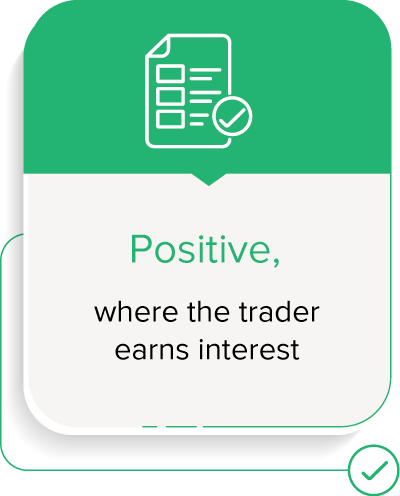
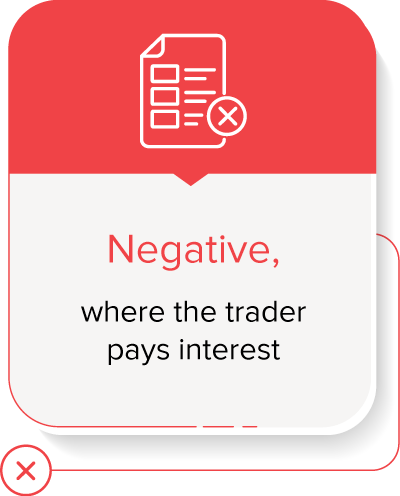
Swap charges in forex are applied once per trading day when positions remain open after the rollover time, usually around 5 PM New York time. Whether the swap is positive or negative depends on the interest rate differential between the two currencies and on whether the position is a buy or a sell. The charge can be:
Overnight Swap and Rollover Fee Explained
The terms "overnight swap" and "rollover fee" are often used interchangeably. They both describe the cost or income resulting from extending a position into the next trading day. On Wednesdays, most brokers apply a triple swap to account for weekend settlement, making this day particularly important for swap-sensitive traders
How Swap Rate Forex Works in Real Trading
Swap rate forex is not random. It is calculated using global interest rates, broker markups, and position size. Understanding how it works helps traders plan better entries and holding periods.
Key Factors Affecting Swap Fee Forex
Several elements influence the swap fee that forex traders experience. For example, buying a high-interest currency against a low-interest currency may result in a positive swap, while the opposite can lead to higher costs.
Interest rate difference between the two currencies
Trade direction, buy or sell
Lot size and contract value
Broker’s swap markup
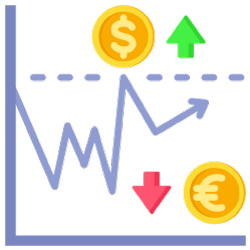
Market liquidity and volatility
Swap Rate Calculation: How Overnight Charges Are Computed
Swap rate calculation could help you understand the true cost of keeping a position open beyond the trading day. It is based on the interest rate differential between the two currencies, adjusted for trade size and broker-specific conditions.
Since swap charges apply daily and compound over time, even low rates can significantly impact long-term positions. Estimating swap costs in advance allows traders to plan holding periods more efficiently and avoid unexpected changes in account balance.
Basic Swap Rate Calculation Formula
The general swap rate calculation follows this structure:
Example table for clarity:
| Currency Pair | Position Type | Interest Difference | Swap Outcome |
|---|---|---|---|
| EUR/USD | Buy | Low | Negative swap |
| AUD/JPY | Buy | High | Positive swap |
| USD/CHF | Sell | Moderate | Variable swap |
Actual swap values vary by broker and market conditions, but the logic remains consistent.
Triple Swap and Its Trading Impact
On Wednesdays, traders incur or earn a triple rollover fee. This is because forex markets settle on a T+2 basis, covering Saturday and Sunday. Traders who ignore this factor may experience unexpected changes in their account balance, especially when trading higher volumes.
Elevate your trading experience with
Century Trader App
Elevate your trading experience with
Century Trader App

Managing and Reducing Swap Charges in Forex Trading
Swap charges do not have to be a disadvantage. With proper planning, traders can reduce or even benefit from overnight swap structures.
Practical Ways to Minimize Swap Charges
Century’s trading platforms, like MT5 and the Century Trader App allow traders to view live swap rates before placing trades, improving transparency and decision-making. Common methods used by professional traders include:
Strategy Alignment With Swap Costs
Understanding swap charges could transform them from a hidden cost into a strategic tool. Long-term traders must factor swap charges into strategy design. High-frequency traders may avoid swaps entirely, while carry traders actively seek positive swap opportunities.
Conclusion
Swap charges in forex are not just a technical detail. They directly affect long-term profitability, capital management, and strategy performance. Traders who ignore overnight swap costs often misjudge real returns, while informed traders use swap rate forex insights to optimize holding periods and asset selection. Whether you are active in forex, index, or commodities trading through CFDs, or exploring opportunities in the share market, Century’s Trading Platform, MT5 Platform, and Century Trader App help you track swap fees accurately and trade with confidence.
From gold trading and oil trading to diversified share basket instruments, Century Financial Services empowers you with education, technology, and execution quality that support smarter decisions. With regulatory oversight and a legacy of serving traders for over 35 years, Century can make trading more informed and easier.
FAQs
Q1. What is the difference between swap charges and spreads?
A: Spreads are transaction costs applied when entering or exiting a trade, while swap charges apply only when a position is held overnight. Both impact profitability but in different ways.
Q2: Do all forex trades have swap fees?
A: No. Trades closed before the rollover time do not incur overnight swap charges. Only open positions held past the daily cutoff are affected.
Q3: Are swap charges the same for buy and sell trades?
A: No. Swap charges vary by trade direction and interest rate differentials. A buy trade may have a positive swap, while the sell trade on the same pair may incur a cost.
Q4. Can swap charges change over time?
A: Yes. Swap rates fluctuate due to changes in central bank interest rates, market liquidity, and broker policies.
Q5. How can traders check swap rates before trading?
A: Most modern trading platforms display swap rates directly within the instrument specifications, helping traders plan trades.
This marketing and educational content has been created by Century Financial Consultancy LLC (“Century”) for general information only. It does not constitute investment, legal, tax, or other professional advice, nor does it constitute a recommendation, offer, or solicitation to buy or sell any financial instrument. The material does not take into account your investment objectives, financial situation, or particular needs.
The opinions expressed by the hosts, speakers, or guests are their own and may change without notice. Information is based on sources we consider to be reliable; however, Century does not guarantee its accuracy, completeness, or timeliness and accepts no liability for any loss arising from reliance on this content.
Trading and investing involve significant risk, and losses may exceed initial deposits. Past performance is not indicative of future results. CFDs and other leveraged products are complex instruments that may not be suitable for all investors. Please ensure you understand how these products work, the associated risks, and seek independent professional advice if necessary.
Century is licensed and regulated by the UAE Capital Market Authority (CMA) under License Nos. 20200000028 and 301044.
Please refer to the full risk disclosure mentioned on our website.



Regulated by CMA
Century Financial Consultancy LLC


.png)


.png)
.png)

Reach us:
-
Dubai
6th Floor, Emaar Square Building 4,
Downtown, Dubai, P.O. Box 65777,
Dubai, United Arab Emirates -
Abu Dhabi
27th Floor, Office 2701,
Shining Towers, Abu Dhabi, UAE -
Sharjah
29th Floor, Office 2905,
The Business Tower, Sharjah, UAE - +971 (4) 356 2800
- info@century.ae

Disclaimer: Trading in financial products carries substantial risk. Leveraged over-the-counter (OTC) derivatives, such as Contracts for Difference (CFDs) and spot forex, may result in losses exceeding initial deposits and may not be suitable for all investors. These complex instruments do not confer ownership of the underlying assets. Investors should carefully consider their investment objectives and risk appetite, and seek independent professional advice if necessary.
Century Financial Consultancy LLC (CFC) is licensed and regulated by the Capital Market Authority (CMA) of the UAE under license numbers 20200000028 and 301044 to carry out the activities of Financial Products dealer, Trading Broker in international markets, Trading Broker of OTC derivatives and currencies in the spot market, Introduction, Financial Consultations, and Promotion. CFC is incorporated under UAE law, registered with the Dubai Economic Department (No. 768189), with its office at 601, Level 6, Building No. 4, Emaar Square, Downtown Dubai, UAE, PO Box 65777.
The content on this website is provided solely for informational and educational purposes and does not constitute an offer, recommendation, or solicitation to buy or sell any securities or financial products.
Products and services offered by CFC are not intended for use in any jurisdiction where such use or distribution would breach local laws or regulatory requirements.
⚠️ Alert: Fraudulent Activity Notice
Century Financial Consultancy LLC (“Century”) has become aware of fraudulent individuals and entities impersonating our firm through unofficial websites, social media channels, and messaging applications such as Telegram, WhatsApp, and Discord.
Please be advised:
- Century does not manage investments on behalf of clients.
- Century does not solicit funds or guarantee investment returns.
- Century does not accept or make payments in cash, cryptocurrency, or digital assets.
- We do not conduct business via social media or messaging platforms.
Our only official website is www.century.ae, and all communication is conducted exclusively through verified channels.
We strongly urge the public to remain vigilant, verify the authenticity of any communication claiming to be from Century, and report any suspicious activity. Century disclaims any responsibility for losses arising from dealings with unauthorised or fraudulent parties.
