 Loading ...

Friday, February 20, 2026
What Is Trade? A Complete Guide to Trading, Investment, and Market Opportunities
By Century Financial in 'Blog'
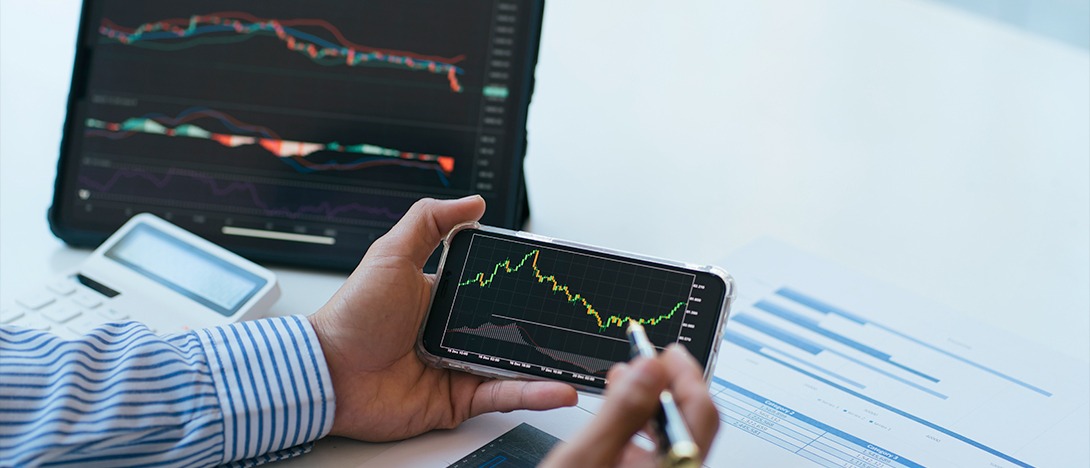
Trade is one of the oldest and most essential economic activities in the world. From exchanging goods in ancient civilizations to executing digital orders on modern trading platforms, trade has continuously evolved. In today’s financial markets, trade goes far beyond buying and selling physical products; it includes stock market trading, commodities, forex, and CFD trading across global exchanges.
Here, we will discuss the meaning of a trader, how trading works in financial markets, and how individuals and businesses generate trading profits through informed investment decisions.
What Is Trade and What Is Meant by Trade
Trade refers to the voluntary exchange of goods, services, or financial instruments between two or more parties. In economic terms, trade allows participants to benefit by specializing in what they do best and exchanging surplus value with others.
What Is Meant by Trade in Financial Markets
In financial markets, trade means buying or selling assets such as stocks, currencies, commodities, or derivatives to generate returns. Each transaction involves a buyer, a seller, a price, and a quantity.
Modern trading in the financial markets occurs electronically, either through regulated exchanges or over-the-counter markets, using advanced trading platforms.
Trader Meaning and Role in the Market
A trader is an individual or institution that participates in market transactions by executing trades based on analysis, market trends, or strategic objectives. Traders may focus on short-term price movements or long-term investment opportunities depending on their approach.
Key responsibilities of a trader include:
What Is Stock Market Trading and How It Works
Stock market trading involves buying and selling shares of publicly listed companies through stock exchanges. It is one of the most popular forms of trade investment and a core part of the global financial system.
What Is Stock Market Trading in Simple Terms
Stock market trading allows participants to take ownership positions in companies or speculate on price movements. When traders buy shares, they anticipate price appreciation or dividends. When they sell, they aim to realize trading profit or limit losses.
Types of Stock Market Trading Styles
Different trading styles exist based on time horizon and strategy. For example, trade to trade stocks strategies are often used by experienced traders who enter and exit positions within specific market cycles to capture recurring price patterns. Some other trading styles are:
| Trading Style | Holding Period | Objective |
|---|---|---|
| Intraday Trading | Same day | Short-term price movements |
| Swing Trading | Days to weeks | Trend-based opportunities |
| Positional Trading | Weeks to months | Medium-term growth |
| Long-Term Investing | Years | Wealth creation |
Elevate your trading experience with
Century Trader App
Elevate your trading experience with
Century Trader App

Trade Investment Explained
Investments were traditionally made in tangible assets such as precious metals and real estate. The popularization and subsequent digitization of financial markets have made trading and investing more accessible to both individuals and institutions.
Trade Investment vs Traditional Investment
Participation in financial markets need not be limited to a single asset. Collective trading strategies often combine multiple assets, such as equities, commodities, and currencies, to diversify risk and optimize returns. And all these assets can be held for a period that aligns with the participant's intent.
Trade investment differs from long-term investing in several ways.
| Aspect | Trade Investment | Traditional Investment |
|---|---|---|
| Time Horizon | Short to medium term | Long term |
| Risk Level | Higher | Moderate |
| Capital Rotation | Frequent | Limited |
| Income Potential | Faster realization | Gradual growth |
Trading Profit, Risk, and Market Instruments
Though financial markets are famous for their returns, they are also infamous for their risks. Generating trading profit requires a balance between opportunity and risk management.
How Trading Profit Is Generated
Trading profit occurs when an asset is sold at a price higher than its purchase cost, or when short selling profits from price declines. Profits may also arise from leveraged products such as CFDs, which allow traders to gain exposure to larger market positions.
Major Trading Instruments in Global Markets
Popular instruments used in modern trading include:
Advanced platforms such as MT5 and Century Trader provide traders with real-time data, technical tools, and multi-asset access.
Conclusion
Trade is the foundation of global economic activity and a powerful way to participate in financial markets. Century Financial provides traders with advanced trading platform solutions, access to global markets, professional tools, and secure execution. With the Century Trader App and MT5, traders can engage in share trading, forex trading, commodities, CFD trading, and diversified share basket strategies—all from a single ecosystem.
If you are ready to transform market opportunities into structured trading profit, open an account with Century Financial and trade with confidence, expertise, and global reach.
FAQs
Q1. What is the basic meaning of trade?
A: Trade means exchanging value between parties. In financial markets, it refers to buying and selling assets to benefit from price movements or investment growth.
Q2: What is stock market trading, and is it risky?
A: Stock market trading involves buying and selling shares. It carries risk due to market volatility, but disciplined strategies and risk management can help limit potential losses.
Q3: How do traders earn trading profit consistently?
A: Consistent profits come from strong analysis, disciplined execution, diversification, and the use of reliable platforms for trade and investment.
Q4. What markets are best for beginners in trading
A: Beginners often start with share market trading, forex trading, or commodities due to liquidity, transparency, and availability of educational resources.
Related Reads
This marketing and educational content has been created by Century Financial Consultancy LLC (“Century”) for general information only. It does not constitute investment, legal, tax, or other professional advice, nor does it constitute a recommendation, offer, or solicitation to buy or sell any financial instrument. The material does not take into account your investment objectives, financial situation, or particular needs.
The opinions expressed by the hosts, speakers, or guests are their own and may change without notice. Information is based on sources we consider to be reliable; however, Century does not guarantee its accuracy, completeness, or timeliness and accepts no liability for any loss arising from reliance on this content.
Trading and investing involve significant risk, and losses may exceed initial deposits. Past performance is not indicative of future results. CFDs and other leveraged products are complex instruments that may not be suitable for all investors. Please ensure you understand how these products work, the associated risks, and seek independent professional advice if necessary.
Century is licensed and regulated by the UAE Capital Market Authority (CMA) under License Nos. 20200000028 and 301044.
Please refer to the full risk disclosure mentioned on our website.



Regulated by CMA
Century Financial Consultancy LLC


.png)
.png)
.png)
.png)
.png)

Reach us:
-
Dubai
6th Floor, Emaar Square Building 4,
Downtown, Dubai, P.O. Box 65777,
Dubai, United Arab Emirates -
Abu Dhabi
27th Floor, Office 2701,
Shining Towers, Abu Dhabi, UAE -
Sharjah
29th Floor, Office 2905,
The Business Tower, Sharjah, UAE - +971 (4) 356 2800
- info@century.ae

Disclaimer: Trading in financial products carries substantial risk. Leveraged over-the-counter (OTC) derivatives, such as Contracts for Difference (CFDs) and spot forex, may result in losses exceeding initial deposits and may not be suitable for all investors. These complex instruments do not confer ownership of the underlying assets. Investors should carefully consider their investment objectives and risk appetite, and seek independent professional advice if necessary.
Century Financial Consultancy LLC (CFC) is licensed and regulated by the Capital Market Authority (CMA) of the UAE under license numbers 20200000028 and 301044 to carry out the activities of Financial Products dealer, Trading Broker in international markets, Trading Broker of OTC derivatives and currencies in the spot market, Introduction, Financial Consultations, and Promotion. CFC is incorporated under UAE law, registered with the Dubai Economic Department (No. 768189), with its office at 601, Level 6, Building No. 4, Emaar Square, Downtown Dubai, UAE, PO Box 65777.
The content on this website is provided solely for informational and educational purposes and does not constitute an offer, recommendation, or solicitation to buy or sell any securities or financial products.
Products and services offered by CFC are not intended for use in any jurisdiction where such use or distribution would breach local laws or regulatory requirements.
⚠️ Alert: Fraudulent Activity Notice
Century Financial Consultancy LLC (“Century”) has become aware of fraudulent individuals and entities impersonating our firm through unofficial websites, social media channels, and messaging applications such as Telegram, WhatsApp, and Discord.
Please be advised:
- Century does not manage investments on behalf of clients.
- Century does not solicit funds or guarantee investment returns.
- Century does not accept or make payments in cash, cryptocurrency, or digital assets.
- We do not conduct business via social media or messaging platforms.
Our only official website is www.century.ae, and all communication is conducted exclusively through verified channels.
We strongly urge the public to remain vigilant, verify the authenticity of any communication claiming to be from Century, and report any suspicious activity. Century disclaims any responsibility for losses arising from dealings with unauthorised or fraudulent parties.
