 Loading ...

Monday, August 24, 2026
What Is Short Selling? Meaning, How It Works, Risks & Strategies
تم إعداد هذا المنشور من قبل سنشري للاستشارات
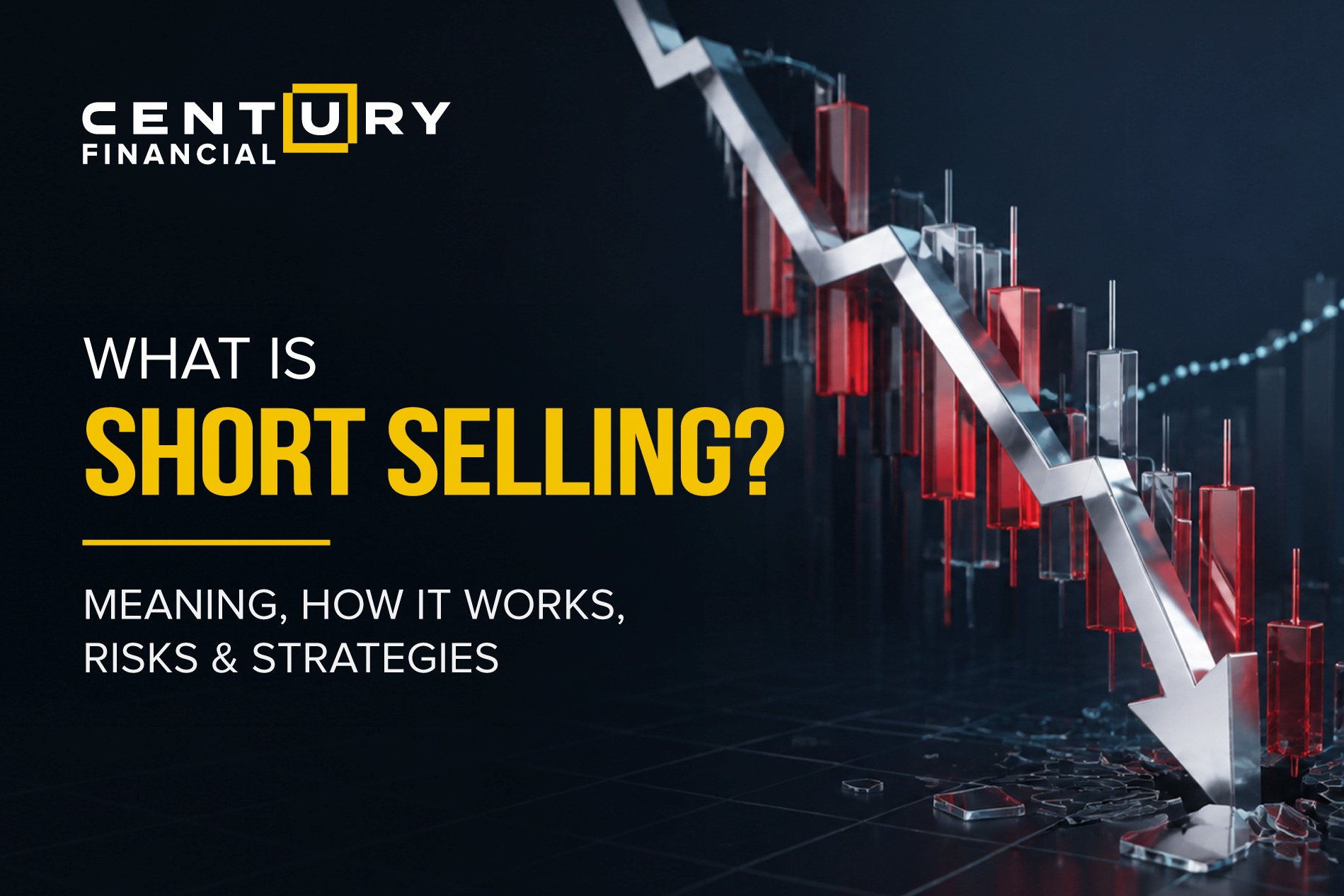

What Is Short Selling?
Short selling means selling an asset you don't own when the outlook on it is bearish. You borrow the asset from a broker, sell it immediately, then buy it back later at a lower price. The difference between the selling and buying prices is your profit.
In direct contrast to normal trading, in short selling, the asset is sold before it is bought, and gains are made when the asset price falls. Short selling has its merits in certain market conditions, as a standalone position and as a part of more elaborate trading strategies.
How Does Short Selling Work?
Here’s a breakdown of what short selling, or taking a short position, looks like:
If the market moves against the position and rises, losses happen. Another aspect to note: when you purchase the asset during the second leg of the trade, your position is closed rather than initiating a new one.
Short Selling Example
There are two ways a trade could go: in profit or loss.
For example, you open a short position by selling the shares of XYZ. The shares are trading at $100, and you short 10 shares, making your position worth $1000.
If the market follows your outlook and falls by 15%, your holdings would drop to $850, generating gains of $150. If instead the shares rise by 15%, the value of your holding goes up to $1,150, wiping $150 from your account.
What Can You Short Sell?
Shorting is not limited to a particular asset class. But most assets that can be shorted have leverage, which requires hands-on monitoring and cognizance of the risks involved.
How to Short Sell with CFDs
CFDs (Contracts for Difference) simplify short selling: no borrowing process, no lending fees (mostly). It offers a wider range of options and built-in leverage for greater exposure.
CFD short selling vs direct shorting:
| Aspect | CFD Short Selling | Direct Short Selling |
|---|---|---|
| Borrowing | No (contract-based) | Yes (borrow shares from broker) |
| Leverage | Available but amplifies gains & losses | Limited or unavailable |
| Speed | Instant | Slower |
| Costs | Spreads, overnight financing | Borrow fees, commissions |
Benefits of Short Selling
Profit from falling markets
Markets don't always rise. Factors such as recessions, earnings misses, and geopolitical crises exert downward pressure.
Hedge existing positions
You can short a CFD of the stock you hold, or a related index to protect against downside. Gains on the short position can help offset losses on the long position.
Flexible portfolio strategies
Even in a range-bound market, you can sell at resistance and capitalize on minor movements with proper analysis and strategies.
Risk management
Short selling allows tactical hedges. You don't have to exit longs; you can temporarily hedge with shorts, then close them when the threats pass.
Risks of Short Selling
What Is a Short Squeeze?
A short squeeze happens when price rises sharply and forces short sellers to panic-buy, covering their positions. This buying pressure accelerates the price rise, creating a feedback loop.
How it happens:
Key metrics showing squeeze risk:

GameStop had extremely high short interest. Retail traders recognized this and began buying. Shorts panicked and bought to cover. The price exploded from $20 to $400+ within weeks. The squeeze was dramatic but short-lived—the price eventually fell back to $100-$150 as shorts covered and momentum faded.
Short Selling Strategies
Trend-Based
Downtrends can be identified using moving averages or technical indicators. A short position can be taken when the indicators and volume confirm a bearish trend; an exit can be made when the trend weakens or reverses.
Support-Level Breakdown
Support levels are recognized using horizontal price levels or moving averages. Short when price breaks below support, with a stop-loss placed above support (invalidation point).
Momentum-Based
Momentum indicators (RSI, MACD) can be used to identify overbought conditions. Traders short when momentum indicators show extreme overbought levels combined with technical resistance and exit when momentum reverses.
News-Based
Monitoring earnings, guidance misses, or regulatory announcements that trigger selling can help spot potential trades.
Hedging Strategy:
Shorting a correlated asset or index to hedge an already open long-term position is one of the more popular uses of shorting. Close the short when the threat passes.
How to Short Sell: Step-by-Step
Here’s a simple checklist for taking a short position.
Common Mistakes When Short Selling
Short selling can be a valuable addition to your trading strategy, but a slight oversight can lead to unwanted losses. Some mistakes to avoid are:
Dependable platforms equipped with built-in alerts, analytical tools, and economic calendars can make trading easier. Century Financial’s 35+ year legacy is built on trust and transparency. Our platform offerings, including Century Trader, MT5, TWS, and CQG, are widely acclaimed as secure and high-speed execution platforms.
Is Short Selling Suitable for Beginners?
Short selling can work for beginners if they first master the fundamental concepts. Some aspects beginners should understand:
Conclusion
Short selling is betting against assets—profiting when prices fall instead of rise. The mechanics are the opposite of normal trading: sell first, buy lower later, and pocket the difference.
Success requires strict risk management, detailed analysis, close monitoring, and a platform that supports speed and accuracy. Beginners need to test their strategies before they commit capital. Century Financial offers trusted platforms with demo accounts for you to trade with assurance and confidence in global markets.
Frequently Asked Questions
Q1: What is short selling?
A: Short selling is selling an asset you don't own, with the assumption that the price will fall. You borrow the asset, sell it, buy it back at a lower price, return it, and keep the profit—the reverse of normal buy-low-sell-high trading.
Q2: How does short selling work?
A: A broker lends you an asset, or you opt for derivative contracts like futures or CFDs. You sell it at the current price; if the asset falls, you make a profit by closing the position by buying it back.
Q3: Is short selling risky?
A: Yes, as losses are potentially unlimited. When buying a stock at $50, the maximum loss a trader incurs is $50. A stock has infinite growth potential, which means a $50 shorted stock can incur losses in the -3 and 4-figure ranges.
Q4: What is a short squeeze?
A: Price rises sharply, forcing short sellers to panic-buy to cover their positions. Their buying pressure accelerates the rise, creating a feedback loop. Price spikes to unsustainable levels until shorts are completely forced out.
Q5: How does leverage affect short selling?
A: Leverage amplifies both gains and losses. 50:1 leverage means a 1% move against you can lead to a 50% margin loss. A 2% move and you are fulfilling a margin call or facing a forced liquidation of the position. Conservative leverage is essential for short selling.
لا تقدم شركة سنشري للإستشارات والتحليل المالي ش.ذ.م.م (الشركة) محتوى هذه المدونة، بما في ذلك أي أبحاث أو تحليلات أو آراء أو توقعات أو أي معلومات أخرى (يُشار إليها مجتمعةً باسم "المعلومات")، إلا لأغراض التسويق والتثقيف وإتاحة المعلومات العامة. ولا يُفسَّر ذلك على أنه نصيحة استثمارية أو توصية أو دعوة لشراء أو بيع أي أدوات مالية.
كما يجوز نشر هذه المعلومات عبر قنوات مختلفة، بما في ذلك موقع الشركة الإلكتروني، ومنصات الغير، والنشرات الإخبارية، والمواد التسويقية، ورسائل البريد الإلكتروني، ووسائل التواصل الاجتماعي، وتطبيقات المراسلة، والندوات الإلكترونية، وغيرها من وسائل التواصل. وبينما تسعى الشركة لضمان دقة المحتوى، فإنها لا تضمن اكتماله أو موثوقيته أو تحديثه في الوقت المناسب. وعليه، فأي قرارات تُتخذ بناءً على هذه المعلومات تكون على مسؤوليتك الشخصية. ولا تتحمل الشركة أي مسؤولية عن أي خسارة أو ضرر ناتج عن استخدامها.
ينطوي تداول المنتجات المالية على مخاطر كبيرة، بما لا يتناسب مع جميع المستثمرين. فيُرجى التأكد من وعيك التام بالمخاطر، وطلب الاستشارة المهنية المتخصصة إذا لزم الأمر.
يُرجى الاطلاع على بيان كشف المخاطر الشامل المتوفر على موقعنا الإلكتروني.




تنظمها هيئة الأوراق المالية والسلع
سنشري للاستشارات المالي ش.ذ.م.م


تصل إلينا:
-
دبي
الطابق رقم 6, مبنى رقم 4, ساحة إعمار دبي
وسط مدينة دبي، ص.ب: 65777،
دبي، الإمارات العربية المتحدة -
Abu Dhabi
27th Floor, Office 2701,
Shining Towers, Abu Dhabi, UAE -
Sharjah
29th Floor, Office 2905,
The Business Tower, Sharjah, UAE - +971 (4) 356 2800
- info@century.ae

Century Financial is the presenting sponsor of

ينطوي التداول في المنتجات المالية على مخاطر كبيرة. فالاعتماد على المشتقات المالية المتاحة للتداول خارح البورصة، مثل عقود الفروقات وتداول العملات الأجنبية (الفوركس) الفوري، قد يتسبب في خسائر تتجاوز قيمة الإيداعات الأولية، مما يجعلها غير ملائمة لجميع المستثمرين. فهذه الأدوات المالية المعقدة لا تمنح ملكية مباشرة للأصول الأساسية. لذا، ينبغي للمستثمرين الاحتراز عند تحديد أهدافهم الاستثمارية ومراعاة مستوى المخاطرة المتوقَع، واللجوء إلى الاستشارة المهنية المتخصصة عند الضرورة.
سنشري للإستشارات والتحليل المالي ش.ذ.م.م (الشركة)، شركة مرخّصة ومنظمة من هيئة الأوراق المالية والسلع في دولة الإمارات العربية المتحدة، بموجب الترخيص رقم (20200000028) و(301044) لتولي أعمال الوساطة في الأسواق الدولية، وتداول المشتقات المالية والعملات المتاحة للتداول خارج البورصة في سوق التداول الفوري، بالإضافة إلى تقديم الخدمات الاستشارية والترويجية. تأسست الشركة بموجب قوانين دولة الإمارات العربية المتحدة، وهي مسجلة لدى دائرة التنمية الاقتصادية بدبي (رقم: 768189)، حيث يقع مكتبها المسجّل في 601، الطابق السادس، المبنى رقم 4، ميدان إعمار، وسط مدينة دبي، دولة الإمارات العربية المتحدة، ص.ب. 65777.
لا يُعرَض محتوى هذا الموقع الإلكتروني إلا لأغراض تعريفية تثقيفية بحتة، فلا يمثل عرضًا ولا توصيةً ولا دعوةً لشراء أو بيع أي أوراق مالية أو منتجات مالية.
لا تنوي الشركة استخدام أو توزيع منتجاتها وخدماتها في أي ولاية قضائية حيث يُشكِّل هذا الاستخدام أو التوزيع انتهاكًا للقوانين المحلية أو اللوائح التنظيمية.
