 Loading ...

Thursday, July 23, 2026
What Is Price Slippage in Trading?
تم إعداد هذا المنشور من قبل سنشري للاستشارات
What Causes Slippage in Trading?
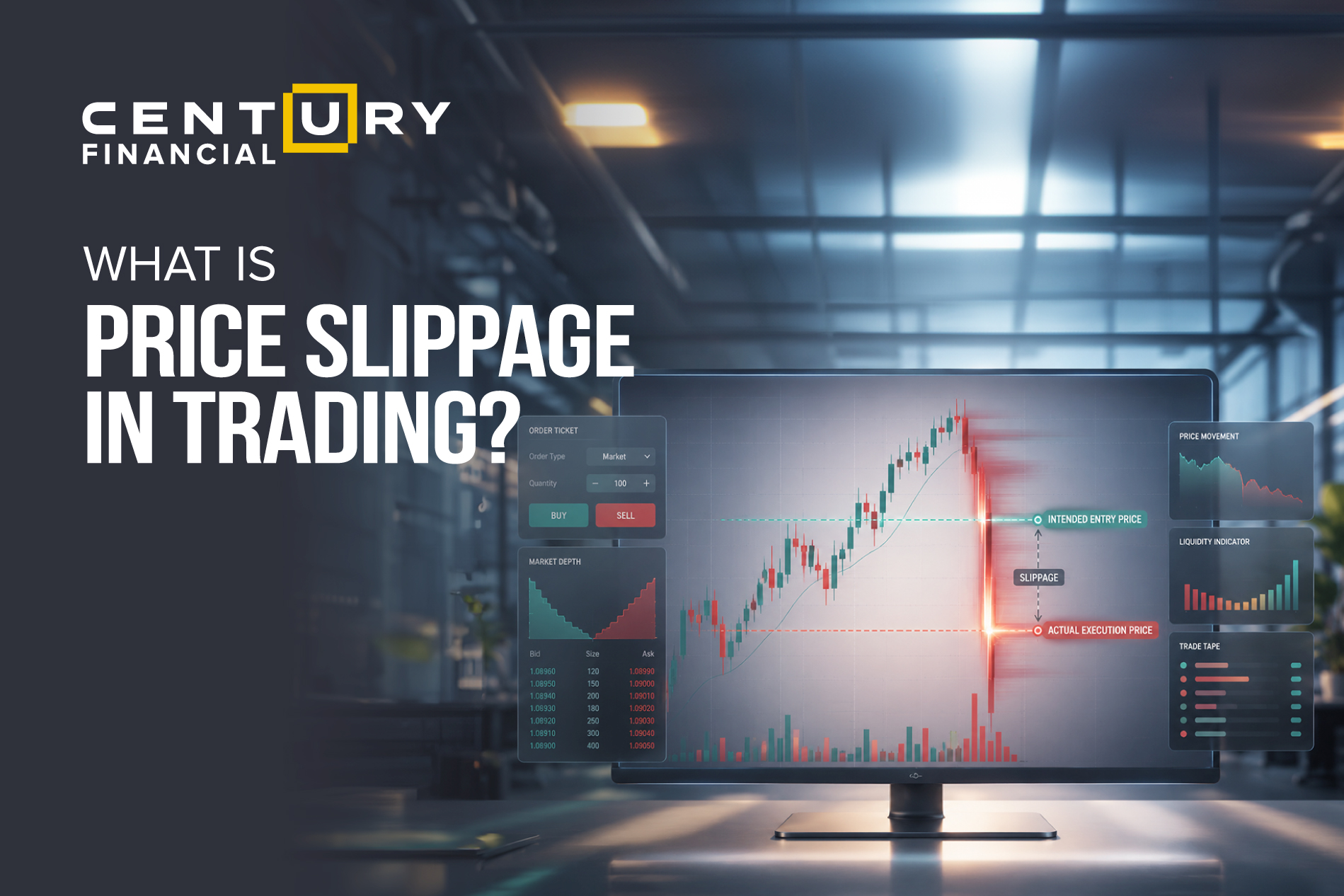
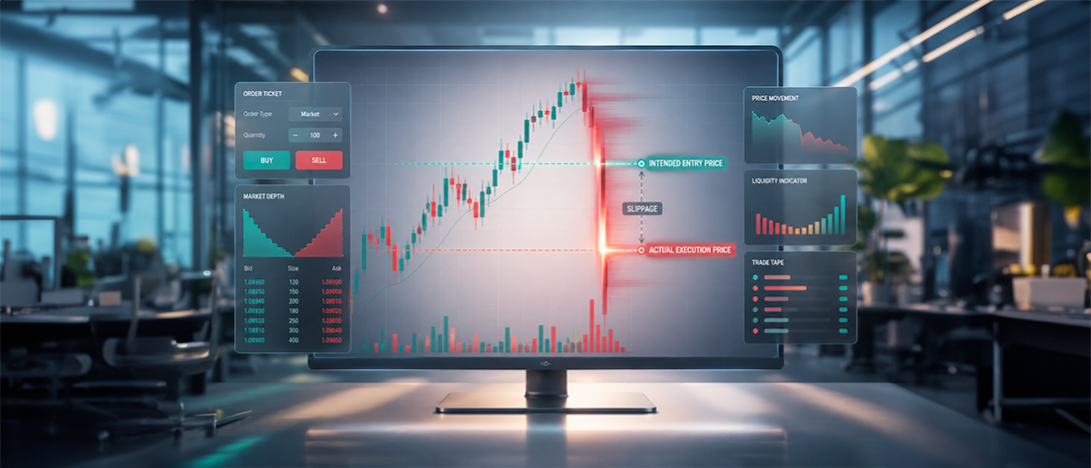
Highly volatile markets are risky not just because they shake up your portfolio, but they can also mess with your trades. Slippage happens when market conditions change between order placement and execution. Market swings create rapid price movements. High trading volume depletes available liquidity at the target price, forcing execution at worse levels.
Beyond volatility, broker infrastructure affects slippage, too. Brokers with fast order routing and direct market access experience less slippage. Slippage is sometimes an unavoidable aspect of market participation, but knowing when and how it occurs can help address the issue with greater confidence.
Types of Slippage in Trading
Positive Slippage
Positive slippage occurs when execution happens at a better price than expected. A trader places a sell order at $100, but the order executes at $100.50, thereby benefiting the trader.
Positive slippage happens when:
- Markets move favorably
- Liquidity exceeds expectations
- Volatility creates wider spreads
Negative Slippage
Negative slippage occurs when execution happens at a worse price than expected. A buy order at $100 executes at $100.50, and the trader loses value.
Negative slippage happens when:
- Markets move unfavorably
- Available liquidity dries up
- High volatility accelerates movement
Partial Order Execution
Partial execution occurs when only a portion of the order fills at the target price, with the remainder executing at different levels. A 10,000-share order at $50 might see 6,000 shares fill at $50 and 4,000 shares at $50.25.
Partial execution happens when:
- Order size exceeds available liquidity
- Market depth is insufficient for the full volume
- Rapid price movement during execution
Slippage in Different Asset Classes
Slippage in Stocks
Stock slippage depends on liquidity and volume. Highly liquid stocks (large-cap) undergo minimal slippage, and thinly traded stocks experience significant slippage. Also, order size relative to average daily volume matters. A 100,000-share order impacts a stock trading 500,000 shares daily differently than one trading 5 million.
When a trade is placed could also impact the possibility of slippage because opening and closing periods show higher volatility and wider spreads, increasing slippage. Mid-day trading generally shows lower slippage due to higher liquidity.
Slippage in Commodities
Commodity slippage varies by type and contract month. Crude oil and precious metals trade with high volume and tight spreads, experiencing low slippage. Agricultural commodities show seasonal patterns—harvest periods have higher volume and lower slippage.
Contracts near expiration show lower volume and wider spreads, increasing slippage. Trading the front contract versus back contracts too significantly affects execution quality.
Slippage in Forex
Forex markets typically experience low slippage due to high liquidity and 24-hour trading. Major pairs (EUR/USD, GBP/USD) show minimal slippage, while exotic pairs show higher slippage due to lower volume.
Slippage follows time-of-day patterns. During overlapping sessions, liquidity is highest, and slippage is lowest. News events cause rapid price movement and slippage spikes.
Slippage vs Spread: What's the Difference?
Spread is a fixed component of transaction cost. Slippage is a variable cost depending on execution timing and financial market conditions. A few other differences include:
| Factor | Spread | Slippage |
|---|---|---|
| Definition | Bid-ask price difference | Expected vs. actual execution price difference |
| Timing | Exists at all times | Occurs only during execution |
| Control | Fixed by market makers | Varies by market conditions |
| Visibility | Always visible in quotes | Apparent only after execution |
| Predictability | Predictable | Less predictable, varies by conditions |
Why Slippage Matters for Traders
Slippage directly changes trading profitability. For active traders placing numerous trades daily, small slippage amounts compound significantly. A trader executing 20 trades per day with $0.10 average slippage loses $2 daily. Over 20 trading days monthly, that's $40 in slippage costs.
Scalpers targeting small price movements are most affected. A scalper targeting 2 pips of profit experiences no profit if slippage exceeds 2 pips. Slippage also affects risk management as a $50 stop-loss might execute at $49.50, costing more than expected.
How to Avoid or Reduce Slippage in Trading
Lowering slippage requires a deliberate strategy. Here are some practical approaches:
- Use limit orders instead of market orders: Limit orders execute only at specified prices, stopping unexpected slippage. They avoid worst-case scenarios but may not execute if prices move past your limit.
- Trade during high-liquidity periods: Forex shows the lowest slippage during overlapping session hours, while stocks show the lowest slippage during mid-day. Commodity markets show the lowest slippage during peak contract hours.
- Reduce order size relative to available liquidity: Smaller orders experience less slippage because they don't move markets. Splitting large orders into smaller ones reduces per-order slippage.
- Use brokers with fast execution and direct market access: Execution speed directly affects slippage probability. Brokers with DMA and low-latency routing experience better execution.
- Avoid trading during news events: News-driven volatility creates rapid price movement and slippage spikes. Waiting 30-60 minutes after major announcements reduces slippage risk.
Why Trade with Century Financial
Century Financial prioritizes fast execution and seamless order routing, directly lowering slippage impact. Multi-asset platforms (MT5, Century Trader App, CQG, TWS) provide direct market access and competitive execution speeds. Reliable connectivity across forex, commodities, stocks, and indices secures efficient order execution.
Century Financial's infrastructure helps traders manage slippage costs effectively.
Elevate your
trading experience with
Century
Trader App
Elevate your trading experience
with
Century Trader App

Conclusion
Slippage occurs due to volatility, liquidity depletion, order size, and execution delays. Using limit orders, trading during high-liquidity periods, reducing order size, and choosing brokers with fast execution help minimize costs. Understanding slippage mechanics improves net profitability by accounting for real execution costs.
Real-time trading data, tight spreads, and liquidity partnerships minimize slippage across asset classes. With Century Financial's execution infrastructure, market access, and platform reliability, traders can minimize slippage.
Frequently Asked Questions
Q1: Why does slippage happen even when the market looks stable?
A: Slippage occurs because execution takes time. Between order placement and execution, prices move. What looks stable when you place an order may have shifted by the time of execution.
Q2: Can slippage affect stop-loss and take-profit orders?
A: Yes, both are affected. Under volatile conditions, stop losses experience significant slippage. Take-profit orders similarly execute at worse prices, impacting profits.
Q3: Can limit orders completely prevent price slippage?
A: Limit orders prevent negative slippage by setting maximum buy or minimum sell prices. If the market doesn't reach your limit, the order doesn't execute.
Q4: Why do scalpers and day traders pay close attention to slippage?
A: Scalpers target small price movements and execute many trades daily. If slippage averages 1 pip per trade and they target 2-3 pips profit, slippage consumes 30-50% of gross profit.
لا تقدم شركة سنشري للإستشارات والتحليل المالي ش.ذ.م.م (الشركة) محتوى هذه المدونة، بما في ذلك أي أبحاث أو تحليلات أو آراء أو توقعات أو أي معلومات أخرى (يُشار إليها مجتمعةً باسم "المعلومات")، إلا لأغراض التسويق والتثقيف وإتاحة المعلومات العامة. ولا يُفسَّر ذلك على أنه نصيحة استثمارية أو توصية أو دعوة لشراء أو بيع أي أدوات مالية.
كما يجوز نشر هذه المعلومات عبر قنوات مختلفة، بما في ذلك موقع الشركة الإلكتروني، ومنصات الغير، والنشرات الإخبارية، والمواد التسويقية، ورسائل البريد الإلكتروني، ووسائل التواصل الاجتماعي، وتطبيقات المراسلة، والندوات الإلكترونية، وغيرها من وسائل التواصل. وبينما تسعى الشركة لضمان دقة المحتوى، فإنها لا تضمن اكتماله أو موثوقيته أو تحديثه في الوقت المناسب. وعليه، فأي قرارات تُتخذ بناءً على هذه المعلومات تكون على مسؤوليتك الشخصية. ولا تتحمل الشركة أي مسؤولية عن أي خسارة أو ضرر ناتج عن استخدامها.
ينطوي تداول المنتجات المالية على مخاطر كبيرة، بما لا يتناسب مع جميع المستثمرين. فيُرجى التأكد من وعيك التام بالمخاطر، وطلب الاستشارة المهنية المتخصصة إذا لزم الأمر.
يُرجى الاطلاع على بيان كشف المخاطر الشامل المتوفر على موقعنا الإلكتروني.




تنظمها هيئة الأوراق المالية والسلع
سنشري للاستشارات المالي ش.ذ.م.م


تصل إلينا:
-
دبي
الطابق رقم 6, مبنى رقم 4, ساحة إعمار دبي
وسط مدينة دبي، ص.ب: 65777،
دبي، الإمارات العربية المتحدة -
Abu Dhabi
27th Floor, Office 2701,
Shining Towers, Abu Dhabi, UAE -
Sharjah
29th Floor, Office 2905,
The Business Tower, Sharjah, UAE - +971 (4) 356 2800
- info@century.ae

Century Financial is the presenting sponsor of

ينطوي التداول في المنتجات المالية على مخاطر كبيرة. فالاعتماد على المشتقات المالية المتاحة للتداول خارح البورصة، مثل عقود الفروقات وتداول العملات الأجنبية (الفوركس) الفوري، قد يتسبب في خسائر تتجاوز قيمة الإيداعات الأولية، مما يجعلها غير ملائمة لجميع المستثمرين. فهذه الأدوات المالية المعقدة لا تمنح ملكية مباشرة للأصول الأساسية. لذا، ينبغي للمستثمرين الاحتراز عند تحديد أهدافهم الاستثمارية ومراعاة مستوى المخاطرة المتوقَع، واللجوء إلى الاستشارة المهنية المتخصصة عند الضرورة.
سنشري للإستشارات والتحليل المالي ش.ذ.م.م (الشركة)، شركة مرخّصة ومنظمة من هيئة الأوراق المالية والسلع في دولة الإمارات العربية المتحدة، بموجب الترخيص رقم (20200000028) و(301044) لتولي أعمال الوساطة في الأسواق الدولية، وتداول المشتقات المالية والعملات المتاحة للتداول خارج البورصة في سوق التداول الفوري، بالإضافة إلى تقديم الخدمات الاستشارية والترويجية. تأسست الشركة بموجب قوانين دولة الإمارات العربية المتحدة، وهي مسجلة لدى دائرة التنمية الاقتصادية بدبي (رقم: 768189)، حيث يقع مكتبها المسجّل في 601، الطابق السادس، المبنى رقم 4، ميدان إعمار، وسط مدينة دبي، دولة الإمارات العربية المتحدة، ص.ب. 65777.
لا يُعرَض محتوى هذا الموقع الإلكتروني إلا لأغراض تعريفية تثقيفية بحتة، فلا يمثل عرضًا ولا توصيةً ولا دعوةً لشراء أو بيع أي أوراق مالية أو منتجات مالية.
لا تنوي الشركة استخدام أو توزيع منتجاتها وخدماتها في أي ولاية قضائية حيث يُشكِّل هذا الاستخدام أو التوزيع انتهاكًا للقوانين المحلية أو اللوائح التنظيمية.
