 Loading ...

Monday, July 20, 2026
ITM Meaning in Trading: What Does In-The-Money (ITM) Mean?
تم إعداد هذا المنشور من قبل سنشري للاستشارات

What Does ITM Mean in Trading?
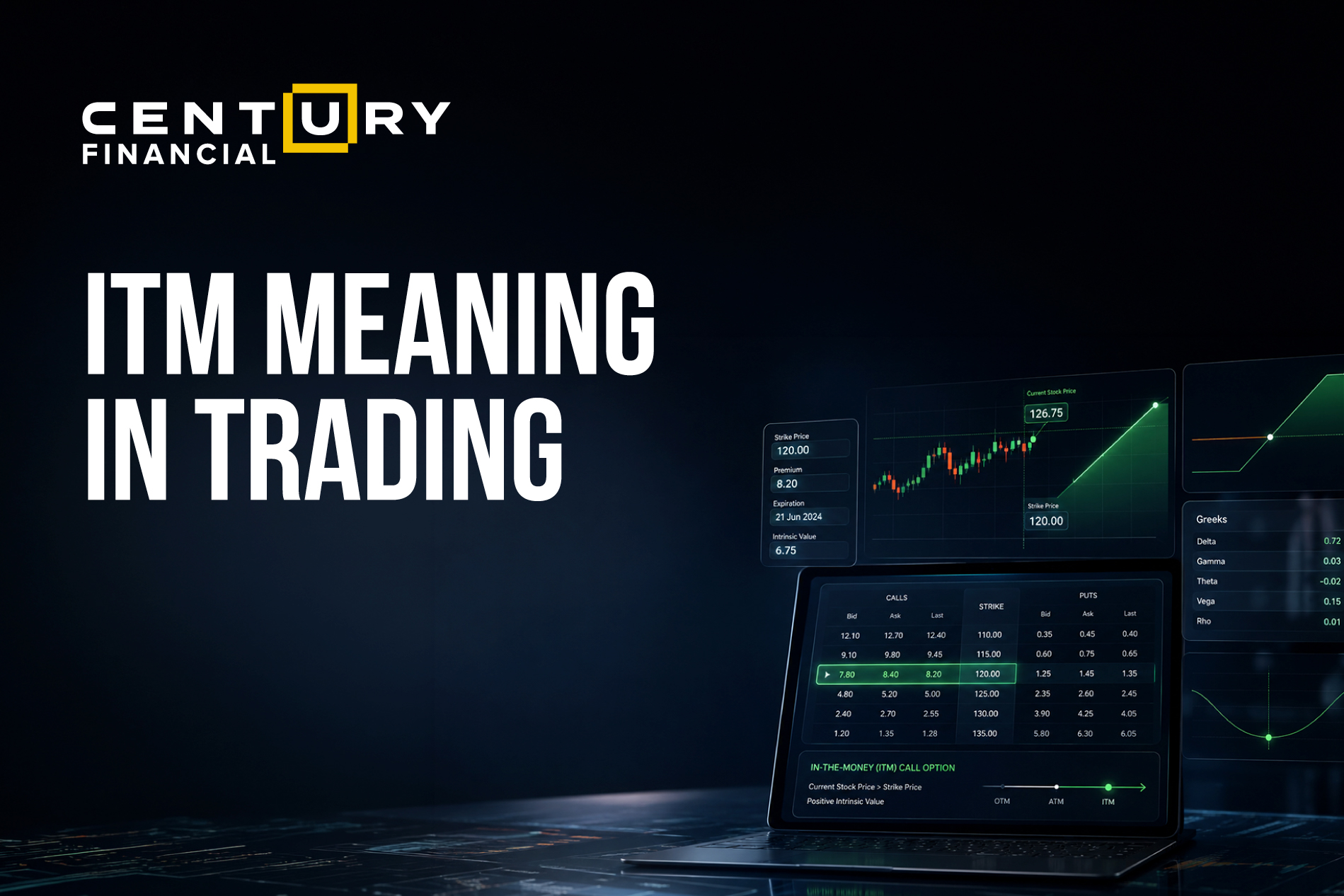
ITM, or “in-the-money,” is a key concept in options trading. It describes the relationship between an option’s strike price and the current market price of the underlying asset. When an option is in the money, it holds real, tangible value—the kind you could capture if you exercised the contract right now. In other words, ITM means the option holder stands to profit immediately at current prices.
How ITM Options Work
ITM options contain two components of value: intrinsic value and time value. Intrinsic value is the immediate profit available if exercised today. A call option is ITM by $3 when the stock is $3 above the strike. A put option is ITM by $2 when the stock is $2 below the strike.
Time value represents an additional premium beyond intrinsic value. An ITM call trading at a $5 total premium with $3 of intrinsic value has $2 of time value. As expiration approaches, time value decays toward zero. At expiration, only intrinsic value remains.
ITM options command higher prices than out-of-the-money options because they come with intrinsic value. For instance, if you hold a $50 call and the stock trades at $52, that option is worth at least $2. In contrast, a $55 call has no intrinsic value if the stock is at $52.
ITM vs ATM vs OTM in Trading
| Term | Definition | Call Example | Put Example | Intrinsic Value |
|---|---|---|---|---|
| ITM (In-The-Money) | Profitable if exercised immediately | Stock $52, Strike $50 | Stock $48, Strike $50 | Yes, contains value |
| ATM (At-The-Money) | Strike price equals market price | Stock $50, Strike $50 | Stock $50, Strike $50 | No, zero intrinsic value |
| OTM (Out-Of-The-Money) | Unprofitable if exercised immediately | Stock $48, Strike $50 | Stock $52, Strike $50 | No, zero intrinsic value |
Key Differences
To put it simply, ITM options have intrinsic value and cost more. ATM options have zero intrinsic value but a higher time value. OTM options have zero intrinsic value and cost less.
As expiration approaches, each type of option behaves differently. ITM options gradually lose time value, but their intrinsic value remains. ATM options see time decay accelerate as the clock runs down. OTM options risk expiring worthless if the underlying asset fails to move in your favor.
How to Identify ITM Options
Strike Price vs Market Price
Identifying ITM requires comparing two numbers: the strike price fixed in the contract and the current market price, which changes constantly.
For call options, compare the strike price to the current stock price. If the stock price exceeds the strike price, the call is ITM. For put options, compare the strike price to the current stock price. If the strike price is greater than the stock price, the put is ITM.
Reading Option Chains
Option chains show every available contract for a given asset. To identify ITM options, find the current stock price and scan the strike prices. For calls, strikes below the current price are ITM; for puts, strikes above the current price are ITM. The reverse holds for OTM options.
Trading Implications and Characteristics of ITM Options
- Higher premium cost: ITM options trade at higher prices because intrinsic value is built in. A buyer pays for guaranteed value plus remaining time value.
- Lower time decay sensitivity: ITM options lose value more slowly than ATM options as expiration approaches because their intrinsic value remains constant. An ITM option worth $7, with $5 intrinsic value and $2 time value, loses only the time-value component.
- Reduced profit potential: Buyers of ITM options pay higher premiums because of the built-in intrinsic value, which changes the risk-to-reward equation. While an ITM option is highly likely to expire with value, it requires a larger upfront investment, which caps maximum percentage returns.
- Lower volatility sensitivity: ITM options respond less dramatically to volatility changes than OTM options because intrinsic value dominates the pricing. Changes in implied volatility affect time value more than intrinsic value.
Popular ITM Trading Strategies
Traders use ITM options in various approaches. The following strategies describe how ITM options function in common trading setups.
Strategy 1: Long Call (Buying ITM Calls)
A trader buys an ITM call option, betting the underlying asset price will rise further. The ITM call already has intrinsic value, so there is a built-in advantage. Any further rise in the asset’s price increases its upward potential. While ITM calls cost more upfront than OTM calls, they need smaller moves to become profitable.
Strategy 2: Long Put (Buying ITM Puts)
A trader buys an ITM put option, betting the underlying asset price will fall further. The ITM option already has intrinsic value because the underlying asset is below the strike. Additional price decreases generate additional profit. ITM puts cost more than OTM puts but require smaller downward moves to generate returns.
Strategy 3: Covered Call (Selling ITM Calls)
A trader owns stock and sells an ITM call option against it. The trader receives a higher premium because intrinsic value is built in. If the stock falls, the seller keeps the premium. This strategy generates income but caps upside at the strike price.
Factors That Affect ITM Options
- Underlying price movement: When the underlying price moves, the ITM status changes. A call option can transition from OTM to ITM if the stock price rises above the strike price. An ITM option can become OTM if the underlying falls.
- Time to expiration: Time value decays continuously. An ITM option loses time value as expiration approaches, even if the underlying stays flat. At expiration, only intrinsic value remains.
- Implied volatility: Changes in volatility affect time value. Higher volatility increases option premiums across all strikes, while lower volatility decreases premiums. ITM options exhibit lower sensitivity to volatility than OTM options because intrinsic value dominates the price.
- Interest rates: Borrowing costs affect option pricing, especially for longer-dated contracts. Rising rates may slightly increase call values and slightly decrease put values.
- Dividends: For equity options, upcoming dividends affect pricing. Calls typically decrease before ex-dividend dates, while puts typically increase before ex-dividend dates.
How Beginners Can Start ITM Trading
Start by opening an account with a broker that supports options trading and complete the options approval process. Once approved, fund your account and head to the platform’s options trading section.
Choose your underlying asset and open the option chain. Find the current market price, then compare it with the available strikes to identify which options are ITM. Check bid-ask spreads and trading volume; higher volume usually means tighter spreads and smoother trades.
Start small and practise with modest position sizes. Use limit orders instead of market orders to control your entry price. Make sure you understand what happens at expiration, how assignment works, and your broker’s specific rules for ITM options.
Paper trading, which simulates trading without real capital, allows you to test approaches before committing funds. Most brokers offer demo accounts for this purpose.
Common ITM Trading Mistakes to Avoid
- Holding ITM options through expiration
- Ignoring assignment risk
- Overpaying for ITM intrinsic value
- Treating ITM options as certainties
- Not accounting for early assignment
Elevate your
trading experience with
Century
Trader App
Elevate your trading experience
with
Century Trader App

Conclusion
Understanding ITM mechanics, such as how intrinsic value works, how time decay affects ITM contracts, and what assignment means, forms the foundation for options trading participation. Proper foundational knowledge and a dependable broker can support more informed participation in high-risk instruments such as options.
Century Financial offers options trading on multiple underlying assets, including stocks, indices, and currencies, through regulated platforms. With proprietary tools, 24x5 support, and access through platforms such as IBKR’s TWS, a Century Financial trading account can open new avenues for options trading.
Frequently Asked Questions
Q1: How do traders know if an option is In the Money?
A: Compare the current market price to the strike price. For calls, if the market price exceeds the strike price, the option is ITM. For puts, if the market price falls below the strike price, the option is ITM. Most trading platforms display ITM status automatically in option chains.
Q2: Why are ITM options more expensive than OTM options?
A: ITM options contain intrinsic value. OTM options contain zero intrinsic value and consist entirely of time value. The intrinsic-value component explains the higher ITM premium.
Q3: How does volatility impact In the Money options?
A: Volatility affects time value. Higher volatility increases option premiums, including ITM options, while lower volatility decreases premiums. ITM options experience smaller percentage changes in response to volatility shifts than OTM options because intrinsic value dominates the price.
Q4: Are ITM options suitable for hedging strategies?
A: Yes. ITM put options can provide downside protection for stock holdings. An ITM put already contains value because the underlying asset is below the strike price, providing immediate protection.
لا تقدم شركة سنشري للإستشارات والتحليل المالي ش.ذ.م.م (الشركة) محتوى هذه المدونة، بما في ذلك أي أبحاث أو تحليلات أو آراء أو توقعات أو أي معلومات أخرى (يُشار إليها مجتمعةً باسم "المعلومات")، إلا لأغراض التسويق والتثقيف وإتاحة المعلومات العامة. ولا يُفسَّر ذلك على أنه نصيحة استثمارية أو توصية أو دعوة لشراء أو بيع أي أدوات مالية.
كما يجوز نشر هذه المعلومات عبر قنوات مختلفة، بما في ذلك موقع الشركة الإلكتروني، ومنصات الغير، والنشرات الإخبارية، والمواد التسويقية، ورسائل البريد الإلكتروني، ووسائل التواصل الاجتماعي، وتطبيقات المراسلة، والندوات الإلكترونية، وغيرها من وسائل التواصل. وبينما تسعى الشركة لضمان دقة المحتوى، فإنها لا تضمن اكتماله أو موثوقيته أو تحديثه في الوقت المناسب. وعليه، فأي قرارات تُتخذ بناءً على هذه المعلومات تكون على مسؤوليتك الشخصية. ولا تتحمل الشركة أي مسؤولية عن أي خسارة أو ضرر ناتج عن استخدامها.
ينطوي تداول المنتجات المالية على مخاطر كبيرة، بما لا يتناسب مع جميع المستثمرين. فيُرجى التأكد من وعيك التام بالمخاطر، وطلب الاستشارة المهنية المتخصصة إذا لزم الأمر.
يُرجى الاطلاع على بيان كشف المخاطر الشامل المتوفر على موقعنا الإلكتروني.



تنظمها هيئة الأوراق المالية والسلع
سنشري للاستشارات المالي ش.ذ.م.م


تصل إلينا:
-
دبي
الطابق رقم 6, مبنى رقم 4, ساحة إعمار دبي
وسط مدينة دبي، ص.ب: 65777،
دبي، الإمارات العربية المتحدة -
Abu Dhabi
27th Floor, Office 2701,
Shining Towers, Abu Dhabi, UAE -
Sharjah
29th Floor, Office 2905,
The Business Tower, Sharjah, UAE - +971 (4) 356 2800
- info@century.ae

Century Financial is the presenting sponsor of

ينطوي التداول في المنتجات المالية على مخاطر كبيرة. فالاعتماد على المشتقات المالية المتاحة للتداول خارح البورصة، مثل عقود الفروقات وتداول العملات الأجنبية (الفوركس) الفوري، قد يتسبب في خسائر تتجاوز قيمة الإيداعات الأولية، مما يجعلها غير ملائمة لجميع المستثمرين. فهذه الأدوات المالية المعقدة لا تمنح ملكية مباشرة للأصول الأساسية. لذا، ينبغي للمستثمرين الاحتراز عند تحديد أهدافهم الاستثمارية ومراعاة مستوى المخاطرة المتوقَع، واللجوء إلى الاستشارة المهنية المتخصصة عند الضرورة.
سنشري للإستشارات والتحليل المالي ش.ذ.م.م (الشركة)، شركة مرخّصة ومنظمة من هيئة الأوراق المالية والسلع في دولة الإمارات العربية المتحدة، بموجب الترخيص رقم (20200000028) و(301044) لتولي أعمال الوساطة في الأسواق الدولية، وتداول المشتقات المالية والعملات المتاحة للتداول خارج البورصة في سوق التداول الفوري، بالإضافة إلى تقديم الخدمات الاستشارية والترويجية. تأسست الشركة بموجب قوانين دولة الإمارات العربية المتحدة، وهي مسجلة لدى دائرة التنمية الاقتصادية بدبي (رقم: 768189)، حيث يقع مكتبها المسجّل في 601، الطابق السادس، المبنى رقم 4، ميدان إعمار، وسط مدينة دبي، دولة الإمارات العربية المتحدة، ص.ب. 65777.
لا يُعرَض محتوى هذا الموقع الإلكتروني إلا لأغراض تعريفية تثقيفية بحتة، فلا يمثل عرضًا ولا توصيةً ولا دعوةً لشراء أو بيع أي أوراق مالية أو منتجات مالية.
لا تنوي الشركة استخدام أو توزيع منتجاتها وخدماتها في أي ولاية قضائية حيث يُشكِّل هذا الاستخدام أو التوزيع انتهاكًا للقوانين المحلية أو اللوائح التنظيمية.
