 Loading ...

Thursday, June 04, 2026
Rights Issue of Shares – Complete Guide for Investors
تم إعداد هذا المنشور من قبل سنشري للاستشارات
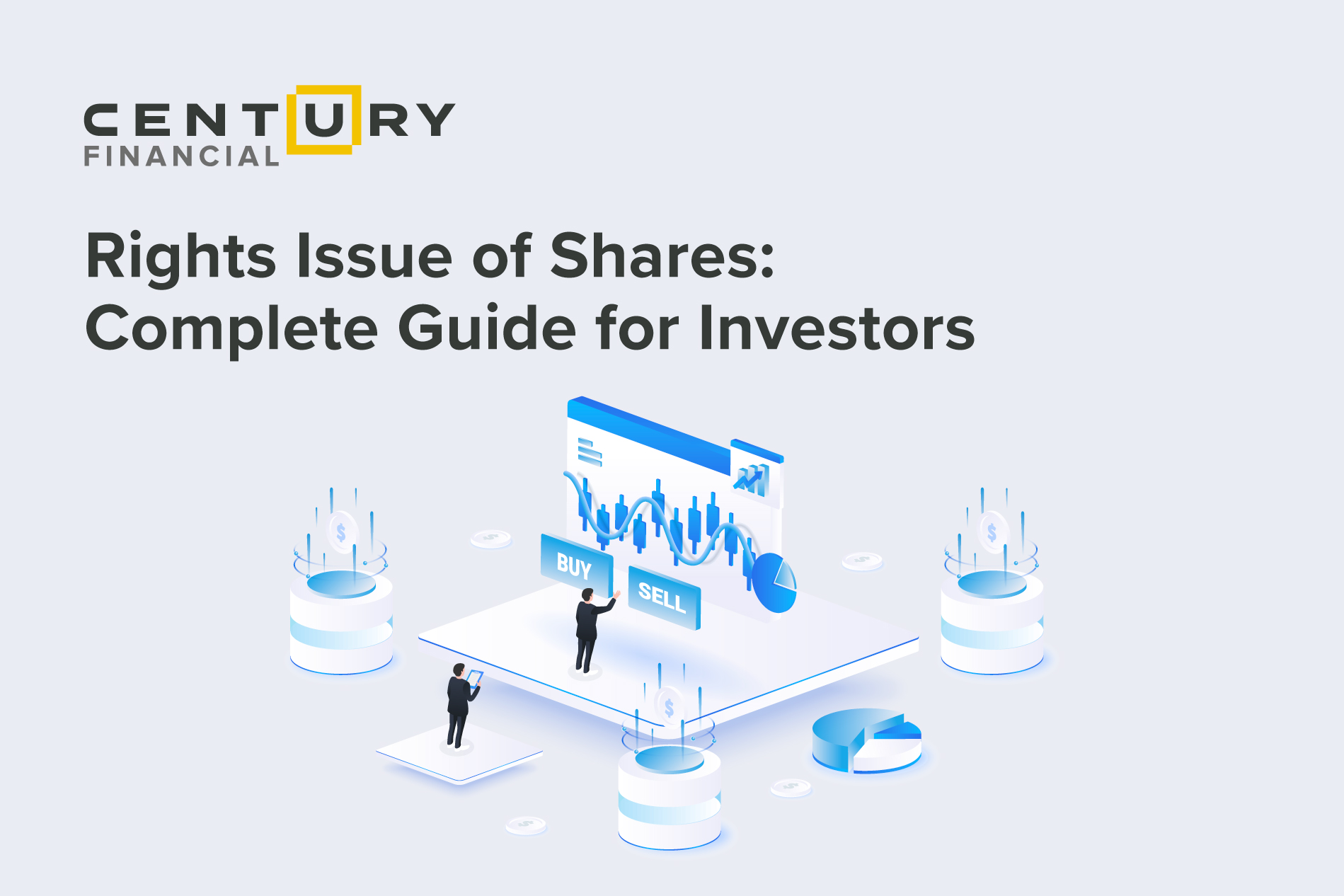

A rights issue is a common corporate action used by listed companies to raise additional capital from existing shareholders. Instead of approaching new investors, the company gives its current shareholders the right to purchase additional shares at a discount. Understanding how a rights issue works, its benefits, risks, and impact on share prices is essential for anyone active in the share market or planning long-term investments.
Here you will find the rights issue definition, process, pricing, allotment, and real-world implications.
What Are Securities in Finance
Securities in finance are tradable financial instruments that hold monetary value and represent ownership, a creditor relationship, or rights to future cash flows. In simple terms, securities are assets that investors can buy, sell, or trade in the securities market to grow wealth or generate income. Governments, corporations, and institutions issue securities to raise capital, while investors purchase them as part of a security investment strategy. These financial securities are regulated to ensure transparency, liquidity, and investor protection.
Securities can be traded on regulated exchanges or over-the-counter markets. Their prices typically fluctuate based on demand, supply, interest rates, company performance, and economic conditions. From stocks and bonds to derivatives, securities form the backbone of modern financial markets.
Securities Meaning and Definition
Securities Meaning
Securities refer to any financial asset that can be traded and has an assigned value. These assets can be easily converted into cash and are commonly used for investment and risk management.
In finance, securities represent one of three things:
Securities Definition
A commonly accepted securities definition is that securities are financial instruments that are fungible, tradable, and legally recognized as having monetary value. They are issued by governments, corporations, or financial institutions and purchased by investors seeking returns.
Security instruments are governed by regulatory authorities to ensure fair trading practices. Regulations define how securities are issued, traded, disclosed, and settled, making them safer and more transparent for investors.
Types of Securities in Finance
Understanding the types of securities can help choose instruments that align with one’s financial goals, risk tolerance, and investment horizon. Broadly, securities are categorized into equity securities, debt securities, and derivative securities.
Equity Securities
When investors buy equity securities, they become shareholders. Equity securities are widely traded in the share market and are suitable for long-term growth-oriented investors, as they represent ownership in a company, and investors can participate in that company’s growth.
Key features of equity securities:
Common securities examples under equity include:
Debt Securities
Debt securities represent borrowed funds that must be repaid with interest. They are often used for portfolio stability and predictable income generation. By purchasing debt securities, investors lend money to issuers such as governments or corporations.
Key characteristics of debt securities are:
Examples of debt securities include:
Derivative Securities
Derivative securities play a crucial role in risk management across global financial markets. These securities derive their value from an underlying asset such as stocks, commodities, currencies, or indices. These are commonly used for hedging risk or short-term trading strategies.
Common derivative security instruments include:
Securities Market and How Trading Securities Works
The securities market is the platform where financial securities are issued and traded. It is divided into primary and secondary markets, each serving a distinct purpose.
Primary Market:
In the primary market, securities are issued for the first time. Funds raised in the primary market are used for expansion, infrastructure, or debt repayment. Companies and governments raise funds directly from investors through:
Secondary Market
The secondary market is where existing securities are bought and sold among investors. Trading securities in the secondary market allows investors to enter and exit positions efficiently using a reliable trading platform. Stock exchanges and electronic trading systems facilitate this process.
Benefits of the secondary securities market include:
Securities Examples and Security Investment Options
Security investment choices vary based on risk appetite, investment goals, and market knowledge. Investors can diversify across multiple security instruments to balance returns and risk.
Common Securities Examples
| Type of Security | Description | Typical Investors |
|---|---|---|
| Equity securities | Company ownership instruments | Growth-focused investors |
| Debt securities | Fixed-income instruments | Stability-seeking investors |
| Derivatives | Value based on underlying assets | Traders and institutions |
Elevate your
trading experience with
Century Trader App
Elevate your trading
experience with
Century Trader App

Popular Security Investment Segments
Modern tools like the Century Trader and the MT5 Platform make trading securities more accessible, faster, and data-driven. Investors today can access a wide range of securities through advanced digital platforms, including:
Conclusion
From equity securities that drive long-term growth to debt securities that provide stability, financial securities offer diverse opportunities for investors at every stage of their journey. The modern securities market has evolved with technology, making trading securities faster, more transparent, and more accessible.
Century Financial Services empowers investors with advanced tools, expert insights, and a robust trading platform designed for both beginners and experienced traders. Whether you are exploring gold trading, oil trading, or global market opportunities, Century provides seamless access through platforms like Century Trader, CQG, TWS, and MT5.
FAQs on Securities in Finance
Q1. What are financial securities used for?
A: Financial securities are used to raise capital, invest surplus funds, manage financial risk, and create wealth over time. They allow issuers to access funding and investors to earn returns.
Q2: Are securities and investments the same?
A: Securities are financial instruments, while investment refers to the act of allocating money into securities or other assets with the expectation of future returns.
Q3: What is the difference between equity and debt securities?
A: Equity securities represent ownership in a company, whereas debt securities represent a loan given to an issuer with fixed interest payments and repayment terms.
Q4. How are securities traded?
A: Securities are traded through regulated exchanges or online platforms using brokerage services, enabling investors to buy and sell in real time..
Q5. Are securities risky?
A: All securities carry some level of risk. The risk varies by type, market conditions, and issuer credibility. Diversification helps reduce overall investment risk.
لا تقدم شركة سنشري للإستشارات والتحليل المالي ش.ذ.م.م (الشركة) محتوى هذه المدونة، بما في ذلك أي أبحاث أو تحليلات أو آراء أو توقعات أو أي معلومات أخرى (يُشار إليها مجتمعةً باسم "المعلومات")، إلا لأغراض التسويق والتثقيف وإتاحة المعلومات العامة. ولا يُفسَّر ذلك على أنه نصيحة استثمارية أو توصية أو دعوة لشراء أو بيع أي أدوات مالية.
كما يجوز نشر هذه المعلومات عبر قنوات مختلفة، بما في ذلك موقع الشركة الإلكتروني، ومنصات الغير، والنشرات الإخبارية، والمواد التسويقية، ورسائل البريد الإلكتروني، ووسائل التواصل الاجتماعي، وتطبيقات المراسلة، والندوات الإلكترونية، وغيرها من وسائل التواصل. وبينما تسعى الشركة لضمان دقة المحتوى، فإنها لا تضمن اكتماله أو موثوقيته أو تحديثه في الوقت المناسب. وعليه، فأي قرارات تُتخذ بناءً على هذه المعلومات تكون على مسؤوليتك الشخصية. ولا تتحمل الشركة أي مسؤولية عن أي خسارة أو ضرر ناتج عن استخدامها.
ينطوي تداول المنتجات المالية على مخاطر كبيرة، بما لا يتناسب مع جميع المستثمرين. فيُرجى التأكد من وعيك التام بالمخاطر، وطلب الاستشارة المهنية المتخصصة إذا لزم الأمر.
يُرجى الاطلاع على بيان كشف المخاطر الشامل المتوفر على موقعنا الإلكتروني.




تنظمها هيئة الأوراق المالية والسلع
سنشري للاستشارات المالي ش.ذ.م.م


تصل إلينا:
-
دبي
الطابق رقم 6, مبنى رقم 4, ساحة إعمار دبي
وسط مدينة دبي، ص.ب: 65777،
دبي، الإمارات العربية المتحدة -
Abu Dhabi
27th Floor, Office 2701,
Shining Towers, Abu Dhabi, UAE -
Sharjah
29th Floor, Office 2905,
The Business Tower, Sharjah, UAE - +971 (4) 356 2800
- info@century.ae

Century Financial is the presenting sponsor of

ينطوي التداول في المنتجات المالية على مخاطر كبيرة. فالاعتماد على المشتقات المالية المتاحة للتداول خارح البورصة، مثل عقود الفروقات وتداول العملات الأجنبية (الفوركس) الفوري، قد يتسبب في خسائر تتجاوز قيمة الإيداعات الأولية، مما يجعلها غير ملائمة لجميع المستثمرين. فهذه الأدوات المالية المعقدة لا تمنح ملكية مباشرة للأصول الأساسية. لذا، ينبغي للمستثمرين الاحتراز عند تحديد أهدافهم الاستثمارية ومراعاة مستوى المخاطرة المتوقَع، واللجوء إلى الاستشارة المهنية المتخصصة عند الضرورة.
سنشري للإستشارات والتحليل المالي ش.ذ.م.م (الشركة)، شركة مرخّصة ومنظمة من هيئة الأوراق المالية والسلع في دولة الإمارات العربية المتحدة، بموجب الترخيص رقم (20200000028) و(301044) لتولي أعمال الوساطة في الأسواق الدولية، وتداول المشتقات المالية والعملات المتاحة للتداول خارج البورصة في سوق التداول الفوري، بالإضافة إلى تقديم الخدمات الاستشارية والترويجية. تأسست الشركة بموجب قوانين دولة الإمارات العربية المتحدة، وهي مسجلة لدى دائرة التنمية الاقتصادية بدبي (رقم: 768189)، حيث يقع مكتبها المسجّل في 601، الطابق السادس، المبنى رقم 4، ميدان إعمار، وسط مدينة دبي، دولة الإمارات العربية المتحدة، ص.ب. 65777.
لا يُعرَض محتوى هذا الموقع الإلكتروني إلا لأغراض تعريفية تثقيفية بحتة، فلا يمثل عرضًا ولا توصيةً ولا دعوةً لشراء أو بيع أي أوراق مالية أو منتجات مالية.
لا تنوي الشركة استخدام أو توزيع منتجاتها وخدماتها في أي ولاية قضائية حيث يُشكِّل هذا الاستخدام أو التوزيع انتهاكًا للقوانين المحلية أو اللوائح التنظيمية.
