 Loading ...


Friday, November 06, 2026
The Beginner's Guide To ETF Trading & Investment Strategies
By Century Financial in 'Blog'

What Is an Exchange-Traded Fund (ETF)?
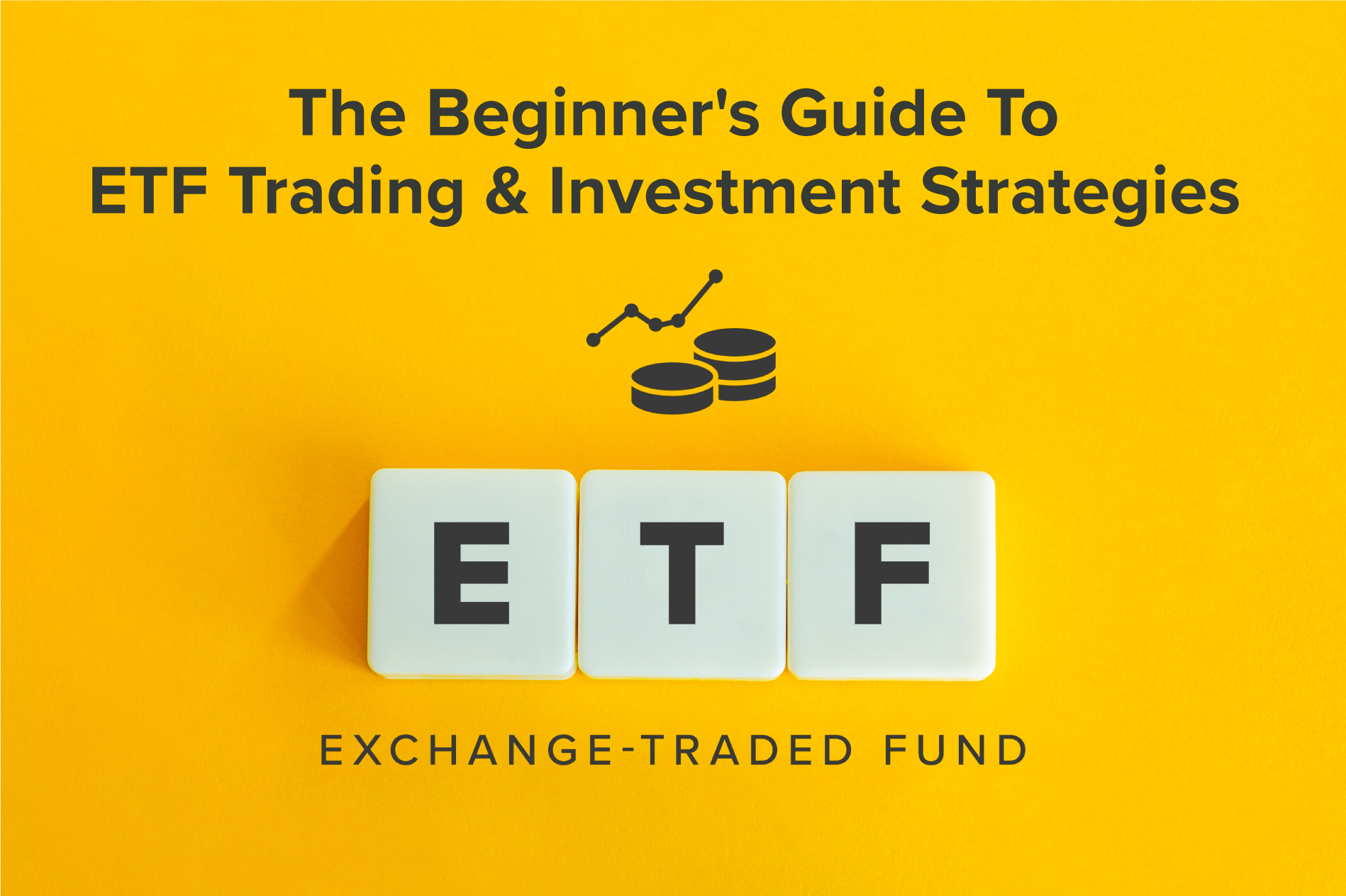
An exchange-traded fund (ETF) holds a mix of securities, which might include stocks, bonds, or commodities, and trades on an exchange much like an individual stock. Holding a single ETF share gives you exposure to all the assets in its basket, so that you can access a range of holdings in one transaction.
How Does an ETF Work?
An ETF holds underlying assets and issues shares that reflect the combined value of those holdings. These shares trade on an exchange at prices that fluctuate during the day, generally in line with the value of the assets inside the fund.
ETF Trading vs ETF Investing
ETF trading typically involves buying and selling ETF shares over shorter periods, sometimes using CFDs to take long or short positions without owning the underlying assets. ETF investing, on the other hand, tends to focus on holding shares for longer, with attention on the fund's growth or income rather than short-term price movements.
ETF vs Mutual Funds
ETFs trade on an exchange, with prices moving during market hours. Mutual funds, in contrast, are priced once daily after markets close, and all orders execute at that end-of-day net asset value. Most ETFs track an index and often have lower expense ratios than actively managed mutual funds.
What Are the Different Types of ETFs?
ETFs are categorized by the assets they hold, which shapes both the fund's exposure and its risk characteristics.

Equity ETFs

Bond ETFs

Commodity ETFs

Sector and Industry ETFs

Index ETFs
Gold ETFs
What Is ETF Trading and How Does It Work?
ETF trading uses the same order types and exchange processes as trading individual stocks, but applies them to a fund that holds multiple underlying assets.
How Are ETFs Bought and Sold?
ETF shares are bought and sold through a brokerage account, with orders executing at the current market price during trading hours. You can also access ETF price movements through CFDs, which track the ETF's price and allow long or short positions without owning the underlying shares.
ETF Trading vs Buying Individual Stocks
Buying a single stock gives exposure to one company's performance. An ETF combines multiple securities in one trade, spreading capital across a basket rather than a single company, which alters the risk profile even if the investment amount is the same.
Popular ETF Trading Strategies for Beginners
ETFs support a range of strategies, from scheduled purchases to more active, short-term trading.

Dollar-Cost Averaging

Asset Allocation and Diversification

Swing Trading

Sector Rotation

Seasonal Trading Strategies
Hedging with ETFs
How to Choose an ETF for Trading or Investing
Choosing between ETFs with similar themes often comes down to a few practical comparisons.
| Factor | What to Check |
|---|---|
| Underlying assets | Exactly what stocks, bonds, or commodities the ETF holds |
| Expense ratio and trading costs | The fund's annual fee, plus the spread or commission on each trade |
| Liquidity and trading volume | Average daily volume and how tight the bid-ask spread runs |
| Risk and volatility | How much the ETF's price has historically swung relative to the goal |
| Investment goals and time horizon | Whether the fund's structure matches a short-term trade or a longer hold |
What Factors Affect ETF Prices?
An ETF's price usually tracks the value of its underlying holdings, though other factors can also influence it.
- Performance of the underlying assets
- Market demand and supply
- Interest rates and economic data
- Currency movements and global market conditions
Benefits and Risks of ETF Trading
ETFs offer advantages, though their risks can be overlooked because they appear diversified.
Benefits:
- A single trade allocates capital across multiple underlying securities rather than concentrating it in one.
- ETF shares trade during market hours, and most funds disclose their holdings regularly.
Risks:
- An ETF carries the combined risk of its holdings. Diversification does not eliminate risk.
- Some ETFs have low trading volume, and their prices can diverge from the underlying net asset value, resulting in tracking error.
How to Manage Risk When Trading ETFs
- Diversifying across asset classes can help avoid concentrating capital in a single ETF type or sector.
- Setting trading limits and stop-loss levels before entering a position can help manage risk, rather than waiting until after a trade moves against the plan.
- Managing portfolio allocation can help prevent a single ETF position from dominating the overall portfolio.
- Checking whether multiple ETFs hold many of the same underlying assets can help avoid overconcentration.
Conclusion
ETFs combine a basket of underlying assets into a single tradeable share, making it possible to gain exposure to a sector, index, or asset class in one transaction instead of building that exposure security by security. The type of ETF, whether equity, bond, commodity, sector, index, or gold, and the chosen strategy, from dollar-cost averaging to sector rotation, shape both the risk involved and the level of active management required.
Accurate representation and execution of ETF exposure on a trading platform can be as important as ETF selection itself. Platforms such as MT5, CQG, TWS, and Century Trader App support both long-term allocation and more active, chart-driven ETF trading.
Frequently Asked Questions
Q1: What is ETF trading?
A: ETF trading is buying and selling exchange-traded fund shares on an exchange, or trading CFDs that track an ETF's price, typically over shorter timeframes than a long-term investment approach.
Q2: How do ETFs work?
A: An ETF typically holds a collection of underlying assets, such as stocks, bonds, or commodities. It issues shares that are traded on an exchange, with prices that generally reflect the combined value of those holdings.
Q3: Is ETF trading suitable for beginners?
A: ETFs are sometimes considered accessible for beginners, since they allow exposure to a range of underlying assets through a single trade. That said, they still reflect the risks of the broader market and the particular asset classes within the fund.
Q4: What is the difference between ETF trading and ETF investing?
A: ETF trading often involves seeking shorter-term price changes, sometimes using instruments like CFDs. ETF investing, on the other hand, usually means holding shares longer to participate in the fund's growth or income.
Q5: Are ETFs good for diversification?
A: ETFs often provide diversification by combining a range of securities in a single holding. However, if several ETFs in a portfolio share similar underlying assets, the overall diversification effect may be less than expected.
This marketing and educational content has been created by Century Financial Consultancy LLC (“Century”) for general information only. It does not constitute investment, legal, tax, or other professional advice, nor does it constitute a recommendation, offer, or solicitation to buy or sell any financial instrument. The material does not take into account your investment objectives, financial situation, or particular needs.
The opinions expressed by the hosts, speakers, or guests are their own and may change without notice. Information is based on sources we consider to be reliable; however, Century does not guarantee its accuracy, completeness, or timeliness and accepts no liability for any loss arising from reliance on this content.
Trading and investing involve significant risk, and losses may exceed initial deposits. Past performance is not indicative of future results. CFDs and other leveraged products are complex instruments that may not be suitable for all investors. Please ensure you understand how these products work, the associated risks, and seek independent professional advice if necessary.
Century is licensed and regulated by the UAE Capital Market Authority (CMA) under License Nos. 20200000028 and 301044.
Please refer to the full risk disclosure mentioned on our website.




Regulated by CMA
Century Financial Consultancy LLC








Reach us:
-
Dubai
6th Floor, Emaar Square Building 4,
Downtown, Dubai, P.O. Box 65777,
Dubai, United Arab Emirates -
Abu Dhabi
27th Floor, Office 2701,
Shining Towers, Abu Dhabi, UAE -
Sharjah
29th Floor, Office 2905,
The Business Tower, Sharjah, UAE - +971 (4) 356 2800
- info@century.ae

Disclaimer: Trading in financial products carries substantial risk. Leveraged over-the-counter (OTC) derivatives, such as Contracts for Difference (CFDs) and spot forex, may result in losses exceeding initial deposits and may not be suitable for all investors. These complex instruments do not confer ownership of the underlying assets. Investors should carefully consider their investment objectives and risk appetite, and seek independent professional advice if necessary.
Century Financial Consultancy LLC (CFC) is licensed and regulated by the Capital Market Authority (CMA) of the UAE under license numbers 20200000028 and 301044 to carry out the activities of Financial Products dealer, Trading Broker in international markets, Trading Broker of OTC derivatives and currencies in the spot market, Introduction, Financial Consultations, and Promotion. CFC is incorporated under UAE law, registered with the Dubai Economic Department (No. 768189), with its office at 601, Level 6, Building No. 4, Emaar Square, Downtown Dubai, UAE, PO Box 65777.
The content on this website is provided solely for informational and educational purposes and does not constitute an offer, recommendation, or solicitation to buy or sell any securities or financial products.
Products and services offered by CFC are not intended for use in any jurisdiction where such use or distribution would breach local laws or regulatory requirements.
⚠️ Alert: Fraudulent Activity Notice
Century Financial Consultancy LLC (“Century”) has become aware of fraudulent individuals and entities impersonating our firm through unofficial websites, social media channels, and messaging applications such as Telegram, WhatsApp, and Discord.
Please be advised:
- Century does not manage investments on behalf of clients.
- Century does not solicit funds or guarantee investment returns.
- Century does not accept or make payments in cash, cryptocurrency, or digital assets.
- We do not conduct business via social media or messaging platforms.
Our only official website is www.century.ae, and all communication is conducted exclusively through verified channels.
We strongly urge the public to remain vigilant, verify the authenticity of any communication claiming to be from Century, and report any suspicious activity. Century disclaims any responsibility for losses arising from dealings with unauthorised or fraudulent parties.
