 Loading ...

Friday, January 09, 2026
Trading Exotic Currencies: A Complete Guide for Forex Traders
By Century Financial in 'Blog'

In the world of forex trading, not all currency pairs are created equal. While major currency pairs like EUR/USD and GBP/USD dominate trading volume, exotic currencies offer unique opportunities for traders looking to diversify their portfolios. Exotic currency pairs typically consist of a prominent currency paired with the currency of a smaller or emerging economy, such as the Turkish Lira (TRY) or the South African Rand (ZAR).
These pairs often exhibit wider spreads, lower liquidity, and greater volatility than major pairs, which can result in larger profits and increased risk. Understanding the characteristics, advantages, and pitfalls of exotic currencies is essential for any forex trader aiming to trade them successfully.
What Are Exotic Currencies?
Exotic currencies are the currencies of emerging or smaller economies. These currencies often reflect the economic and political conditions of their respective countries, making them highly sensitive to local events, central bank decisions, and global market sentiment. Traders interested in exotic currencies frequently diversify their strategies by also exploring other financial instruments, such as shares, commodities, indices, and CFDs, to balance risk and capitalize on opportunities across different markets.
Understanding Exotic Pairs in Forex
An exotic currency pair combines a major currency with a currency from an emerging or smaller economy. Examples include USD/TRY (US Dollar/Turkish Lira), EUR/SEK (Euro/Swedish Krona), and USD/SGD (US Dollar/Singapore Dollar).
Key characteristics of Forex Exotic Pairs:
Lower liquidity:
Trading volumes are smaller compared to major pairs, leading to less price stability.
Wider spreads:
Transaction costs are usually higher due to limited market participation.

Higher volatility:
Prices can move sharply, creating opportunities for quick profits or losses.
.png)
Influenced by local and geopolitical factors:
Local political events, inflation, or interest rate changes can significantly impact their value.

Greater trading risk:
Requires strong technical analysis and sound risk management strategies.
Examples of Popular Exotic Currency Pairs

USD/TRY
(US Dollar/Turkish Lira)
Known for its high volatility, this pair is heavily affected by Turkey’s political climate, inflation rates, and central bank decisions, making it a favorite among traders seeking large price swings.

EUR/SEK
(Euro/Swedish Krona)
This pair is influenced by the monetary policies of the European Central Bank and the Swedish Riksbank, often reflecting economic differences between the Eurozone and the Scandinavian region.

USD/SGD
(US Dollar/Singapore Dollar)
Considered one of the more stable exotic pairs, it is impacted by Asia-Pacific trade trends, Singapore’s export economy, and US monetary policy.

GBP/TRY
(British Pound/Turkish Lira)
A high-risk, high-reward pair that reacts sharply to UK economic data, Brexit developments, and Turkish market conditions, making it suitable for experienced traders only.
Risks Associated with Exotic Currencies
Exotic pairs often behave unpredictably due to lower liquidity and higher sensitivity to regional developments. Knowing the risks involved can help make more sound decisions.
Key Risks Include:
High volatility: 
Volatility is usually an unavoidable aspect of trading in exotic pairs. This can lead to substantial gains or losses within a short time.
Low liquidity: 
Volatility and limited market participation can cause wider spreads and slippage, making trade execution more expensive and less predictable.
Economic exposure: 
These currencies are highly sensitive to local political instability, inflation rates, and changes in monetary policy.
Currency controls: 
Some countries impose strict exchange regulations, restricting capital flow and impacting market accessibility.
Risk Management Tips
Effective risk management is essential when trading exotic forex pairs. Traders should adopt disciplined strategies to safeguard their capital and minimize potential losses.
Practical Risk Management Tips:
Benefits of Trading Exotic Currencies
Despite their risks, exotic currency pairs offer several advantages that can appeal to experienced traders looking for unique opportunities in the forex market. These pairs give traders the opportunity to investigate unconventional markets and possibly increase profits through calculated trading.
Key Benefits Include:
Potential for higher returns
Portfolio diversification
Exposure to emerging markets
Advanced trading opportunities
Indicators Used for Exotic Currencies
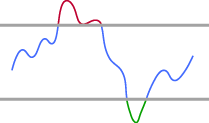
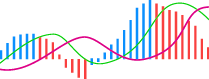
When trading exotic forex pairs, using the right technical indicators can help traders navigate high volatility and unpredictable price movements. These tools assist in identifying trends, market momentum, and potential entry or exit points.
Commonly Used Indicators Include:

Conclusion
Trading exotic currency pairs offers opportunities for higher returns due to their volatility, but it also comes with increased risks.
By understanding their characteristics, monitoring market conditions, and using proper risk management strategies, you can start trading in exotic pairs, thereby diversifying your forex portfolios and capitalizing on numerous opportunities the exotic currency market offers.
With our education hub and platforms like the Century Trader App, MT5, and IBKR platform, get ready to implement specialized strategies and gain deeper market insights.
Elevate your trading experience with
Century Trader App
Elevate your trading experience with
Century Trader App

FAQs
Q1. What are exotic currencies in forex?
A: Exotic currencies are those from smaller or emerging economies, usually traded in combination with a major currency like the USD, EUR, or GBP. They are less commonly traded but can offer unique trading opportunities.
Q2: Why trade exotic pairs in forex?
A: Because of their high volatility and potential for profit, exotic pairs appeal to seasoned traders. However, they come with higher risks compared to major currency pairs due to lower liquidity and unpredictable price movements.
Q3: What are the best exotic forex pairs to trade?
A: Popular pairs include USD/TRY, EUR/SEK, USD/SGD, USD/ZAR, and GBP/SGD.
Q4. Are exotic currencies riskier than major pairs?
A: Yes, due to low liquidity, higher volatility, and sensitivity to local economic events.
Related Reads
This marketing and educational content has been created by Century Financial Consultancy LLC (“Century”) for general information only. It does not constitute investment, legal, tax, or other professional advice, nor does it constitute a recommendation, offer, or solicitation to buy or sell any financial instrument. The material does not take into account your investment objectives, financial situation, or particular needs.
The opinions expressed by the hosts, speakers, or guests are their own and may change without notice. Information is based on sources we consider to be reliable; however, Century does not guarantee its accuracy, completeness, or timeliness and accepts no liability for any loss arising from reliance on this content.
Trading and investing involve significant risk, and losses may exceed initial deposits. Past performance is not indicative of future results. CFDs and other leveraged products are complex instruments that may not be suitable for all investors. Please ensure you understand how these products work, the associated risks, and seek independent professional advice if necessary.
Century is licensed and regulated by the UAE Capital Market Authority (CMA) under License Nos. 20200000028 and 301044.
Please refer to the full risk disclosure mentioned on our website.


Regulated by CMA
Century Financial Consultancy LLC


.png)
.png)
.png)
.png)


Reach us:
-
Dubai
6th Floor, Emaar Square Building 4,
Downtown, Dubai, P.O. Box 65777,
Dubai, United Arab Emirates -
Abu Dhabi
27th Floor, Office 2701,
Shining Towers, Abu Dhabi, UAE -
Sharjah
29th Floor, Office 2905,
The Business Tower, Sharjah, UAE - +971 (4) 356 2800
- info@century.ae

Disclaimer: Trading in financial products carries substantial risk. Leveraged over-the-counter (OTC) derivatives, such as Contracts for Difference (CFDs) and spot forex, may result in losses exceeding initial deposits and may not be suitable for all investors. These complex instruments do not confer ownership of the underlying assets. Investors should carefully consider their investment objectives and risk appetite, and seek independent professional advice if necessary.
Century Financial Consultancy LLC (CFC) is licensed and regulated by the Capital Market Authority (CMA) of the UAE under license numbers 20200000028 and 301044 to carry out the activities of Financial Products dealer, Trading Broker in international markets, Trading Broker of OTC derivatives and currencies in the spot market, Introduction, Financial Consultations, and Promotion. CFC is incorporated under UAE law, registered with the Dubai Economic Department (No. 768189), with its office at 601, Level 6, Building No. 4, Emaar Square, Downtown Dubai, UAE, PO Box 65777.
The content on this website is provided solely for informational and educational purposes and does not constitute an offer, recommendation, or solicitation to buy or sell any securities or financial products.
Products and services offered by CFC are not intended for use in any jurisdiction where such use or distribution would breach local laws or regulatory requirements.
⚠️ Alert: Fraudulent Activity Notice
Century Financial Consultancy LLC (“Century”) has become aware of fraudulent individuals and entities impersonating our firm through unofficial websites, social media channels, and messaging applications such as Telegram, WhatsApp, and Discord.
Please be advised:
- Century does not manage investments on behalf of clients.
- Century does not solicit funds or guarantee investment returns.
- Century does not accept or make payments in cash, cryptocurrency, or digital assets.
- We do not conduct business via social media or messaging platforms.
Our only official website is www.century.ae, and all communication is conducted exclusively through verified channels.
We strongly urge the public to remain vigilant, verify the authenticity of any communication claiming to be from Century, and report any suspicious activity. Century disclaims any responsibility for losses arising from dealings with unauthorised or fraudulent parties.
