 Loading ...

.jpg)
"The T20 world cup is back!
It's time to don the jersey of the team you support and enjoy the nail-biting matches. All this while, the teams focus on one objective, the world cup!
But did you know that cricket can also teach you about financial planning?
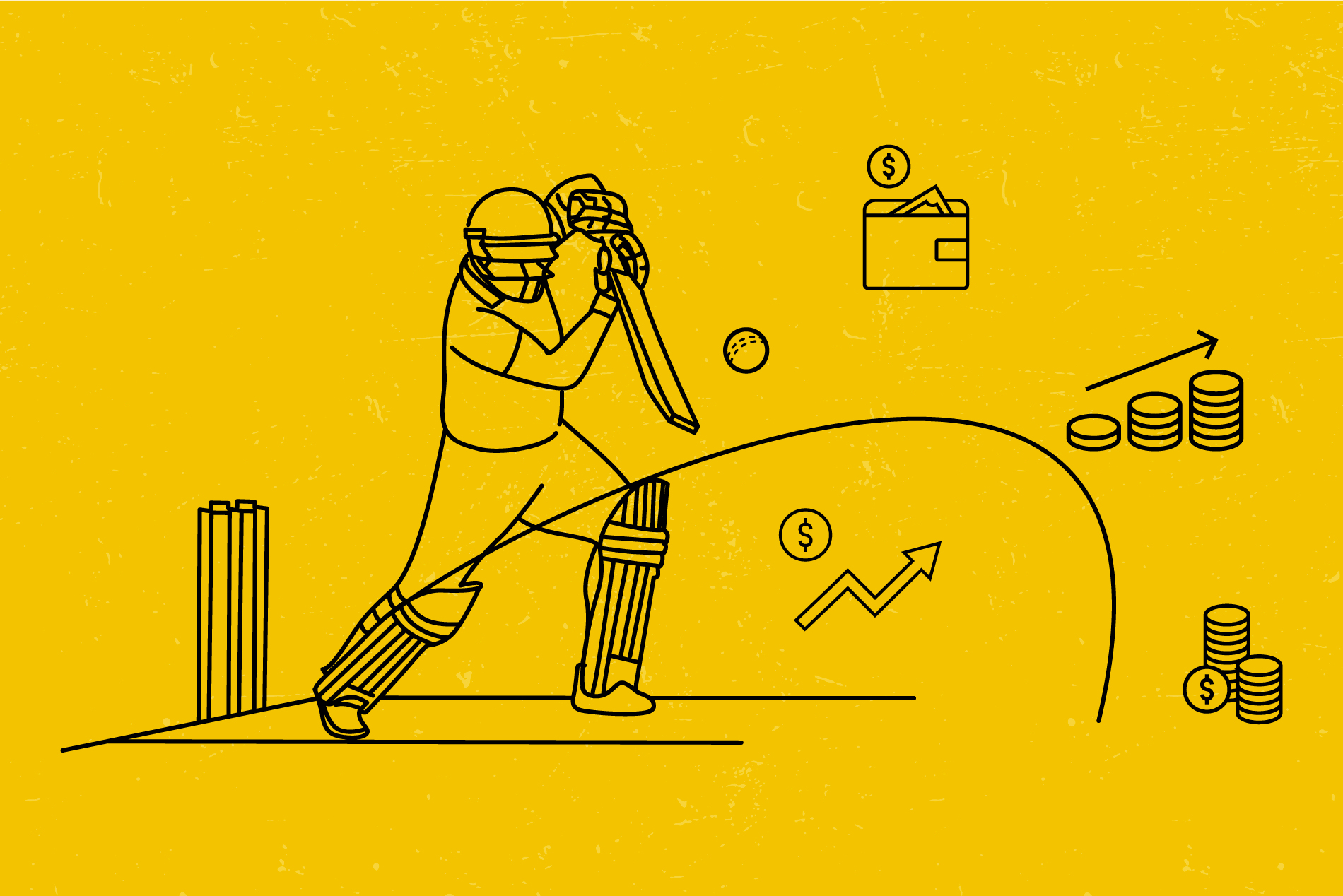
A lot of things that are used on the cricket field, like tactics and strategies, can be used to build your investment portfolio over time.
The game of cricket has its strategies revolve around factors like the ground, weather, pitch, etc. Similarly, financial planning strategies and asset allocation for you will be based on factors like age, dependents, risk capacity, goals and more.
Let us now build on what cricket can teach us about finance.
A winning team requires diversification
A cricket squad is made up of batters, wicket-keepers, all-rounders and bowlers. Within the batter category, there are different specialists like openers and middle-order batters. Similarly, you may have fast and spin bowlers.
Now imagine if your cricket team was made entirely out of bowlers. While it may be beneficial during your bowling innings, you may see your team collapse like a pack of cards when it's your turn to bat.
Similarly, in investing, there are different asset classes for you to diversify. You may select a combination of equities, bonds, real estate, etc., based on your goals and other factors.

Even within a given asset class, you should diversify. For example, not all your equity investments should be in one stock or one category of stocks. You should diversify between large-cap, mid-cap and small-cap stocks.
Have a backup!
Jasprit Bumrah of the Indian Team was injured just before the world cup. However, the team had some backup bowlers to replace him. Such injuries and other issues may not be forecasted beforehand. It is important to have a contingency plan.
In your financial planning also, it is necessary to have a contingency plan. To face immediate uncertainties like medical bills, you should have an emergency fund to which you have urgent and easy access.
The start influences the game
The first 6 overs of a T20 match (called powerplay) are the overs when the batting team can take the most risk as there are only 2 fielders on the boundary. The lower risk of being caught out in these 6 overs incentivizes the batters to play big shots. A good start can also help you set a huge score.
Your 20s can be seen as a powerplay when you generally have fewer responsibilities, and therefore you can take more considerable risks. If you start investing early, you can build a bigger corpus thanks to the magic of compounding. You may also opt for stock trading if you can take additional risks.
Take calculated risks
Trying to hit a boundary at every ball is not wise. At times, the players just look for singles and doubles. They may even decide to leave the unplayable balls. Blind hitting will only harm the team and its ability to score.
Similarly, in investing, do not always chase high returns. You should be sensible while investing. You should avoid investing in assets that you do not understand or feel are risky for you.

Past performance is not a guarantee
Many players who are known for performing well often fall short at such big stages. Some fail due to confidence issues, while some could possibly have been overhyped after performing in bilateral series or domestic leagues. The past performance of the players does not ensure they will perform similarly at the grandest stage.
In the financial world, most investments come with a disclaimer "Past performance is not indicative of future results". However, people still believe that if an investment has performed well in the past, it will perform well in the future. Such beliefs are often the reason why people lose money in investments.
Before a match, the teams do a thorough analysis of the conditions, players, and opposition to help them achieve a win. In investing as well, you should do a thorough analysis of the market, your asset allocation and investment options to help you achieve your financial goals.
Parting thoughts
Cricket has several lessons that we could use in financial planning and building our investment portfolio. The game of cricket can run from a few hours to a maximum of 5 days. But, when making our financial plans, we have a horizon that spans years.
T20 matches and the financial markets can be unpredictable and volatile. What's important is that you remain calm when things do not seem to go your way.
This marketing and educational content has been created by Century Financial Consultancy LLC (“Century”) for general information only. It does not constitute investment, legal, tax, or other professional advice, nor does it constitute a recommendation, offer, or solicitation to buy or sell any financial instrument. The material does not take into account your investment objectives, financial situation, or particular needs.
The opinions expressed by the hosts, speakers, or guests are their own and may change without notice. Information is based on sources we consider to be reliable; however, Century does not guarantee its accuracy, completeness, or timeliness and accepts no liability for any loss arising from reliance on this content.
Trading and investing involve significant risk, and losses may exceed initial deposits. Past performance is not indicative of future results. CFDs and other leveraged products are complex instruments that may not be suitable for all investors. Please ensure you understand how these products work, the associated risks, and seek independent professional advice if necessary.
Century is licensed and regulated by the UAE Capital Market Authority (CMA) under License Nos. 20200000028 and 301044.
Please refer to the full risk disclosure mentioned on our website.




Regulated by CMA
Century Financial Consultancy LLC


.png)
.png)
.png)
.png)


Reach us:
-
Dubai
6th Floor, Emaar Square Building 4,
Downtown, Dubai, P.O. Box 65777,
Dubai, United Arab Emirates -
Abu Dhabi
27th Floor, Office 2701,
Shining Towers, Abu Dhabi, UAE -
Sharjah
29th Floor, Office 2905,
The Business Tower, Sharjah, UAE - +971 (4) 356 2800
- info@century.ae

Disclaimer: Trading in financial products carries substantial risk. Leveraged over-the-counter (OTC) derivatives, such as Contracts for Difference (CFDs) and spot forex, may result in losses exceeding initial deposits and may not be suitable for all investors. These complex instruments do not confer ownership of the underlying assets. Investors should carefully consider their investment objectives and risk appetite, and seek independent professional advice if necessary.
Century Financial Consultancy LLC (CFC) is licensed and regulated by the Capital Market Authority (CMA) of the UAE under license numbers 20200000028 and 301044 to carry out the activities of Financial Products dealer, Trading Broker in international markets, Trading Broker of OTC derivatives and currencies in the spot market, Introduction, Financial Consultations, and Promotion. CFC is incorporated under UAE law, registered with the Dubai Economic Department (No. 768189), with its office at 601, Level 6, Building No. 4, Emaar Square, Downtown Dubai, UAE, PO Box 65777.
The content on this website is provided solely for informational and educational purposes and does not constitute an offer, recommendation, or solicitation to buy or sell any securities or financial products.
Products and services offered by CFC are not intended for use in any jurisdiction where such use or distribution would breach local laws or regulatory requirements.
⚠️ Alert: Fraudulent Activity Notice
Century Financial Consultancy LLC (“Century”) has become aware of fraudulent individuals and entities impersonating our firm through unofficial websites, social media channels, and messaging applications such as Telegram, WhatsApp, and Discord.
Please be advised:
- Century does not manage investments on behalf of clients.
- Century does not solicit funds or guarantee investment returns.
- Century does not accept or make payments in cash, cryptocurrency, or digital assets.
- We do not conduct business via social media or messaging platforms.
Our only official website is www.century.ae, and all communication is conducted exclusively through verified channels.
We strongly urge the public to remain vigilant, verify the authenticity of any communication claiming to be from Century, and report any suspicious activity. Century disclaims any responsibility for losses arising from dealings with unauthorised or fraudulent parties.
